
From New York to Riyadh: Samer Choucair Says the UN Funding Crisis Is Creating Opportunities for Gulf Capital
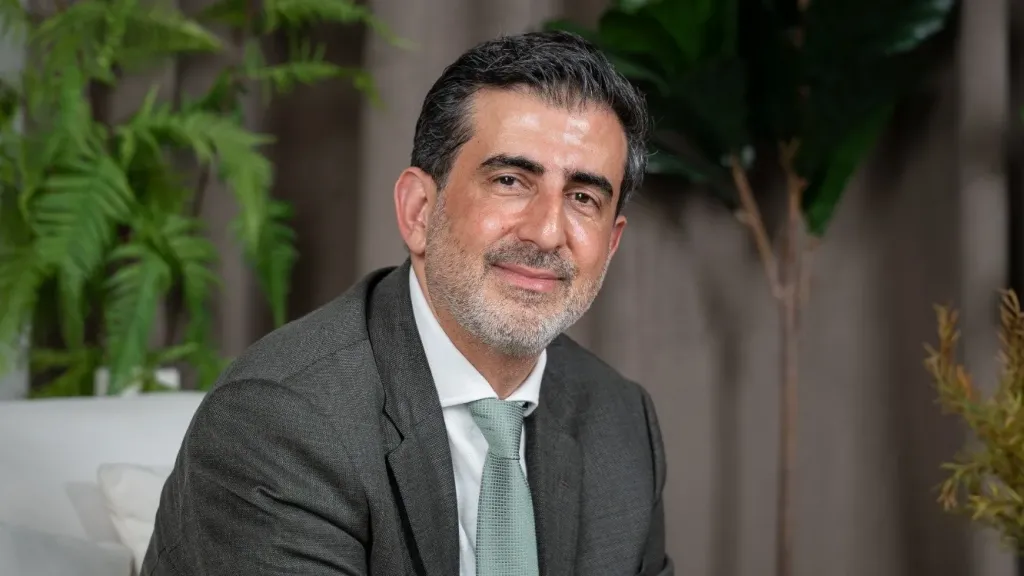
Investment leader Samer Choucair said the U.S. administration’s August 4, 2026 notification to Congress of its intention to allocate $725 million toward the United Nations regular budget was more than an attempt to address unpaid obligations. In his view, it was a signal that the rules governing multilateral financing are beginning to change.
The planned payment remains modest relative to the scale of U.S. arrears. Recent reporting puts the broader U.S. obligation to the UN at roughly $5 billion, including around $2 billion for the regular budget and approximately $3 billion for peacekeeping. The current congressional notifications cover about $850 million in total: $725 million for the regular budget and another $125 million connected to peacekeeping operations in Haiti and the Democratic Republic of Congo.
Funding Is Becoming a Negotiating Instrument
Samer Choucair said the importance of the U.S. position goes well beyond the dollar amount itself. Washington is assessed 22% of the UN regular budget and roughly 26% of peacekeeping costs, making it the organization’s largest assessed contributor and giving changes in U.S. funding flows implications that extend far beyond accounting.
The United States had already made a payment of about $160 million earlier in 2026, yet substantial arrears remained. At the same time, Secretary-General António Guterres repeatedly warned of a severe liquidity problem, while the UN pursued broad reforms under the UN80 initiative. The UN itself has acknowledged that the Secretariat faces a severe liquidity crisis caused by delayed and incomplete assessed contributions from member states.
Choucair said the significance of the latest partial payment is that it should not be understood simply as conventional debt settlement.
“This is increasingly becoming a negotiating instrument,” Choucair said. “Capital is released alongside demands for reform, accountability, and institutional change. In that sense, the framework is beginning to resemble the governance conditions an institutional investor might impose on a company before committing additional capital.”
The Liquidity Crisis Is Reshaping Global Financing
Samer Choucair said the UN’s financial strain reflects several overlapping pressures: the structure and timing of member-state payments, U.S. legislative constraints, and a broader shift in American funding policy after President Donald Trump returned to office in 2025, including reduced engagement with parts of the UN system and significant cuts to voluntary foreign assistance.
The financial consequences have become increasingly visible. The UN entered 2026 under substantial liquidity pressure after ending the previous year with major unpaid assessments, while parts of the organization were forced to operate under tighter financial constraints. In June, the General Assembly approved changes to financial rules intended to prevent an immediate deterioration in the organization’s finances, but senior UN officials stressed that the underlying problem of members failing to pay in full and on time remained unresolved.
Choucair said the direct impact on U.S. GDP is negligible. The more meaningful consequences appear elsewhere: in the financing of humanitarian relief, health, food assistance, refugee programs, and peacekeeping operations, as well as in the repricing of sovereign and security risk in countries that rely heavily on international support.
That deterioration is already affecting the wider UN system. The UN refugee agency, for example, is planning significant budget and staffing reductions for 2027 following a sharp decline in global aid flows, particularly from the United States.
Capital Is Looking for Alternatives
Choucair said institutional investors are interpreting the shift across several layers.
At the sovereign level, Washington is increasingly using funding leverage to press for institutional restructuring. At the sector level, UN agencies that depend heavily on voluntary contributions have become more exposed to abrupt changes in donor policy. At the structural level, part of the financing traditionally delivered through multilateral institutions may increasingly migrate toward bilateral partnerships, sovereign investment vehicles, development banks, and blended-finance structures.
According to Samer Choucair, institutional capital is unlikely to build portfolios on the assumption that multilateral funding will simply return to its previous model.
“Institutional capital is adapting to a world in which conditional financing is becoming part of the architecture rather than an exception,” Choucair said. “The question is no longer only who provides the capital, but what governance, measurable outcomes, and strategic alignment are required before that capital is deployed.”
A New Window for Gulf Capital
Choucair said the emerging financing gap does not mean Saudi Arabia or the wider Gulf will replace the United Nations. Rather, it creates more room for Gulf institutions to participate in development finance and commercially structured investments across tourism, manufacturing, logistics, energy, digital infrastructure, food security, and water security.
Saudi Vision 2030, the Public Investment Fund, and the Kingdom’s broader investment ecosystem give Saudi Arabia an increasingly sophisticated platform for directing capital toward projects with clearer governance structures and measurable cash flows.
For Choucair, that distinction is important. Gulf capital does not necessarily need to replicate the traditional grant-based development model. It can instead participate where developmental impact overlaps with commercially viable infrastructure and long-term strategic interests.
That is particularly relevant in food security, water systems, transportation corridors, digital infrastructure, and supply-chain resilience.
Choucair added that any deterioration in peacekeeping or stabilization capacity around strategically important regions such as the Red Sea and the Horn of Africa could increase risks for trade, shipping, insurance, and supply chains. This would strengthen the investment case for logistics infrastructure and food-security assets as forms of geopolitical resilience rather than purely economic expansion.
The Opportunity Is in Financing Outcomes
Samer Choucair cautioned against confusing opportunity with an open-ended financial commitment.
Saudi Arabia and other Gulf states are not substitutes for the UN, he said, but their growing pools of institutional capital allow them to price development financing in ways that increasingly resemble institutional investment rather than conventional aid.
Choucair expects some of the most attractive opportunities to emerge in blended finance, digital infrastructure, agricultural supply chains, healthcare, and projects that combine measurable developmental impact with identifiable operating returns.
That means the central investment question is changing. Instead of asking which institution needs funding, investors are increasingly asking which outcome can be financed, measured, governed, and ultimately scaled.
This shift from institution-based funding toward outcome-based capital allocation could be particularly significant for Gulf sovereign investors because their mandates often combine financial returns, national development objectives, supply-chain security, and long-term strategic positioning.
The Next Scenario
Choucair said the most likely near-term scenario is neither immediate full U.S. repayment nor a complete rupture with the United Nations.
Instead, he expects a model of conditional tranches in which financing is released incrementally while negotiations over reform, institutional accountability, and the future scale of American participation continue into 2027.
The $725 million notification by itself does not justify a tactical repositioning in U.S. equities or Treasury markets, Choucair said. Its importance lies elsewhere: it reinforces the need to reassess frontier-market risk and the degree to which vulnerable economies depend on multilateral institutions for financial and political stability.
The UN’s financial problems are therefore relevant to investors not because they threaten the core of global capital markets, but because they can alter the marginal financing conditions of countries, industries, and infrastructure projects sitting closer to geopolitical fault lines.
Samer Choucair concluded that one of the defining developments of 2026 is the transition from “funding institutions” toward “funding outcomes.”
“The investor who interprets the U.S. payment not simply as a cheque against arrears, but as a repricing of the influence of the largest shareholder in the multilateral system, will be better positioned to identify where capital moves next,” Choucair said.
From New York to Riyadh, that shift could create a wider role for Saudi and Gulf capital in projects where development, infrastructure, resilience, and commercially measurable returns increasingly converge.