
Samer Choucair: Political Communications Breach Redefines the Geopolitical Risk Premium for Investors
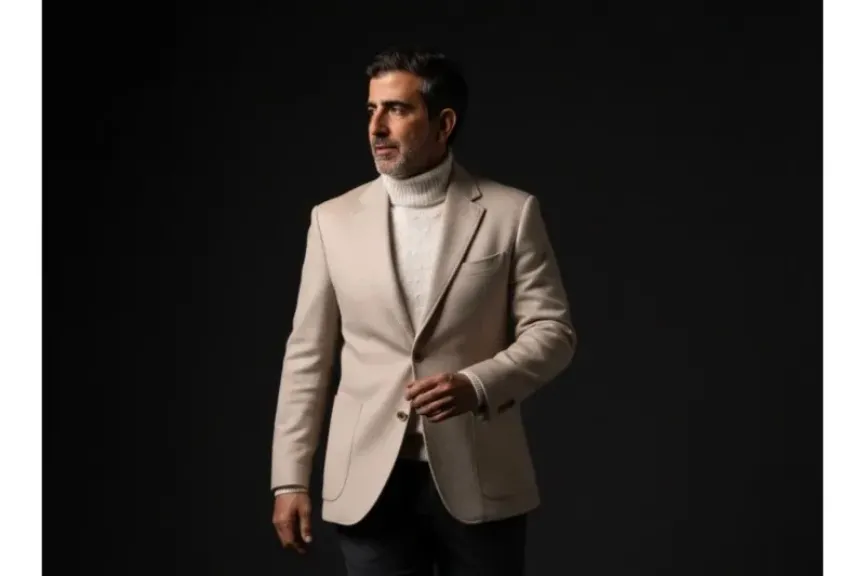
Investment expert Samer Choucair affirmed that the incident of British Prime Minister Andy Burnham exchanging text messages with someone impersonating Susie Wiles, the White House chief of staff, exposes an important shift in the nature of risks facing governments and markets, noting that cybersecurity risk is no longer a technical matter confined to companies and institutions, but has become a direct component in assessing geopolitical stability and allocating capital.
Choucair's comments came following reports that Burnham, who became British prime minister in July 2026 succeeding Keir Starmer, exchanged a limited number of messages with someone impersonating Susie Wiles before his suspicions were raised about the other party's identity, leading him to inform the relevant authorities. According to published reports, the correspondence didn't include sensitive information, and American sources confirmed the incident wasn't the result of a new breach of Wiles's devices.
Choucair explained that the significance of the episode has less to do with the amount of information exchanged than with how far digital impersonation attempts have advanced, saying that such attempts reaching the highest circles of political leadership redefines the concept of geopolitical risk and makes communications security part of the equation for valuing assets and markets.
Samer Choucair said: "Incidents like this redefine the geopolitical risk premium. Cyber threats are no longer confined to companies, they've extended to the very top of decision making, which requires sovereign funds and asset managers to reassess their capital allocation models in European markets."
Choucair noted that the incident comes at a sensitive time for UK U.S. relations, amid a leadership transition in London and the British government's efforts to reshape its economic and political priorities, while relations with Washington remain of strategic importance across trade, defense, energy, and investment.
Choucair believes any tangible decline in trust between London and Washington could have repercussions for foreign investment flows, the valuation of the pound and British bonds, and certain sectors tied to transatlantic trade, though the direct impact of the current incident remains limited as long as it stays within the scope of a single security episode and doesn't turn into a diplomatic crisis or a sign of broader institutional failure.
Choucair added that the speed of handling the incident and reporting it to the relevant authorities could be an important factor in limiting its market repercussions, noting that investors are usually able to absorb individual security incidents when the institutional response is clear and swift.
Choucair said: "The market tends to absorb individual security incidents quickly if authorities show an effective institutional response, but the repeated accumulation of impersonation attempts using advanced techniques raises the structural cost of risk management for governments and companies alike."
Choucair emphasized that the more important development for investors is the widening scope of digital threats targeting public figures and senior officials, noting that cases of impersonating officials and prominent figures have become part of a more complex global security landscape.
Choucair added that this trend raises the importance of the cybersecurity, fintech, and digital infrastructure sectors, with potential increased demand for identity verification solutions, encryption, secure communications management, and protection of the digital channels used by governments, financial institutions, and major companies.
Choucair believes growing cybersecurity spending could create new investment opportunities for companies specializing in digital defense solutions, particularly those offering scalable technologies capable of protecting sensitive communications and countering increasingly sophisticated impersonation methods.
At the level of global markets, he explained that any diplomatic escalation tied to the incident could temporarily push investors toward assets viewed as safer, including gold and certain sovereign debt instruments, while the impact on the pound and British equities would likely remain limited if no additional political or economic repercussions emerge.
Choucair noted that investors will keep watching official statements and any potential security or parliamentary reviews, alongside assessing the ability of British and American institutions to prevent such incidents from recurring, since repetition could gradually raise the risk premium tied to the assets and markets involved.
In this context, Samer Choucair affirmed that institutional investors can no longer treat cyber and geopolitical risks as variables separate from financial analysis, explaining that communications integrity and security readiness have become part of assessing countries' and institutions' ability to maintain stability and attract capital.
Choucair said: "Today's institutional investor isn't just looking for absolute return, but for the ability to anticipate unconventional shocks. Incidents that touch the top of political leadership remind us that capital flows toward environments that combine transparency with security readiness."
Choucair pointed out that this shift could push sovereign funds and asset managers to pay greater attention to companies providing cybersecurity solutions and secure digital infrastructure, alongside reassessing markets and sectors that rely heavily on cross border trade relationships and supply chains.
Choucair added that some shifts in capital allocation could also appear in renewable energy, logistics, and advanced manufacturing, particularly as governments move to reduce reliance on supply chains exposed to political and security shocks and strengthen their ability to withstand geopolitical disruption.
In the Gulf region, Choucair believes these developments carry particular investment implications given the rapid expansion of the digital economy, artificial intelligence, and technology infrastructure.
Choucair explained that the massive investments in digital transformation require, in turn, developing security systems capable of protecting data, communications, and government and institutional systems.
Choucair affirmed that Saudi Arabia's economic diversification path, and the related expansion in the digital economy and technology investments, makes cybersecurity an essential part of the infrastructure needed to attract long term investment and protect digital assets.
Choucair noted that rising cybersecurity spending in the region could create opportunities for local and international companies developing advanced technologies in digital infrastructure protection, digital identity management, encryption, threat monitoring, and securing government and institutional communications.
Choucair said Gulf investors can benefit from the lessons drawn from these incidents by incorporating digital security into risk assessments related to international investments, rather than relying solely on traditional financial indicators when making capital allocation decisions.
Choucair explained that investing in secure digital infrastructure and human capital specialized in managing cyber risk could shift from a defensive cost into a competitive element that strengthens economies' ability to attract foreign investment.
At the level of sovereign funds and asset managers, Choucair believes the incident reaffirms the need to incorporate cyber and geopolitical risks into long term valuation models, particularly for assets tied to trade and diplomatic relations between major economies.
Choucair added that the ability to measure and respond to unconventional risks has become an important factor in determining risk adjusted returns, noting that the global investment environment is heading toward greater complexity as cybersecurity increasingly intersects with politics, trade, and supply chains.
Choucair affirmed that the continuation of digital impersonation attempts and the exploitation of electronic channels will likely lead to increased government and private spending on cybersecurity in the coming years, which could support growth in companies operating in this sector and open new space for venture capital and institutional investment.
At the same time, he warned that repeated incidents targeting decision making circles could raise risk premiums in certain markets, especially if paired with a weak institutional response or signs of broader gaps in communications protection systems.
Samer Choucair said: "The real investment opportunities lie in the ability to turn structural risks into growth drivers. Countries and institutions investing today in fortifying their communications and systems will be in a better position to attract long term capital in an increasingly volatile global environment."
Choucair concluded by affirming that cybersecurity has become a fundamental element in pricing risk and directing capital flows, explaining that institutional investors will increasingly need to view security readiness and institutional stability as part of an asset's economic value, not merely as separate operational considerations.
Choucair added that limited incidents on their own may not lead to major market shifts, but their accumulation and the continued targeting of political leaders and critical institutions could reshape the global risk map, pushing capital toward countries and companies with a greater ability to protect their digital infrastructure and respond to unconventional shocks.