
Samer Choucair: TASI Enters a New Phase Despite Growth and Liquidity Pressures in 2026
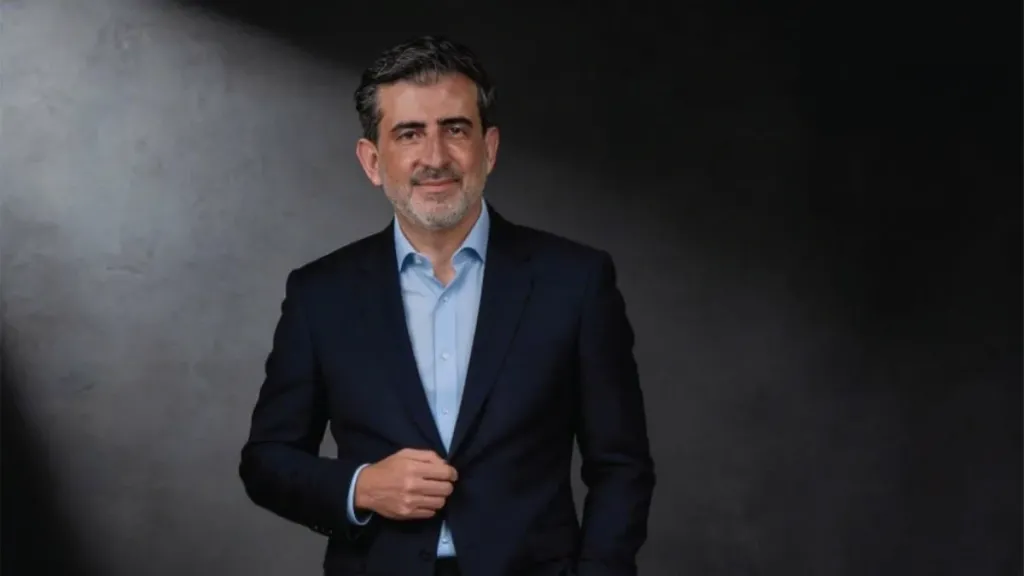
Investment strategist Samer Choucair said that the Saudi stock market has entered a pivotal phase characterized by a combination of short-term cyclical pressures and a structural transformation reshaping earnings quality, corporate diversification, and sources of financing.
He explained that the 1.7% economic growth forecast for 2026 requires investors to distinguish between cyclical effects and long-term fundamentals supported by Vision 2030 and the continued opening of the market.
Choucair added that improved earnings credibility, lower relative valuations compared with peer markets, expansion of the non-oil economy, and increased foreign capital following the removal of restrictions on qualified foreign investors could create opportunities for returns exceeding inflation and risk-free rates over the coming decade.
From the 2006 Peak to Vision 2030 Reforms
Samer Choucair explained that Saudi Arabia is currently facing cyclical pressures, including reprioritization of government spending, tighter liquidity, declines in some real estate values, and regional tensions.
The International Monetary Fund has lowered its growth forecast to 1.7%, he noted. However, Choucair stressed that these pressures are fundamentally different from the structural conditions that prevailed two decades ago, when the TASI reached a peak of nearly 20,635 points in February 2006 before losing around 80% of its value at the subsequent trough.
Choucair said gross profit margins at the time exceeded 30%, compared with roughly 9% in global markets, driven by government support, competitive restrictions, and financial engineering.
He noted that dairy companies, for example, achieved high margins largely because of cost subsidies rather than operating efficiency, while some earnings reflected the recycling of government spending rather than genuine value creation.
According to Choucair, Vision 2030 reforms have dismantled a significant portion of these distortions, making earnings more transparent and defensible in a competitive environment. Valuations have also moved closer to those of comparable emerging markets, improving the risk-return equation.
Greater Corporate Diversity and Multiple Sources of Financing
Samer Choucair pointed out that the market has changed dramatically. Twenty years ago, it had fewer than 80 listed companies, most of them state-owned businesses concentrated in utilities, telecommunications, petrochemicals, and banking.
Today, the number of listed companies exceeds 265, spanning technology, healthcare, retail, entertainment, logistics, and consumer goods.
Choucair said new listings increasingly involve companies with stronger fundamentals and growth models linked to demographic and economic transformation.
At the same time, the financing ecosystem has evolved from reliance primarily on banks, the government, and retail investors toward a multi-channel system encompassing institutional funds, private equity, venture capital, and private financing.
He added that opening the market to all non-resident investors in early February 2026 has provided an additional source of capital that could reduce the severity of market cycles and enhance stability.
Reallocation of Institutional Capital
Samer Choucair said institutional investors who focus solely on cyclical pressures risk overlooking the deeper transformation in earnings quality and corporate diversification.
What was once a structural obstacle, he explained, has increasingly become a potential driver of sustainable returns.
Improved earnings and lower valuations provide greater margins of safety for sovereign wealth funds, asset managers, and private equity funds, despite continuing challenges related to oil dependence, foreign direct investment flows that remain below ambitions, and certain governance and management-quality gaps.
Choucair emphasized that these challenges are no longer existential threats to the extent they were two decades ago.
He said capital is increasingly flowing toward companies that create genuine value in a competitive environment, rather than entities dependent on protection and government support.
Vision 2030 Sectors in Focus
Samer Choucair believes sector selection will be more appropriate than making a broad bet on the overall index.
He identified opportunities in:
Logistics
Healthcare
The digital economy
Entertainment
These sectors, he noted, are directly linked to the trajectory of Vision 2030.
Choucair added that a gradual recovery toward more moderate historical valuation levels could generate double-digit annual returns, exceeding inflation and risk-free rates, while diversified financing sources and foreign capital inflows could help stabilize the market during periods of volatility.
Risks and Investment Strategy
Samer Choucair pointed to continued risks from geopolitical tensions, a delayed recovery in non-oil growth, governance and liquidity challenges in certain market segments, and continued dependence on oil prices.
He emphasized the need to focus on balance-sheet quality, cash flows, and exposure to sectors with structural growth.
Choucair concluded that successful capital allocation depends on distinguishing between companies that have benefited from reforms and rebuilt their business models and those that continue to rely on legacy structures.
The Saudi market, he said, is entering a phase characterized by higher-quality earnings, broader sector diversification, and more balanced sources of financing.
He emphasized that the transformation is not yet complete, and that governance and oil dependence require continued monitoring. Nevertheless, lower relative valuations, improved earnings credibility, and expansion of the non-oil economy make the ability to distinguish cyclical noise from structural signals the foundation of investment strategy over the coming decade.