
Samer Choucair: Heatwaves Are Reshaping the Risk Map and Redirecting Capital Toward Resilience Assets
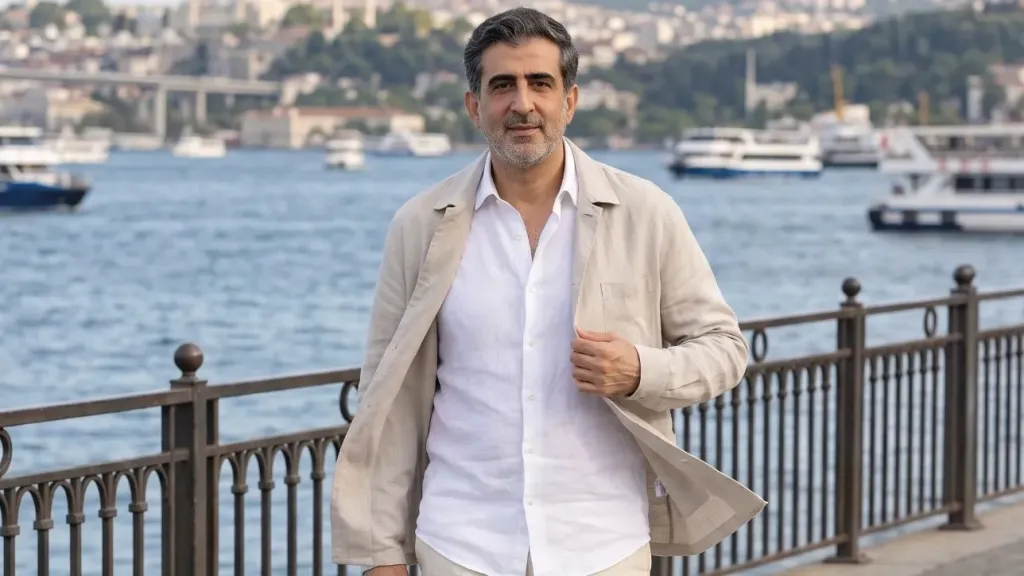
Investment strategist Samer Choucair said that the record-breaking heatwaves experienced across Western Europe in June and July represent more than a temporary climate phenomenon. They are becoming a structural economic and investment variable that is reshaping the risk landscape and capital flows.
He said accelerating climate developments are forcing institutional investors and sovereign wealth funds to reprice climate risks across equity, debt, and infrastructure portfolios, while simultaneously creating growing investment opportunities in adaptation and resilience assets, renewable energy, storage, cooling technologies, and climate finance.
Choucair explained that Western Europe is experiencing one of its hottest summers in modern records, with the region recording an average temperature of 21.62°C for June and July combined, approximately 2.8°C above the 1991–2020 average and above the previous record set in 2022.
He added that these temperatures followed successive heatwaves beginning in May, with France, Germany, Poland, the Czech Republic, and other European countries recording extreme temperatures. Daily temperatures exceeded 43°C in several western areas, alongside widespread drought and wildfires that burned hundreds of thousands of hectares, particularly in France and Spain. The events imposed direct costs on public budgets, insurers, and productive sectors.
Choucair said the repeated sequence of such events indicates that climate risk is shifting from a periodic event into a structural factor affecting economic growth, inflation, and capital flows. Previous economic analyses have estimated that comparable heatwaves could reduce European GDP by as much as 0.5% annually in some cases, with larger losses in southern regions.
Recent estimates, he added, suggest that the cumulative impact of heatwaves and drought could result in losses equivalent to 5%–7% of GDP in economies such as France, Italy, and Spain by the end of the decade if current patterns continue. This is prompting institutional investors to reassess what is known as climate beta within their portfolios.
Heatwaves Become a Macroeconomic Variable
Choucair said extreme heat has become a macroeconomic variable affecting both supply and demand.
Higher river temperatures have restricted the operation of nuclear power plants that depend on cooling water, reducing output at plants in France, Hungary, and Romania. Meanwhile, historically low water levels in the Rhine and Danube have disrupted river shipping and reduced the cargo capacity available to vessels.
On the demand side, electricity consumption has risen sharply because of increased cooling requirements. This pushed day-ahead energy prices to record levels in several European markets during peak heatwave periods.
The simultaneous combination of supply constraints and higher demand, Choucair said, adds another layer of risk to European energy markets.
The impact extends beyond energy markets. Drought and extreme temperatures are putting pressure on agricultural production, particularly grains and oil crops, pushing up food prices and complicating the European Central Bank’s efforts to maintain price stability.
Some studies estimate that heat and drought events could add 0.4–0.9 percentage points to euro-area food inflation, with a greater impact on southern European economies.
Choucair also highlighted declining productivity as another channel through which extreme heat affects the economy. Reduced effective working hours in construction, logistics, and services can generate direct losses in value added, with losses in Germany alone estimated at billions of euros during the June heatwave.
He said institutional markets are increasingly treating extreme heat as a potential stagflationary factor, as slower growth coincides with higher cost pressures. This requires risk premiums to be repriced in fixed-income instruments and European sovereign debt markets that are particularly exposed to these effects.
Energy, Storage, and Cooling Create New Opportunities
Choucair noted that solar energy helped ease some of the pressure in certain markets during daytime peak hours, strengthening the investment case for energy storage and grid resilience.
At the same time, higher and more volatile energy costs are creating broader opportunities for investments in energy efficiency and advanced cooling technologies.
Gas and electricity prices have experienced notable increases during peak periods, while the gap between daytime and nighttime prices has widened. Wildfires and drought have also affected agricultural and forestry supply chains, adding pressure to the prices of various crops and related commodities.
Choucair emphasized that climate change is simultaneously creating new investment opportunities. Rising energy costs and the growing need to adapt to higher temperatures are supporting sectors such as energy efficiency, advanced cooling, resilient infrastructure, and renewable energy integrated with storage systems capable of responding to seasonal fluctuations in demand.
Insurance and Climate Risk Transfer
At the insurance level, Choucair said European markets are facing increasing pressure because a significant share of climate-related losses remains uninsured. This shifts part of the financial burden onto governments and households.
Insurance premiums have risen in some markets, while certain insurers have begun tightening coverage in areas with greater exposure to climate risks.
These developments, he said, are supporting the growth of risk-transfer instruments in capital markets, including catastrophe bonds and climate derivatives, as well as growing interest in European weather-linked contracts as a means of hedging some of the financial effects of extreme climate events.
Choucair said private-equity funds and institutional investors have a broad range of opportunities in infrastructure rehabilitation, electricity-grid development, highly efficient cooling and air-conditioning technologies, drought-resistant agriculture, and renewable-energy assets integrated with flexible storage solutions.
He described this trend as a gradual shift in capital allocation toward “resilience assets.”
Investors that systematically incorporate climate risks into valuation models, he said, will be better positioned both to avoid assets exposed to declining values and to benefit from pricing differences across markets and sectors.
Opportunities for Saudi Arabia and the Gulf
In the Gulf and Saudi context, Choucair said Europe’s increasingly extreme climate conditions create strategic opportunities for Saudi Arabia to strengthen its position as a reliable supplier of both conventional and alternative energy, supported by advanced engineering expertise in operating in high-temperature environments.
He added that Gulf sovereign wealth funds, particularly the Public Investment Fund, could play an important role in financing European adaptation projects or entering partnerships involving cooling technologies, energy storage, and resilient infrastructure, in line with long-term diversification and investment strategies.
Rising European demand for clean energy also provides additional support for Saudi green-hydrogen and renewable-energy projects targeting global markets.
Choucair stressed that Europe’s climate transition is therefore not only a source of risk; it also creates new opportunities for cooperation and investment across global energy value chains.
He said the Gulf’s competitive advantage lies in its ability to provide reliable energy solutions in a global environment characterized by increasing climate volatility. Investment in energy and adaptation value chains could become one of the region’s key strategic capital-allocation themes in the coming years.
The acceleration of adaptation investment could also become a growth engine for new infrastructure and clean-technology sectors, potentially driving a long-term reallocation of capital toward companies and assets that offer greater resilience against extreme climate conditions.
A New Approach to Capital Allocation
Choucair said the new environment requires institutional investors to integrate climate risks systematically into asset-allocation decisions, through scenario analysis and climate-hedging tools, while focusing on opportunities in resilient infrastructure, cooling technologies, energy efficiency, renewable energy paired with storage, and climate-finance instruments such as catastrophe bonds and climate-related derivatives.
Gulf investors can benefit from combining their local expertise in operating in hot environments with the ability to invest across global clean-energy value chains.
He said this approach is consistent with long-term economic diversification objectives and gives the region an opportunity to play a greater role in financing solutions related to adaptation, energy, and resilience.
Choucair concluded that successful investing in the next phase will not simply mean avoiding climate risks. It will require investors to capture the opportunities created by the structural shift in asset pricing and the growing demand for resilience.