
Samer Choucair: Private Credit and Sukuk Are Reshaping Financing for Saudi Arabia’s Data Center Boom
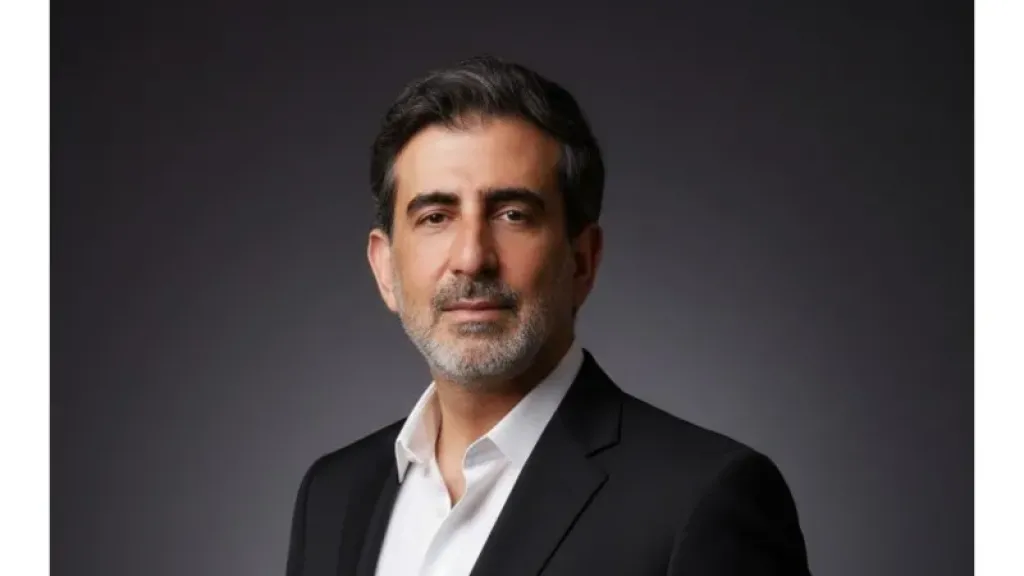
Investment strategist Samer Choucair said Saudi Arabia’s data center boom is entering a new financing phase, with the sector’s total capital requirements potentially reaching around $42 billion by the end of the decade, while debt needs could reach approximately $32 billion under more ambitious scenarios. This makes it necessary to diversify funding sources rather than relying solely on local banks.
Choucair explained that the rapid acceleration of investment in artificial intelligence and cloud computing, combined with growing government demand for computing capacity and data-sovereignty requirements, is pushing digital infrastructure toward the top of Saudi Arabia’s capital-allocation priorities. He emphasized that private credit and sukuk are likely to play an increasingly important role alongside traditional bank financing.
He noted that this dynamic represents a structural shift in institutional investment in Saudi Arabia, as digital infrastructure has become an asset class attracting sovereign wealth funds, asset managers, infrastructure funds, and private-credit investors, supported by long-term growth driven by AI, digital transformation, and Vision 2030.
Financing Will Favor Projects With Stronger Counterparties
Samer Choucair said financial close will not be equally achievable for all developers. Capital is likely to flow disproportionately toward projects backed by strong sovereign-linked entities or those with long-term leases from high-quality tenants with strong credit profiles.
Such characteristics provide greater visibility into cash flows and reduce financing risk.
Projects with weaker institutional backing or those relying heavily on uncertain future demand, he added, will face greater pressure on financing costs and financial-close timelines, particularly as data centers compete with other Vision 2030 infrastructure projects for bank liquidity.
Saudi Arabia’s Digital Infrastructure Demand Is Expanding Rapidly
Choucair explained that Saudi Arabia is undergoing a structural transformation in demand for digital infrastructure. Installed data center capacity has risen to approximately 410 megawatts, with base-case projections pointing toward nearly 1 gigawatt by 2030.
Meanwhile, projects associated with the Public Investment Fund—including Humain—are targeting capacity exceeding 6 gigawatts over the course of the decade.
This growth is supported by several factors, including substantial government demand for computing, regulations encouraging data to remain within the Kingdom, and an increasing tendency among global cloud providers to lease data center capacity rather than build fully owned facilities in new markets.
Saudi Arabia’s availability of land and competitively priced energy provides additional advantages, Choucair said, although the scale of the investment ambitions creates significant challenges for traditional financing models.
Financing Requirements Could Reach $42 Billion
According to Choucair, base-case estimates indicate capital requirements of approximately $7 billion to $9 billion, including $3.5 billion to $7 billion of debt.
Under a more ambitious scenario—assuming approximately half of the announced capacity becomes operational, equivalent to roughly 2.5 to 3 gigawatts—capital requirements could rise to between $28 billion and $42 billion, with debt needs ranging from $14 billion to $32 billion.
“These figures demonstrate that the required financing exceeds what Saudi banks can easily provide on their own,” Choucair said, particularly given competition between data centers and other infrastructure projects for lending capacity and liquidity.
Private Credit and Sukuk Become Increasingly Important
Choucair emphasized that this environment creates an opportunity for private credit and sukuk to become core components of the financing ecosystem for Saudi data centers, with each instrument serving a different purpose depending on the project’s development stage and risk profile.
Globally, Saudi Arabia is not alone in facing the financing challenge associated with data center expansion. Developed markets are also confronting enormous capital requirements to expand computing capacity needed for AI applications, encouraging global investors to seek opportunities in digital infrastructure.
Growing interest from global investment firms in Gulf technology infrastructure further enhances Saudi Arabia’s attractiveness, particularly given domestic demand and a regulatory framework supportive of foreign direct investment in the digital sector.
Data Centers Combine Infrastructure Stability With Technology Growth
Samer Choucair said data centers combine characteristics of traditional infrastructure with those of high-growth technology sectors.
On one hand, they can benefit from long-term contracts and relatively stable cash flows. On the other, they benefit from the structural growth of artificial intelligence and cloud computing.
This dual nature makes them particularly attractive to institutional investors seeking long-duration cash flows while maintaining exposure to technology-driven demand growth.
Investors, he added, will increasingly focus on structures that separate construction risk from operational risk, while placing greater emphasis on the strength of the anchor tenant, contract quality, and credit rating when assessing a project’s bankability.
Power Supply Is Critical to Financing Viability
Choucair noted that grid connectivity and reliable power supply will remain among the most important determinants of financing viability, particularly given the high energy intensity of AI-related computing facilities.
“An excessive focus on targeted capacity without sufficient attention to financing structure could lead to financial-close delays for some projects,” he said. Institutional investors today are looking for clarity around the allocation of risk throughout the asset’s lifecycle—from development to operational stabilization and eventually long-term refinancing.
Sukuk Can Broaden the Investor Base
Samer Choucair said sukuk linked to data centers could provide a new mechanism for expanding the investor base, both domestically and internationally, particularly as Saudi debt markets develop and private debt instruments become increasingly important.
Sukuk can give digital infrastructure projects access to a broader pool of investors seeking Sharia-compliant instruments, while private credit can provide greater flexibility during development phases when public debt markets may be difficult to access.
This combination, Choucair said, could distribute risk more efficiently among developers, lenders, and investors rather than placing the entire financing burden on the banking sector from development through operational stabilization.
Private projects will therefore require increasingly innovative capital structures combining equity, debt, and private credit, allowing the cost of capital to be aligned with the different risks faced by a project at each stage.
The Economic Impact Extends Beyond Data Centers
Choucair noted that the expansion of the data center sector will have economic effects well beyond digital infrastructure.
It will support demand for electricity, technical talent, logistics services, and industrial real estate, while strengthening Saudi Arabia’s position in global digital-economy value chains.
The real investment opportunity, he said, does not lie simply in the amount of announced capacity, but in identifying projects that combine strategic locations, stable contracts, and flexible financing structures.
“The real investment opportunity lies in selecting projects that combine a strategic location, stable contracts, and a flexible financing structure,” Choucair said. “Institutional capital entering at an early stage on appropriate terms could achieve higher returns as the market matures and cash flows stabilize.”
The Key Challenge Is Matching Execution With Financial Capacity
Choucair emphasized that the biggest challenge is not a lack of demand, but aligning the speed of project execution with financial markets’ ability to absorb the required volume of debt without creating excessive pressure on pricing or liquidity.
Saudi Arabia’s success in developing a diversified financing model for data centers, he said, will be critical to converting expected computing demand into operational assets capable of generating stable cash flows.
Delays in achieving financial close could become one of the most important constraints on the pace of project execution over the coming years.
A More Diverse Financing Model
Samer Choucair concluded that the financing landscape for Saudi Arabia’s data centers is moving toward a more diversified model combining banks, private credit, sukuk, and global institutional investors, with each funding source playing a different role depending on the project’s stage and risk profile.
The ability to structure this combination effectively, he said, will be a key determinant of whether Saudi Arabia can translate its enormous AI and cloud-computing ambitions into a sustainable, investable digital infrastructure market.