
Burry Leads in the Short Term, Buffett in the Long Run: Samer Choucair Examines the Future of Automated Investment Strategies
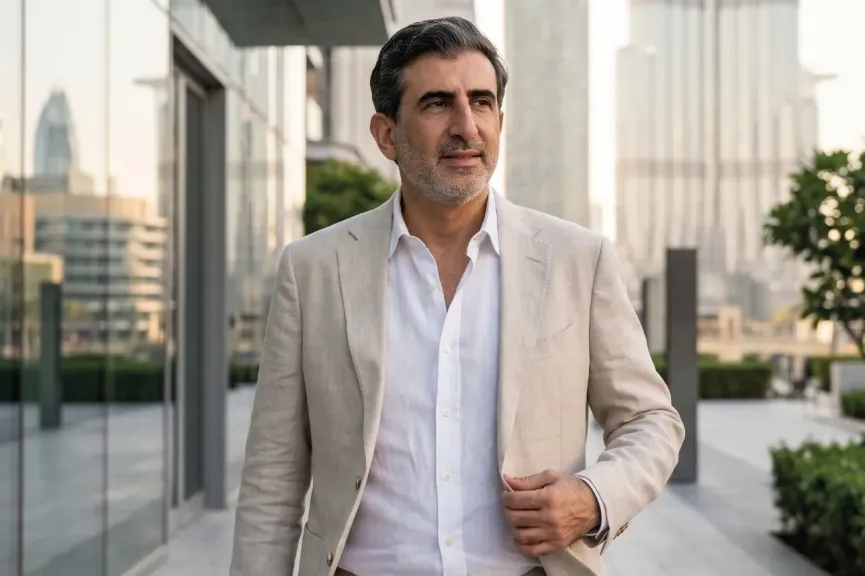
Investment leader Samer Choucair said that global market volatility during the first half of 2026 highlighted the rise of automated investment strategies that replicate the portfolios and recommendations of prominent investors as a new tool for capital allocation. He noted that a strategy tracking Michael Burry’s recommendations recorded an annualized performance of more than 20%, compared with approximately 12.6% for a strategy tracking the disclosures of Warren Buffett’s Berkshire Hathaway.
Choucair explained that this relative outperformance did not mean that Burry had a superior long-term investment strategy to Buffett, but rather reflected differences in the nature of their positions and investment horizons. Contrarian strategies benefited from corrections in some growth stocks, while the long-term approach remained more stable over extended periods.
He added that this shift had prompted institutional investors and sovereign wealth funds to monitor automated tracking tools and consider integrating them into their portfolios, particularly as U.S. equity valuations reached historically high levels and major investment companies maintained elevated cash positions.
A Volatile Market Tests Investment Strategies
Samer noted that the global economy in 2026 combined moderate growth driven by infrastructure and artificial-intelligence spending with persistent inflationary pressures and elevated real interest rates.
He said technology stocks and cyclical sectors performed strongly during much of the year before corrections in July and August affected stocks such as Tesla, Caterpillar, and semiconductor companies.
Samer explained that the strategy tracking Burry was based on positions he publicly disclosed through his platform, including bearish bets against several high-growth stocks as well as long positions in other sectors. By contrast, the Buffett strategy relied on Berkshire Hathaway’s quarterly disclosures, which focused on companies with stable cash flows and strong quality characteristics, while maintaining substantial cash reserves that had exceeded $300 billion at certain points.
Flexibility Versus a Long-Term Buy-and-Hold Philosophy
Samer choucair said the relative outperformance of contrarian strategies during market corrections reflected a shift in market psychology, as investors increasingly sought capital protection rather than chasing absolute returns amid elevated valuations.
He added that this pattern could continue if markets remained exposed to volatility stemming from central-bank policies or geopolitical tensions, but stressed that short-term results were insufficient to judge an investment philosophy designed to operate over decades.
Choucair noted that automated tracking platforms, which allow investors to replicate 13F portfolios or publicly available investment recommendations, had become an increasingly important channel for capital flows from retail investors and smaller institutions. These platforms provide automated execution through existing brokerage accounts, reduce the cost of individual research, and offer a degree of performance transparency.
Buffett and Burry: Different Approaches to the Timing of Risk
Samer explained that the temporary outperformance of the Burry strategy raised questions about the timing of entry into and exit from growth and value positions. He noted that Berkshire had relatively lagged the S&P 500 during parts of 2026 because of its greater exposure to traditional sectors and its high cash holdings, which limited its participation in rapid market rallies.
He said institutional investors in the region, particularly sovereign wealth funds, had increasingly combined elements of both approaches by maintaining long-term holdings in high-quality assets while allocating a limited portion of their portfolios to tactical positions.
Choucair added that the key challenge was managing the risk created by the lag between quarterly disclosures and the speed at which publicly disclosed recommendations and markets can move.
Tactical Opportunities and Elevated Risks
Samer choucair pointed out that the current environment created opportunities in some sectors that had experienced partial corrections, including certain consumer technology and industrial stocks. However, he urged caution against excessive concentration in artificial intelligence.
He noted that risks remained elevated, with the possibility of renewed sharp volatility if central-bank policies shifted toward further tightening or new pressures emerged across global supply chains.
In the Gulf, Choucair said the comparison between Burry and Buffett had opened a broader discussion about aligning capital-allocation strategies with the diversification objectives of Saudi Vision 2030. He explained that Saudi sovereign funds, particularly the Public Investment Fund, had focused on long-term strategic investments in renewable energy, technology, and manufacturing—an approach closer to Buffett’s philosophy of building sustainable long-term value.
At the same time, Shaqir said that part of institutional portfolios could benefit from more dynamic tracking tools capable of capturing tactical opportunities in global markets.
Short-Term Returns Do Not Settle the Debate
Samer emphasized that Buffett’s investment philosophy had historically been stronger over the long term, with Berkshire Hathaway generating cumulative returns that outperformed markets over several decades, driven by capital discipline and a focus on companies with sustainable competitive advantages.
He explained that Burry’s approach retained its value in identifying major market mispricing, as demonstrated during the 2008 financial crisis, but came with higher levels of volatility and risk.
Choucair said Burry’s relative outperformance in 2026 offered an important lesson for institutional investors, but did not erase the distinction between short-term performance and the ability to generate compounded returns over decades. He warned that focusing on quarterly outperformance could obscure structural risks related to leverage or sector concentration.
Artificial Intelligence Opens the Next Stage
Samer choucair concluded that interest in automated tracking tools is likely to continue as execution technologies evolve and regulatory transparency increases. He expects further innovation through the integration of advanced analytics and artificial intelligence to improve the timing of portfolio updates.
Shaqir emphasized that investment success in 2026 and beyond will depend on the ability to combine tactical flexibility with long-term discipline, building portfolios capable of withstanding different market cycles while benefiting from global technological and economic shifts without abandoning the principles of risk management and capital allocation.