
Samer Choucair: $29.7 Billion Reshapes the Map of Gulf Capital in Egypt’s North Coast
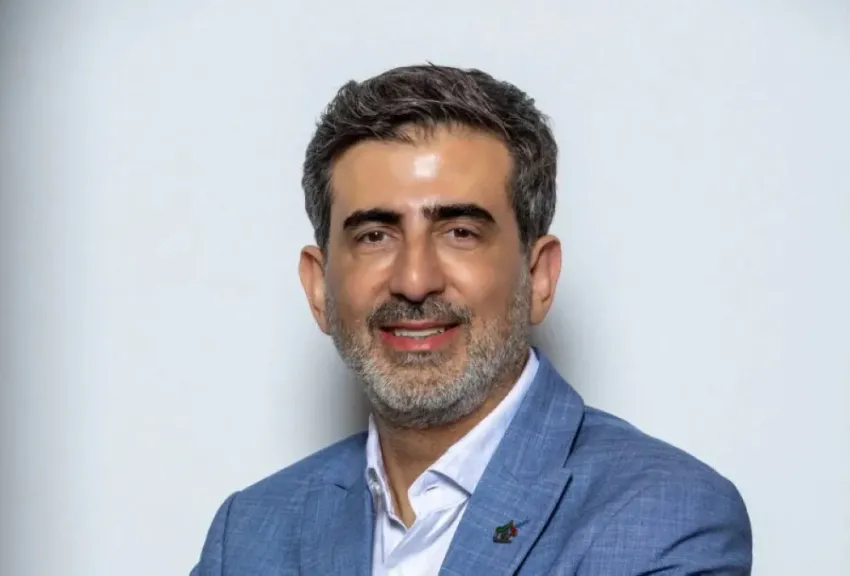
Samer Choucair said the Alamein Bay project represents an important shift in the flow of Gulf capital into Egypt, not only because of its financial scale, but also because of its development model, which combines real estate, tourism, services, and infrastructure within an integrated urban destination designed for long-term development.
Choucair explained that Diar Qatar, the real estate arm of the Qatar Investment Authority, signed an agreement in November 2025 with Egypt’s New Urban Communities Authority to develop the Alamein Bay project on the northwestern coast, with announced total investments of $29.7 billion.
The deal includes $3.5 billion for the land, along with an in-kind investment of $26.2 billion toward developing the project.
A Long-Term Integrated Development
The project covers approximately 4,901 feddans, equivalent to roughly 20.6 million square meters, with a 7.2-kilometer coastline.
It is designed as an integrated urban community incorporating residential, commercial, tourism, and entertainment components, with hotel capacity exceeding 4,500 rooms. Residential developments are expected to account for approximately 60% of the project’s total land area.
Choucair noted that the first phase is scheduled to begin in 2026 and will cover approximately 20% of the total land area, while the full development plan is expected to extend over approximately 15 years.
This timeline reflects the nature of the investment as a long-term allocation of capital into real assets rather than a short-term speculative strategy.
Diversifying Revenue Streams
According to Choucair, Alamein Bay’s appeal to institutional investors lies in its ability to diversify revenue streams across real estate, hospitality, retail, entertainment, and services, while potentially transforming the area into a destination with activity throughout the year.
The master plan also includes a free zone, an international marina, and various service components, strengthening the links between real estate investment and transportation, tourism, and service-sector activity.
This integrated model could potentially provide investors with multiple sources of cash flow rather than relying solely on residential property sales.
Local Economic Spillovers
Choucair pointed out that the participation of Egyptian companies and suppliers in the project could create an economic impact extending beyond the value of the real estate development itself.
Local participation can support construction activity, supply chains, employment, and related services, at a time when Egypt is seeking to increase its ability to attract foreign direct investment.
Diar Qatar has confirmed that Egyptian companies and local suppliers will participate in the project’s implementation.
Execution Is the Key Investment Test
Choucair stressed that the project’s success should not be measured solely by the headline investment figure, but by its ability to convert capital into productive assets and sustainable cash flows.
Investors, he said, will need to monitor several risks, including execution delays, construction costs, currency movements, tourism demand, and real estate demand.
The scale of the project means that even relatively modest changes in these variables could have a material impact on returns over its extended development period.
A Test for Long-Term Gulf Investment in Egypt
Samer Choucair concluded that Alamein Bay represents an important test for the model of long-term Gulf partnerships in Egypt.
If successfully executed, the project could strengthen the North Coast’s attractiveness to additional investment in tourism, infrastructure, and services, while demonstrating how Gulf capital can be deployed into large-scale real assets that generate economic activity over decades.
The key, Choucair emphasized, is ensuring that capital deployment remains tied to sustainable economic and operational viability, rather than investment volume alone.