
Samer Choucair: Arab Investment Company’s 15% Stake in Akdital’s International Arm Reflects a Structural Shift in Capital Allocation Toward Regional Healthcare
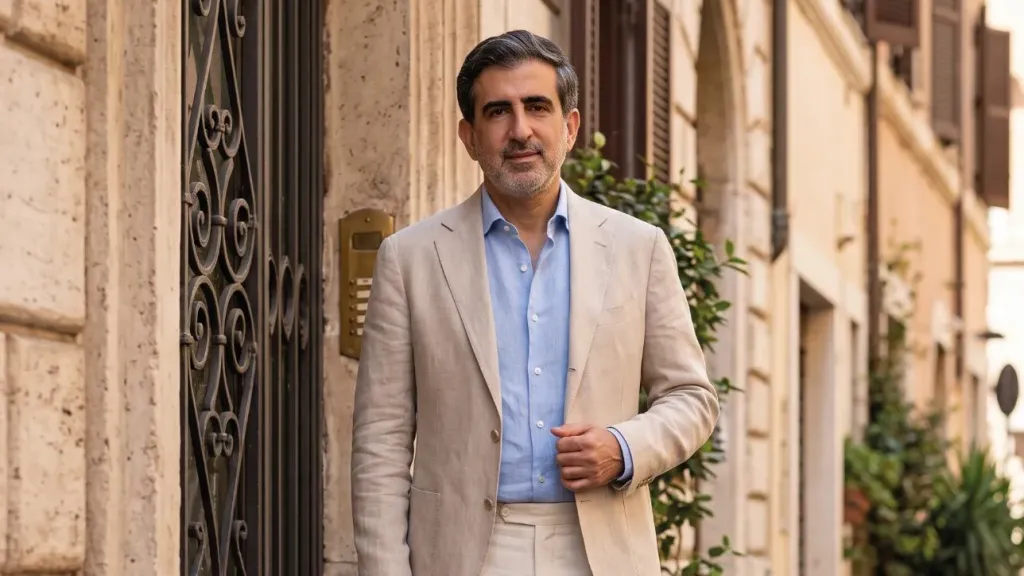
Entrepreneur Samer Choucair said Arab Investment Company’s acquisition of a 15% stake in the Riyadh-based international holding company of Morocco’s Akdital Group reflects a structural shift in capital allocation toward the regional healthcare sector, noting that the transaction provides a clear signal of accelerating capital flows into healthcare as one of the key drivers of economic diversification across the Gulf.
Choucair explained that the transaction, whose value was not disclosed, combines the operating expertise of Morocco’s largest private hospital operator with the financing capabilities and regional network of Arab Investment Company, which is owned by the governments of 16 Arab countries.
He added that this type of partnership has direct implications for healthcare asset valuations and the restructuring of long-term investment portfolios, particularly as the sector moves away from a traditional model heavily dependent on government spending toward a hybrid ecosystem combining private-sector participation with institutional financing.
15% of Akdital International to finance regional expansion
Samer Choucair noted that Arab Investment Company’s acquisition of a 15% stake in Akdital’s international holding company is intended to finance regional expansion, particularly in Saudi Arabia.
He said Akdital is targeting a network of more than 2,000 beds outside Morocco by 2030, alongside international revenues exceeding MAD 5 billion across three Arab markets.
Choucair explained that the group currently has four projects in Saudi Arabia, including two hospitals in Riyadh, one in Makkah, and another in Jeddah, as part of a broader regional expansion plan that also includes the UAE and Tunisia.
He added that these objectives demonstrate that the transaction is not simply a financial investment in an operating company, but is designed to create a financing and operating platform capable of accelerating the Moroccan group’s expansion beyond its domestic market.
Healthcare becomes a driver of regional growth
Samer Choucair said the regional healthcare sector has shifted from a traditional model centred on government expenditure toward a more diversified ecosystem combining private investment and institutional capital.
He noted that this transition has become particularly important in Saudi Arabia, where the privatization of healthcare services is accelerating under Vision 2030 as demand for private medical services rises due to population growth, an expanding middle class, and improving insurance coverage.
Choucair emphasized that these factors have changed how investors assess the sector.
Healthcare is no longer viewed solely as a traditional defensive industry, but increasingly as a structural growth opportunity linked to demographic trends and government capital expenditure.
Nearly $1 billion in paid-up capital strengthens confidence
Samer Choucair explained that the entry of a pan-Arab institution with paid-up capital approaching $1 billion into the ownership structure of a Moroccan operating company strengthens confidence in the ability of regional business models to attract sovereign and quasi-sovereign capital.
He said the combination of an investment institution owned by 16 Arab countries and a specialized healthcare operator creates a model that brings together institutional capital and operating expertise, helping reduce the risks associated with cross-border expansion.
Choucair added that the partnership’s significance extends beyond financing by providing access to a regional network that could support expansion and coordination across new markets.
Akdital International as a separate financing and operating platform
Samer Choucair noted that Akdital’s international holding company in Riyadh operates as a financing and operating platform separate from the group’s Moroccan activities.
He said this separation enables the group to raise capital for international expansion without significantly diluting shareholders in its Casablanca Stock Exchange-listed parent company, while retaining operating control.
Choucair explained that the group has previously raised international financing and issued domestic bonds to support its growth and is targeting international revenues representing approximately 35% of total business by the end of the decade.
He added that the partnership with Arab Investment Company introduces an additional layer of institutional credibility, particularly given that the institution was established in 1974 to invest Arab capital in commercially viable development projects.
A model separating real estate from operations
Samer Choucair said the transaction could encourage private investment funds, family offices, and sovereign wealth funds to increase their exposure to healthcare across the Gulf.
He explained that demand for private hospital beds in Saudi Arabia and the UAE exceeds supply in the mid- and high-quality segments, while successful operating models can generate margins above the average of many other service industries.
Institutional investors, he noted, are seeking assets capable of producing stable cash flows while offering scalability through acquisitions and new developments.
Choucair added that Akdital’s model, which separates real estate ownership from healthcare operations, provides this flexibility, reduces the capital intensity required from the operator, and creates opportunities for partnerships with local property investors similar to those previously established with Saudi developers.
Arab capital shifts toward direct investment
Samer Choucair noted that the transaction forms part of a broader trend in which Arab capital is moving away from passive investments in equities and bonds toward direct investment in service industries.
He said Arab Investment Company, headquartered in Riyadh and owned by the governments of 16 Arab countries, has previously stated its intention to increase direct investment in private equity.
Choucair explained that the institution’s investment in Akdital International is consistent with this strategy and reflects an ambition to build regional platforms capable of combining commercial returns with developmental impact.
He added that Dr Rochdi Talib, chief executive of Morocco’s Akdital Group, described the transaction as a pivotal milestone in the group’s regional expansion strategy, while Arab Investment Company chief executive Abdullah bin Saleh Bakhreeba said it represented a step toward building an investment platform that supports healthcare-sector development and improves access to medical services.
Risks linked to expansion speed and multiple markets
Samer Choucair explained that rapid expansion beyond the domestic market introduces several challenges, particularly around governance, operational integration, and regulatory compliance across multiple jurisdictions.
He noted that reliance on external financing makes the group more sensitive to interest-rate movements and the cost of capital.
However, Choucair said the presence of a pan-Arab institutional partner can reduce financing risks while providing a regional network that may help facilitate approvals and licensing.
He added that the continued prioritization of healthcare in Gulf government budgets, supported by oil surpluses and non-oil revenues, reinforces the base-case scenario for continued growth in demand for private healthcare services.
Transaction could support Akdital’s Casablanca valuation
Samer Choucair noted that the transaction could have a positive impact on Akdital’s valuation on the Casablanca Stock Exchange, particularly if the group succeeds in achieving its international revenue targets.
He said successful regional expansion could also open the door to further mergers and acquisitions across the healthcare sectors of the Maghreb and Gulf, as other regional groups seek financial partners capable of accelerating their growth.
Choucair explained that these developments are also encouraging investors to reassess exposure to listed and unlisted healthcare equities, with particular attention to companies whose operating models can scale across borders.
Healthcare attracts capital seeking stable returns
Samer Choucair emphasized that institutional investment in healthcare is no longer confined to traditional infrastructure funds but increasingly includes private capital and joint sovereign financing.
He said this shift reflects investors’ search for stable returns away from the volatility associated with energy and commodity markets.
Choucair added that one of the clearest trends in 2026 and beyond is the concentration of capital in sectors combining demographic growth, government support, and the ability to generate strong operating margins.
Private healthcare, he said, is among the leading regional beneficiaries of this trend.
He explained that transactions combining local operating expertise with regional institutional capital tend to offer stronger long-term return potential than standalone investments.
Saudi Arabia emerges as a regional hub for holding companies
Samer Choucair noted that the transaction also reflects increasing maturity in Arab capital markets, as regional expansion is no longer dependent solely on domestic financing or bank lending.
He said partnerships with institutions such as Arab Investment Company are becoming mechanisms for sharing risk and accelerating execution, and that the model could be replicated in sectors such as private education, logistics, and digital healthcare.
Choucair added that the transaction also strengthens Saudi Arabia’s attractiveness as a regional hub for managing international holding companies, supported by its regulatory framework and the investment incentives associated with Vision 2030.
A new wave of minority acquisitions
Samer Choucair expects the region to see more minority acquisitions of successful operating companies by pan-Arab investment institutions and sovereign wealth funds over the medium term.
He said the trend could support the creation of regional platforms capable of competing with global healthcare operators.
Choucair explained that the broader economic success of such partnerships could help raise productivity across the services sector, reduce dependence on imported medical capabilities, and support localization objectives for talent and technology.
Maintaining service quality is the greatest challenge
Samer Choucair emphasized that the principal challenge facing the expansion model is the ability of operating groups to maintain service quality while growing rapidly, alongside the ability of financial partners to provide value beyond capital.
He noted that the current transaction structure, under which Akdital retains operating control while an institutional partner acquires a 15% stake, appears sufficiently balanced to attract additional capital without sacrificing operational control.
Healthcare enters a new phase of institutional maturity
Concluding his analysis, Samer Choucair emphasized that, from a long-term capital-allocation perspective, the transaction signals that healthcare across the Gulf and Maghreb is entering a new phase of institutional maturity.
He said investors previously hesitant because of operating and regulatory risks are increasingly seeing clearer business models, more stable financing structures, and institutional partners capable of sharing risk and supporting expansion.
Choucair added that amid volatile interest rates and slowing growth in some developed markets, the region is becoming a more attractive destination for capital seeking structural growth linked to demographic and economic transformation.
He emphasized that Arab Investment Company’s acquisition of a 15% stake in Akdital International was more than an ownership transaction.
It reflects a broader shift in how Arab capital is being directed toward scalable operating platforms capable of combining financial returns with developmental impact, with healthcare among the sectors best positioned to benefit from this transition in the years ahead.