
Samer Choucair: US Political Polarization Is Redirecting Risk Premia Toward More Stable Markets
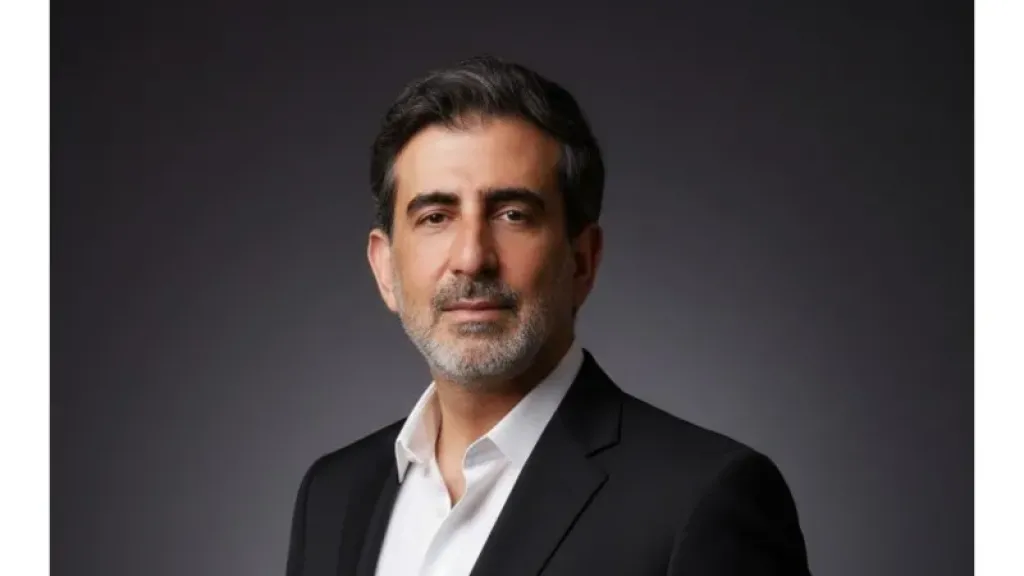
Entrepreneur Samer Choucair said persistent political tensions within the US establishment, more than a year and a half into President Donald Trump’s second term, demonstrate that the political risk premium remains firmly embedded in US markets.
He noted that this dynamic is encouraging institutional investors to reassess their asset-allocation strategies, with a growing preference for markets offering relative political stability and clearly defined structural reforms.
Samer Choucair explained that the Saudi and broader Gulf economies, supported by Vision 2030 and the Public Investment Fund, are emerging as important destinations for capital seeking long-term growth away from short-term political noise.
He emphasized that periods such as the current one reinforce the importance of disciplined capital allocation and of focusing on structural fundamentals rather than reacting to every political headline or development.
Choucair noted that recent US political developments have again highlighted the persistence of polarization within the country’s political landscape.
In August 2026, comments by Hillary Clinton on the “Pivot” podcast revived a political moment dating back to June, during the opening of the Obama Presidential Center in Chicago, when Michelle Obama referred to the Nobel Peace Prize awarded to her husband as one of his achievements.
Choucair added that Clinton said she had joked with Barack Obama that US President Donald Trump was “probably thinking he is in the third circle of hell right now,” to which Obama briefly responded: “I hope so.”
Samer Choucair said that while exchanges of this kind are largely symbolic, they remind investors that political polarization in the United States has not subsided.
Its implications, he added, extend beyond political rhetoric to the way investors assess risk, the cost of capital, and the long-term stability of economic and regulatory policy.
He noted that US markets have delivered substantial gains since the 2024 election, with the S&P 500 rising by more than 13% from the beginning of 2026 through early August, supported by corporate earnings and growing demand associated with artificial intelligence.
Choucair explained, however, that these gains have occurred alongside significant volatility linked to tariffs, tensions in the Middle East, and changing expectations around monetary policy.
Positive US equity performance, therefore, has not eliminated the impact of political and geopolitical factors on risk pricing.
Samer Choucair said the persistence of politically charged signals means institutional investors are likely to continue incorporating a political risk premium into the valuation of US assets.
This is encouraging a reassessment of portfolio allocations across US equities, sovereign bonds, and emerging markets that offer either greater political stability or clearer visibility on economic and structural reforms.
From a global economic and market perspective, Choucair explained that markets in mid-2026 have shown relative resilience despite persistent geopolitical noise.
He noted that yields on intermediate-term US Treasury securities have risen to around 4.6%, while equities have maintained momentum on the back of earnings growth in the technology and energy sectors.
He added that conflict involving Iran and concerns surrounding the Strait of Hormuz earlier in the year caused temporary spikes in oil prices before prices eased following partial ceasefire agreements.
These developments, he said, provide an example of how rapidly geopolitical shocks can transmit into energy prices, financial markets, and the cost of capital.
Samer Choucair noted that markets have become more accustomed to volatility in US politics, but this does not mean that political developments no longer influence financing costs.
Institutional investors are closely monitoring how continued polarization affects Federal Reserve policy, trade, energy, and technology regulation.
He emphasized that any escalation in political rhetoric or legislation can trigger rapid repricing of risk, making political developments an integral part of portfolio management even when the underlying operating performance of many US companies remains strong.
Choucair said prolonged political polarization in the world’s largest economy does not necessarily destroy growth, but it can raise the cost of capital and accelerate the movement of some investment flows toward markets offering greater policy clarity.
He added that sovereign investors and asset managers are increasingly separating the operating performance of US companies from day-to-day political noise, while simultaneously increasing exposure to markets where structural reforms are linked to clearly defined development objectives with measurable effects on the real economy.
Samer Choucair said this transition is visible in foreign direct investment flows.
Saudi Arabia recorded a notable increase in net foreign direct investment during 2025, reaching approximately $32.6 billion and ranking 13th globally.
Although quarterly figures in 2026 have shown more moderate growth, Choucair said the broader trend reflects increasing confidence in non-oil sectors, infrastructure, and technology, which now form a growing part of the Kingdom’s economic transformation.
He emphasized that the Public Investment Fund continues to play a central role as an investment catalyst, with an increasing focus on international partnerships in private capital, private credit, tourism, and entertainment.
These initiatives align with Saudi Arabia’s strategy to diversify its economy and reduce dependence on oil.
Regarding structural opportunities in the Saudi economy, Samer Choucair said Vision 2030 has entered its most important implementation phase ten years after its launch.
He noted that non-oil activities now account for more than half of real GDP, while the non-oil economy recorded strong growth during 2025.
Choucair explained that investments in data centres, artificial intelligence, renewable energy, and tourism are creating new areas for capital allocation and giving institutional investors opportunities to participate in sectors tied to long-term structural economic change.
He said Saudi Arabia now offers a relatively rare combination of political stability, sovereign financial capacity, and continuing regulatory reform, making it a natural destination for capital seeking structural growth away from the short-term political cycles dominating US news.
Choucair emphasized that the real opportunities extend beyond megaprojects to the value chains supporting the digital economy, advanced manufacturing, and logistics.
Building these ecosystems, he said, is fundamental to converting investment into sustainable productive capacity and long-term economic value.
He explained that investors evaluating opportunities in Saudi Arabia and the wider Gulf need to assess the economic ecosystem as a whole rather than concentrating solely on individual projects.
That requires analysing companies, services, infrastructure, and supporting industries capable of benefiting from the broader transformation.
Choucair added that Gulf sovereign wealth funds and family offices are increasingly viewing the development of regional hubs for data, clean energy, and financial services as a natural hedge against volatility in US politics.
Such investments help create growth engines that are relatively less dependent on political and economic cycles in external markets.
He noted that the continued development of local capital markets, including the Saudi Exchange, Tadawul, and alternative financing instruments, is also strengthening the Gulf’s ability to attract and retain capital while giving companies and investors additional tools to finance expansion within the region.
Samer Choucair emphasized that building deeper and more diversified financial markets is an important part of economic transformation because it does more than provide additional sources of financing.
It also broadens the investor base and improves the ability of domestic companies to access capital.
Regarding risks and future scenarios, Choucair said the main concerns remain the possibility of renewed trade or geopolitical tensions, as well as unexpected monetary tightening if inflationary pressures return.
He explained that these factors could affect the cost of capital and asset valuations while reshaping investor priorities across markets and sectors, particularly if trade or geopolitical shocks coincide with higher energy prices or sudden shifts in monetary policy.
Samer Choucair said the base-case scenario assumes continued growth in US corporate earnings supported by artificial intelligence, alongside a gradual redistribution of capital toward emerging markets with strong fundamentals, particularly those combining relative stability, structural reform, and long-term growth opportunities.
He added that if current trends continue, US equities are likely to remain supported but may trade with a relatively higher risk premium than markets offering a stronger combination of growth and stability.
Institutional investment in Saudi Arabia and other Gulf markets could benefit from this shift, particularly in sectors linked to Vision 2030.
Choucair emphasized that this does not necessarily imply declining importance for the US market or a broad withdrawal of capital.
Rather, it represents a gradual move toward more balanced capital allocation, reducing portfolio dependence on a single market or a narrow set of political and economic drivers.
He explained that discipline in capital allocation becomes even more important in an environment characterized by greater political and geopolitical volatility.
Investors who react separately to every political development risk making short-term decisions at the expense of long-term investment objectives.
Samer Choucair said the current environment requires investors to distinguish between temporary political noise and structural economic shifts capable of lasting for years or decades.
The ability to make this distinction, he said, is one of the most important elements of successful institutional portfolio management.
“Investors who build portfolios around the ability to generate stable cash flows in less politically noisy environments are more likely to achieve superior risk-adjusted returns over the long term,” Choucair said.
“The objective is not to eliminate risk entirely, but to select risks that can be measured, managed, and adequately compensated.”
He noted that the Saudi economy, supported by Vision 2030 and the Public Investment Fund, provides one of the clearest current examples of this approach, with continued foreign direct investment inflows, expansion of non-oil industries, and ongoing development of infrastructure and capital markets.
Samer Choucair added that institutional capital still has substantial opportunities to establish long-term investment positions in a region undergoing genuine economic transformation, particularly across the digital economy, data centres, artificial intelligence, clean energy, advanced manufacturing, logistics, tourism, and financial services.
He emphasized that the changes taking place across Saudi Arabia and the Gulf should not be viewed solely through the lens of current capital inflows, but as part of a long-term process of rebuilding economic capabilities and diversifying sources of growth and income.
This gives investors opportunities to participate at multiple stages of the region’s economic transformation.
Choucair explained that continued political polarization in the United States may keep the political risk premium present in investor decision-making, but its impact should be assessed within a broader framework that also includes asset valuations, corporate earnings, monetary policy, geopolitical conditions, and structural opportunities in alternative markets.
Concluding his remarks, Samer Choucair said markets will continue to price political headlines, but intelligent capital prices structural trends.
He emphasized that investors capable of moving beyond immediate reactions and focusing instead on the quality of cash flows, sustainability of growth, economic reform, and relative stability will be better positioned to build portfolios capable of delivering sustainable, risk-adjusted returns over the long term.