
Samer Choucair: Streetlights Are Becoming Smart Assets and Reshaping Urban Investment
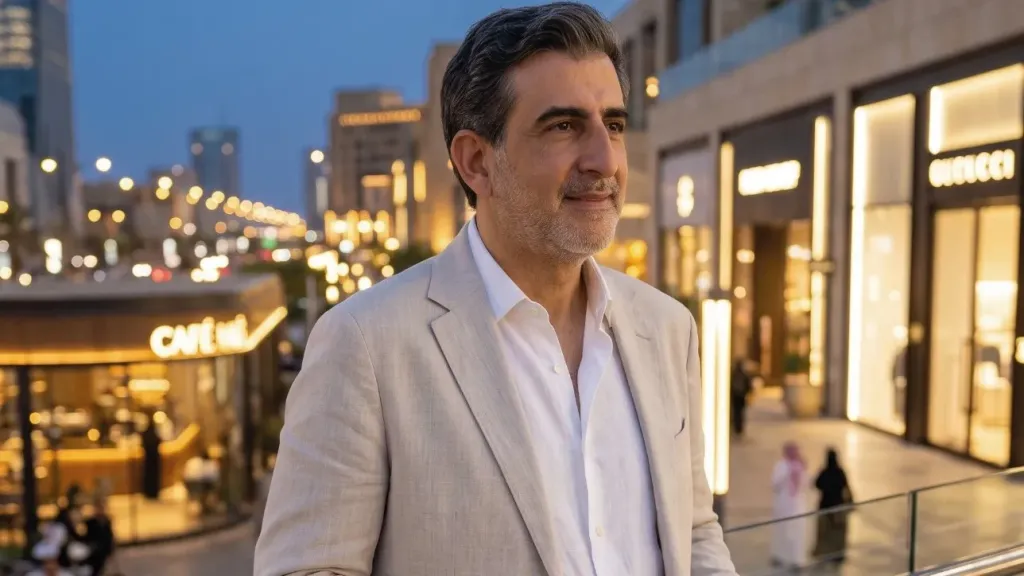
Entrepreneur Samer Choucair said the accelerating shift toward artificial-intelligence-powered urban infrastructure is redefining how investments in cities are valued, emphasizing that streetlights and public utilities can gradually evolve from traditional assets into smart platforms combining energy efficiency, connectivity, sensors, and data analytics.
Choucair explained that developments in the United Kingdom reflect a broader trend toward integrating artificial intelligence into security and urban infrastructure.
He pointed to the British government’s launch of the “PoliceAI” programme in June 2026, backed by £75 million in funding over three years as part of an approximately £140 million investment package for artificial intelligence in policing, including funding for 40 additional live facial-recognition units.
London also conducted a trial involving facial-recognition cameras installed on street furniture in Croydon between October 2025 and March 2026.
Samer Choucair said: “The investment value of smart infrastructure does not come from the camera or processing unit alone, but from the system’s ability to generate operating savings and provide scalable services while maintaining strict standards of privacy and governance.”
He added that institutional investors need to distinguish between applications with demonstrated economic value, such as energy management, traffic management, and predictive maintenance, and marketing claims surrounding the transformation of every streetlight into an advanced computing platform.
Choucair said this distinction will be critical in determining which companies are capable of attracting long-term capital.
He noted that regulatory and privacy risks have become fundamental components in the valuation of these assets, particularly when systems incorporate cameras or technologies capable of identifying individuals.
Companies that establish clear rules governing data ownership, retention periods, and access mechanisms will therefore be better positioned with both investors and regulators.
Regarding the Gulf, Samer Choucair emphasized that Saudi Arabia has strong foundations for developing this model, given the Public Investment Fund’s 2026–2030 strategy focusing on urban development, infrastructure, and artificial intelligence, alongside the fund’s investments in digital technologies and smart cities.
NEOM is also seeking to develop advanced digital infrastructure incorporating artificial intelligence, robotics, connectivity, and data protection.
Choucair emphasized that the real investment opportunity does not lie in simply increasing the number of cameras, but in building intelligent infrastructure capable of delivering higher productivity, lower operating costs, and more useful data while remaining fully auditable and governed.
Concluding his remarks, Samer Choucair said capital allocation in smart cities over the coming years will depend on three interconnected factors: demonstrated economic viability, the scalability and upgradeability of the technology, and the model’s ability to meet privacy and regulatory requirements.
He emphasized that the combination of these elements will determine the winners in the market for digital urban infrastructure.