
Samer Choucair: Exceptional Energy Profits Are Reshaping the Global Investment Landscape
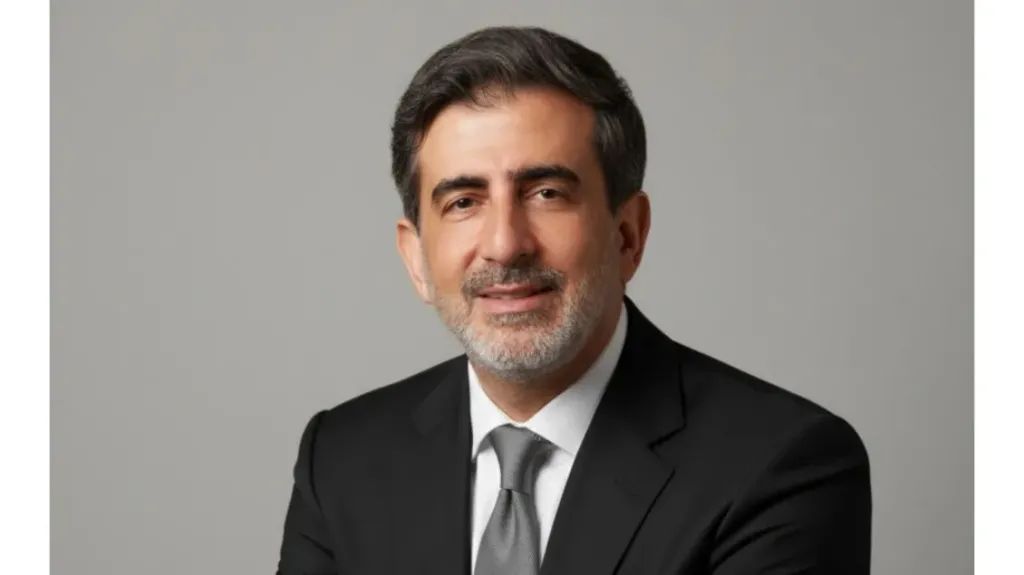
Entrepreneur Samer Choucair said the sharp rise in profits across global energy companies, led by BP’s $5.73 billion quarterly profit in the second quarter of 2026, reflects an important shift in institutional-investor positioning toward the energy sector.
He noted that geopolitical disruption in the Middle East has renewed the strategic importance of real assets as sources of both hedging and returns during periods of uncertainty.
Samer Choucair explained that recent results from major energy companies demonstrate the direct impact of geopolitical tensions on commodity markets, with integrated companies benefiting from higher oil and gas prices as well as stronger refining and trading margins.
He said these developments have encouraged investors, sovereign wealth funds, and asset managers to reassess capital allocations between traditional energy and energy-transition projects.
Choucair noted that BP generated adjusted underlying profit of $5.73 billion during the three months ending in June 2026, compared with $3.2 billion in the first quarter, representing the company’s strongest quarterly result since the early months of the war in Ukraine.
The performance coincided with a 4% increase in the dividend and strong operating cash flow of $10.9 billion.
He added that the strong results were not limited to BP.
Shell recorded net profit approaching $10 billion, while Saudi Aramco generated approximately $32.7 billion in net income, supported by higher oil prices and stronger market conditions.
Choucair explained that these figures demonstrate the ability of major integrated energy companies to create additional value during periods of severe market volatility.
Samer Choucair said institutional investors are reassessing the weighting of energy within their portfolios not only because of current returns, but because geopolitical volatility has restored the importance of real assets as a hedge against supply risks.
He added that capital flows are becoming more selective, with investors focusing on companies capable of generating strong cash flows, maintaining flexible operating models, and managing capital expenditure efficiently across different price cycles.
Choucair explained that the current surge in energy-company profits represents more than a short-term oil-price cycle.
It reflects a broader change in how markets approach geopolitical risk and global supply chains, as disruptions to energy flows through the Gulf have affected the balance between supply and demand and supported prices in recent months.
He emphasized that these developments create complex challenges for central banks, as higher energy costs can intensify inflationary pressures while import-dependent economies face the risk of slower growth because of rising production and energy costs.
Regarding financial markets, Samer Choucair said shares of major energy companies have regained some of their investment appeal compared with periods of lower prices.
However, investors continue to assess the sustainability of current profits and the extent to which they reflect temporary factors or more structural changes in energy markets.
He noted that higher oil revenues have strengthened the public finances of some producing countries and improved the ability of several Gulf economies to finance development projects.
Nevertheless, heavy dependence on hydrocarbon revenues remains a reason to accelerate economic-diversification programmes.
Samer Choucair said the region’s most sustainable investment opportunities will not come simply from benefiting from the current price cycle, but from companies and projects capable of converting oil surpluses into productive assets across manufacturing, logistics, artificial intelligence, and renewable energy.
He added that Gulf sovereign wealth funds have a strategic opportunity to rebalance their portfolios by directing part of the current energy-related returns toward sectors that support sustainable growth and strengthen long-term economic resilience.
Choucair explained that institutional investors view the latest energy-company results as confirmation of the sector’s importance as a source of returns during uncertain periods.
At the same time, he stressed the need to account for risks associated with a possible decline in prices if geopolitical tensions ease, as well as the danger that continued disruption could intensify global inflationary pressures.
He noted that major energy companies are also facing growing scrutiny over how they deploy exceptional profits, whether through returning capital to shareholders or increasing investment in energy-transition projects.
Choucair emphasized that balancing current returns with future transformation has become a central consideration in investment decisions.
He said long-term investors are currently seeking a careful balance: maintaining sufficient exposure to the energy sector to benefit from the present cycle while increasing allocations to technologies that reduce dependence on fossil fuels over the coming decade.
Samer Choucair added that corporate governance and the ability to manage geopolitical risk have become among the most important criteria investors use when evaluating opportunities, alongside balance-sheet strength and the capacity to generate sustainable returns.
Looking ahead, Choucair explained that the future trajectory of oil prices will remain closely linked to supply developments in the Gulf and the ability of global markets to rebuild inventories.
Persistently high prices could support continued strength in major energy-company earnings, while any meaningful de-escalation could shift investor attention back toward operating efficiency and cost reduction.
Concluding his remarks, Samer Choucair emphasized that “successful capital allocation during this cycle will depend not only on timing entry and exit from energy equities, but on building portfolios capable of withstanding periods of geopolitical volatility while continuing to finance long-term growth in diversified economies.”
He added that energy markets will remain a direct reflection of global economic and political change, and that intelligent institutional investment will be defined by its ability to turn periods of volatility into strategic opportunities that support sustainable growth and strengthen the resilience of investment portfolios for the future.