
Samer Choucair: The Resilience of the British Monarchy Reveals New Investment Opportunities in Tourism
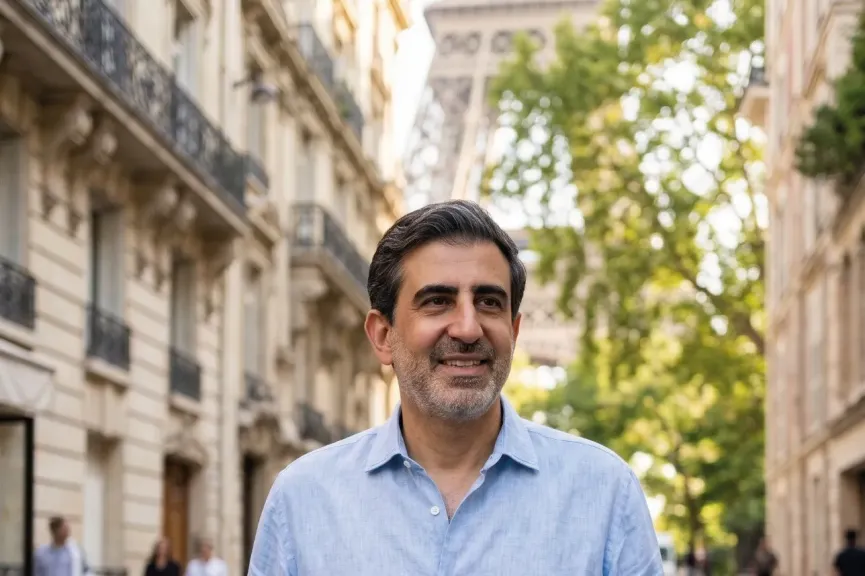
Entrepreneur Samer Choucair said the British monarchy’s ability to preserve its position as one of the world’s most prominent symbols of soft power despite internal changes in recent years offers investors an important example of how long-term institutional value can be protected and separated from risks associated with individuals.
Choucair explained that the monarchy is not only a historical and cultural symbol, but also an intangible asset with economic significance, linked to multiple sectors including tourism, heritage brands, media, luxury industries, and increasingly renewable-energy investment through assets associated with the Crown Estate.
Samer Choucair noted that the British economy continues to benefit from the monarchy’s economic impact as part of the country’s tourism and soft-power ecosystem.
He explained that tourism remains an important driver of the UK economy, supporting millions of jobs and contributing significantly to gross domestic product, while the nature of heritage assets requires careful management to balance the preservation of historical identity with the maximization of economic returns.
Choucair said markets favour institutions capable of separating family-related risks from operating value, much as effective governance does in major family-owned companies, where institutional stability becomes a decisive factor in long-term valuation multiples.
He added that this principle has become increasingly important for institutional investors, sovereign wealth funds, and asset managers seeking assets capable of generating stable value over time without excessive exposure to volatility arising from individual events or short-term changes.
Samer Choucair explained that the financing model associated with the monarchy reflects a broader transformation in the relationship between historical assets and the modern economy.
Returns generated by assets associated with the Crown Estate, particularly in renewable energy, have become part of a financing ecosystem that increasingly reflects sustainable-investment and energy-transition trends.
He noted that this connection between heritage and clean energy demonstrates how historical institutions can redefine their economic roles by diversifying revenue sources and linking traditional assets with future-oriented sectors.
Choucair emphasized that global investors increasingly regard brands associated with historical institutions as economically valuable assets, particularly across luxury tourism, premium goods, media, and digital heritage experiences.
Samer Choucair added that reputation management and governance have become fundamental to the valuation of such assets.
Clearly defined boundaries between an institution’s official role and the private lives of individuals associated with it can reduce volatility that might otherwise affect consumer confidence or tourist flows.
He explained that investment in heritage assets is no longer limited to conventional historic sites.
It increasingly extends to digital tourism experiences, content platforms, and visitor-related services, creating opportunities for technology and tourism companies to capture value from historic brands.
Choucair said institutions capable of transforming heritage into an integrated economic ecosystem can generate sustainable returns, particularly when they combine historical identity with digital innovation and financial sustainability.
Regarding the Gulf economy, Samer Choucair emphasized that developments in the management of British soft power offer important lessons for the region, particularly as Saudi Arabia expands its tourism, entertainment, and cultural sectors under Vision 2030.
He noted that the Kingdom’s major tourism projects represent an effort to build globally valuable assets combining visitor experiences, cultural identity, and modern technology.
The British experience of managing a historic institutional brand, he explained, provides useful models for building sustainable tourism assets.
Choucair said the British experience of managing a long-established institutional brand through structural change offers practical lessons for funds such as the Public Investment Fund on how to develop sustainable heritage assets capable of generating stable tourism flows while reducing dependence on individual personalities.
He added that global competition in luxury tourism and soft power is likely to intensify during the coming years, making the ability to build strong institutional brands increasingly important in attracting both capital and international visitors.
Samer Choucair explained that the principal challenges facing heritage assets include fluctuations in visitor numbers, high maintenance costs, and changes in global economic conditions.
However, he noted that these risks can be managed through revenue diversification and investment in technology and sustainable energy.
He emphasized that institutional investors are increasingly focusing on assets that combine cultural value with economic returns, particularly in an investment environment demanding genuine income streams linked to global demand and long-term sustainability.
Choucair noted that the coming phase is likely to see continued capital flows toward sectors integrating heritage tourism, the energy transition, and the digital economy, alongside growing emphasis on governance and the ability to manage institutional risk.
Concluding his remarks, Samer Choucair emphasized that “optimal capital allocation at this stage focuses on portfolios that combine heritage tourism with the energy transition and the digital economy, while institutions capable of separating institutional value from personal volatility remain more attractive to sovereign wealth funds and asset managers over the long term.”
He added that soft power will remain an influential asset in the global economy, and that institutions capable of converting history and heritage into sustainable economic models will retain an important position on the global investment map in 2026 and beyond.