
Samer Choucair: Mubadala’s Investment in Moove Confirms Gulf Capital Is Moving Toward Building the Autonomous-Vehicle Economy
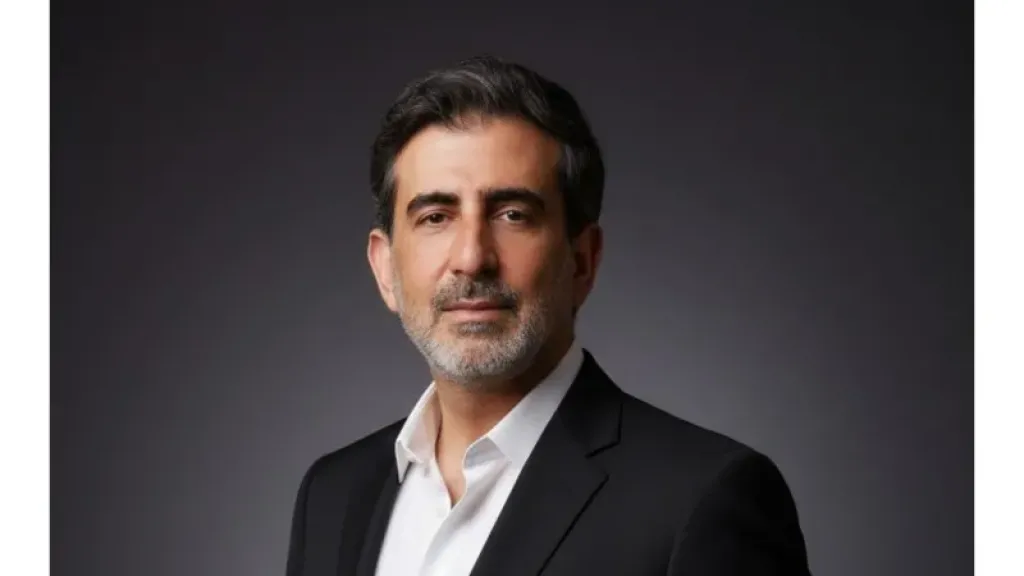
Entrepreneur Samer Choucair said Mubadala’s $250 million investment in Moove represents an important shift in the philosophy of Gulf sovereign investment.
He noted that the transaction is not merely financing for a mobility start-up, but a sign that institutional capital is increasingly moving toward ownership of the infrastructure underpinning the future digital economy, particularly the autonomous-vehicle ecosystem.
Samer Choucair explained that Moove’s valuation rising to approximately $2.1 billion following the investment round reflects growing global investor interest in companies with scalable operating models.
He said the future value of the smart-mobility sector will not be concentrated solely in applications and digital platforms, but increasingly in companies that manage the assets and operating infrastructure required for artificial-intelligence systems to function in the physical world.
Choucair said sovereign wealth funds are beginning to view digital infrastructure in much the same way they previously viewed ports, airports, and energy networks: as strategic assets capable of generating long-term competitive advantages while supporting economic-diversification strategies.
He added that this shift reflects a growing recognition among institutional investors that the next phase of the digital economy will depend on owning and operating infrastructure, not simply developing technology.
Autonomous vehicles provide a clear example of value moving beyond software alone toward an integrated ecosystem encompassing operations, maintenance, fleet management, and logistics services.
Samer Choucair explained that the mobility sector is undergoing a fundamental transformation after years in which investment attention focused heavily on ride-hailing applications and the sharing economy.
The priority is increasingly shifting toward building operational ecosystems capable of managing fleets of intelligent vehicles at scale.
He noted that Moove’s plans to develop specialized operating and maintenance centres for autonomous vehicles illustrate the nature of the next phase.
The industry will require advanced infrastructure encompassing maintenance services, vehicle management, logistical support, financing solutions, and other capabilities necessary to ensure the sustainable operation of autonomous fleets.
Choucair emphasized that the participation of strategic industrial investors, including Toyota-backed Woven Capital, adds an important dimension to the transaction.
It demonstrates that the future of mobility is no longer a field dominated solely by technology companies, but has become a point of convergence between the automotive industry, artificial intelligence, and long-term institutional investment.
Samer Choucair said investors focusing exclusively on companies developing artificial intelligence may overlook an important part of the value chain.
Sustainable returns may gradually shift toward companies managing the operating assets required to deploy these technologies in real-world environments.
He added that the next investment cycle is likely to place greater emphasis on businesses capable of converting technological innovation into scalable operations that generate sustainable cash flows.
Choucair explained that Moove’s evolution from a company founded in 2020 to finance vehicles for ride-hailing drivers into a platform expanding across multiple markets demonstrates how start-ups with a global vision can become influential industry participants when supported by institutional capital and strategic partnerships.
He noted that the company’s expansion into markets including the United Arab Emirates, the United Kingdom, India, and the United States, together with future plans for Europe and Asia, reflects a broader trend toward building smart-mobility companies capable of operating across multiple jurisdictions.
Samer Choucair emphasized that autonomous vehicles will create a new capital-expenditure cycle.
Investment will extend beyond autonomous-driving systems and artificial intelligence into operating and maintenance centres, logistics infrastructure, fleet management, vehicle financing, and supporting charging and service networks.
He noted that this transformation aligns with Gulf countries’ efforts to build economies increasingly driven by technology, innovation, and knowledge capital.
Investment in smart mobility, artificial intelligence, and digital infrastructure is consistent with the objectives of Saudi Vision 2030 and broader economic-diversification strategies across the region.
Choucair said economies that succeed in owning the infrastructure supporting future technologies will be best positioned to achieve lasting competitive advantages because economic value will gradually shift from simply owning technology toward having the ability to operate it efficiently and scale its use.
He added that institutional investors are monitoring these developments through three principal themes: the continuing appetite of sovereign wealth funds for private-company investment, the transition from financing rapid growth toward backing scalable operating business models, and the increasing importance of sectors combining artificial intelligence with physical assets.
Samer Choucair explained that company valuations in the coming phase will no longer depend solely on growth rates or user numbers.
Investors will increasingly assess companies according to their ability to build difficult-to-replicate infrastructure, achieve operating efficiency, and generate stable returns as markets mature.
Concluding his remarks, Samer Choucair emphasized that “the next phase will see investment institutions competing to own the assets that form the backbone of the new digital economy, where value will not be limited to developing technology but will increasingly depend on who can operate it efficiently and at global scale.”
He added that institutional investment in smart-mobility infrastructure is likely to become one of the most significant economic trends during 2026 and beyond as the global economy continues shifting toward ecosystems built around artificial intelligence and advanced operating assets.