
Samer Choucair: Dalia Khorshid’s Experience Shows Investment Leadership Has Become a Strategic Asset Beyond Government Roles
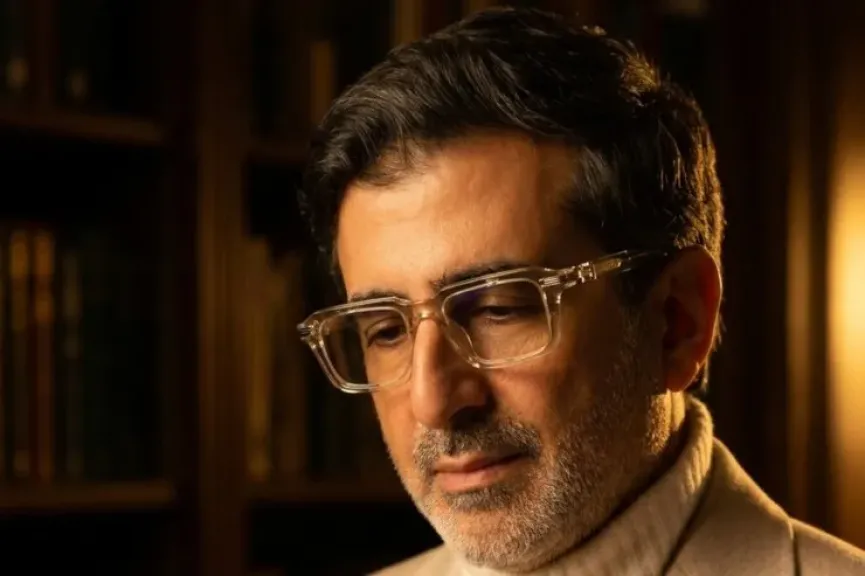
Entrepreneur Samer Choucair said Dalia Khorshid’s professional career reflects a fundamental shift in the concept of modern economic leadership, with expertise in capital management and building investment institutions becoming one of the most important strategic assets extending beyond government positions or traditional executive roles.
Choucair explained that the movement of economic leaders between the public and private sectors is no longer merely a career path. It has become part of a broader ecosystem connecting economic reform, capital-market development, stronger governance, and the attraction of long-term investment.
Samer Choucair noted that Dalia Khorshid’s experience represents a clear example of this transformation, combining government experience during an important period of economic change with subsequent work in the financial and investment sectors.
He said this reflects the increasing value of leaders capable of understanding both economic policy and the mechanisms of capital allocation.
Choucair said the true value of economic leaders is not measured by the positions they hold, but by their ability to build institutions capable of creating sustainable shareholder value and translating economic visions into measurable operating and investment outcomes.
He added that emerging economies increasingly require leaders with a dual understanding of the regulatory environment and investor requirements, particularly during periods of economic transformation that demand improvements in the business environment, deeper capital markets, and more efficient institutions.
Samer Choucair explained that Dalia Khorshid’s tenure as Egypt’s Minister of Investment in 2016 came during a period of broad economic reforms aimed at improving the investment climate, facilitating company formation, and strengthening the Egyptian economy’s ability to attract foreign investment.
He noted that the importance of such experience is not limited to decisions made while holding government responsibility, but also lies in the ability to transfer that expertise into the private sector and contribute to the development and growth of financial and investment institutions.
Choucair emphasized that the movement of economic leaders from the public sector into investment institutions reflects the market’s need for expertise capable of connecting public policy with the requirements of private capital, particularly in economies undergoing restructuring and diversification.
Samer Choucair said institutional investors do not evaluate markets on the basis of a single decision. Instead, they assess a country’s ability to create a stable economic framework in which companies can grow over many years.
He added that economic reforms generate their greatest impact when they translate into more efficient institutions, deeper financial markets, and an investment environment capable of strengthening confidence among domestic and international investors.
Choucair explained that governance has become one of the most important factors determining the attractiveness of investment institutions.
Company valuations no longer depend solely on short-term financial results, but increasingly incorporate management quality, capital-allocation efficiency, and leadership’s ability to manage risk and deliver sustainable growth.
He noted that executives remaining in their positions with shareholder support often reflects market confidence in the strategy being pursued and management’s ability to execute growth plans, which can be an important factor in attracting long-term capital.
Samer Choucair emphasized that sovereign wealth funds and global asset managers are placing increasing importance on governance quality and institutional capability when making investment decisions, particularly as the global cost of capital remains elevated and the need for more efficient business models grows.
He explained that these changes are particularly important for Arab economies as Egypt and Gulf countries seek to deepen their capital markets, strengthen the role of the private sector, and increase international investor participation in strategic industries.
Choucair noted that the objectives of Saudi Vision 2030 align closely with this direction through their focus on developing the financial sector, strengthening institutional investment, increasing private-sector participation, and building a more competitive business environment.
Samer Choucair said future competition between economies will not be determined solely by the scale of investment incentives, but by countries’ ability to build strong financial institutions capable of allocating capital efficiently and converting economic reforms into sustainable growth.
He added that markets with executive leaders who combine regulatory experience, financial discipline, and a long-term investment perspective are better positioned to attract capital, particularly in financial services, asset management, infrastructure, and the digital economy.
Choucair explained that global investors today are looking for strong institutions rather than individual success stories alone.
Management quality, the ability to build effective teams, and robust governance systems have become some of the most important criteria for evaluating investment opportunities.
He emphasized that the coming period will see increasing demand for leaders capable of managing economic transformation and converting reforms into platforms for institutional growth, particularly as regional economies expand diversification programmes and investment in future-oriented sectors.
Concluding his remarks, Samer Choucair emphasized that “sustainable value creation begins with the quality of capital allocation, management efficiency, and the ability to convert economic reforms into enduring institutional growth.”
He added that investment leadership has become one of the most important assets in the modern economy, and that institutions capable of attracting talent combining strategic vision with execution discipline will be best positioned to compete for global capital in the next phase.