
Samer Choucair: Narratives About Hidden Financial Elites Reveal a Crisis of Trust More Than Real Centres of Power in the Global Economy
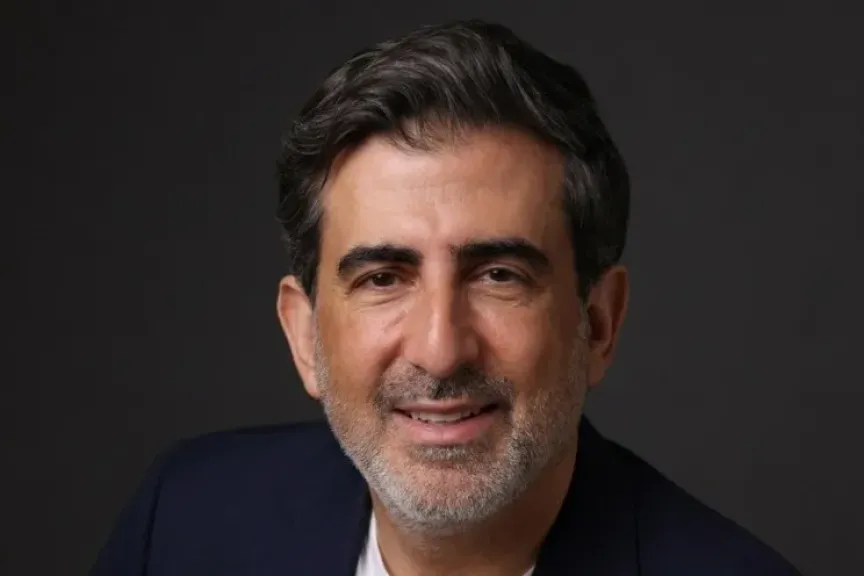
Entrepreneur Samer Choucair said the spread of narratives surrounding so-called “hidden financial elites” during periods of economic uncertainty does not indicate that a single entity controls the global financial system. Rather, it reflects a deeper phenomenon: declining trust in institutions and a widening gap between the complexity of the global economy and individuals’ ability to interpret rapid economic change.
Choucair explained that such narratives typically re-emerge during periods of high inflation, rising debt, and growing geopolitical tensions, when investors and societies seek simplified explanations for complex economic developments shaped by multiple interacting factors, including monetary policy, government spending, market cycles, and technological transformation.
He said the phenomenon should not be assessed by following the narratives themselves, but by understanding the economic and psychological conditions that allow them to spread, because markets are influenced not only by data but also by confidence, expectations, and perceptions about the future.
Samer Choucair added that the global financial system has become too complex and too widely distributed to be controlled by a single institution, family, or organization.
Economic power today is dispersed across central banks, governments, sovereign wealth funds, asset managers, insurance companies, financial markets, and regulatory institutions.
He noted that some historic financial families and institutions played influential roles during particular phases of global economic development, but interpreting modern market movements as the result of decisions by a single actor is inconsistent with the structure of today’s financial system, which depends on a broad network of participants and interconnected decisions.
Choucair identified elevated global debt as one of the principal reasons these narratives gain traction.
He explained that debt has become one of the largest structural challenges facing the global economy, but it is not the result of control by any single party. Instead, it reflects a complex combination of fiscal policy, interest rates, inflation, and investor confidence.
He said the more important investment question is not who owns the debt, but how the debt is managed, because debt management, monetary policy, and institutional quality are the factors that ultimately influence asset valuations and capital flows.
Samer Choucair emphasized that periods of economic crisis often produce greater demand for explanations that offer simple, comprehensive answers to complex events.
Behavioural economics helps explain this tendency through individuals’ preference for narratives that create a sense of understanding and control in an environment characterized by uncertainty.
He noted that this phenomenon can also affect financial markets by influencing investor behaviour, whether by increasing risk aversion or generating short-term price movements driven more by sentiment than by fundamental analysis.
Choucair explained that institutional trust has become one of the most important economic assets of the modern era.
The quality of institutions, transparency of data, independence of monetary policy, and effectiveness of regulatory frameworks directly affect financing costs and the ability of markets to attract long-term investment.
He said institutional investors do not base their decisions on widely circulated narratives, but on institutional strength, management quality, data clarity, and economies’ capacity to generate sustainable value over time.
Samer Choucair added that the rapid spread of information through digital platforms is creating new challenges for companies and financial institutions.
Reputation management, information verification, stronger disclosure, and sound governance have become essential to preserving investor confidence.
He explained that listed companies and investment institutions must now build more effective communication channels, particularly in an environment where information circulates rapidly and economic analysis can easily become mixed with unverified content.
Regarding Gulf markets, Samer Choucair emphasized that strengthening institutional trust is a critical factor in the region’s ability to attract global capital, particularly as economic-diversification programmes expand and domestic capital markets continue to develop.
He noted that Saudi Vision 2030 and broader economic-development programmes across the Gulf depend heavily on building investment environments characterized by transparency, regulatory stability, and clear governance.
These factors have become even more important as digital information exerts a growing influence on investor decision-making.
Choucair said the competitive advantage of markets in the coming phase will depend not only on the scale of investment opportunities, but also on institutions’ ability to build trust and convert regulatory stability and transparency into long-term economic value.
He added that successful investors distinguish between economic narratives and economic analysis.
Compelling stories may influence markets for short periods, but long-term investment decisions depend on deeper factors such as productivity, innovation, profitability, economic policy, and management quality.
Samer Choucair explained that the major transformations likely to shape the future of the global economy over the coming years will emerge from structural forces such as artificial intelligence, the reconfiguration of supply chains, the energy transition, and industrial development, rather than assumptions that a single entity controls the direction of the global economy.
Concluding his remarks, Samer Choucair emphasized that “long-term capital will always seek strong institutions, transparency, and stability, and the ability to distinguish between informational noise and genuine economic trends has become one of the most important skills for investors in the modern era.”
He added that markets will continue to face waves of competing economic narratives during periods of uncertainty, but genuine value will remain tied to institutions’ ability to generate growth, manage risk, and deliver sustainable long-term returns.