
SAR 399 Million in Deals as Samer Choucair Says Knowledge Economic City Is Redefining Property-Development Models
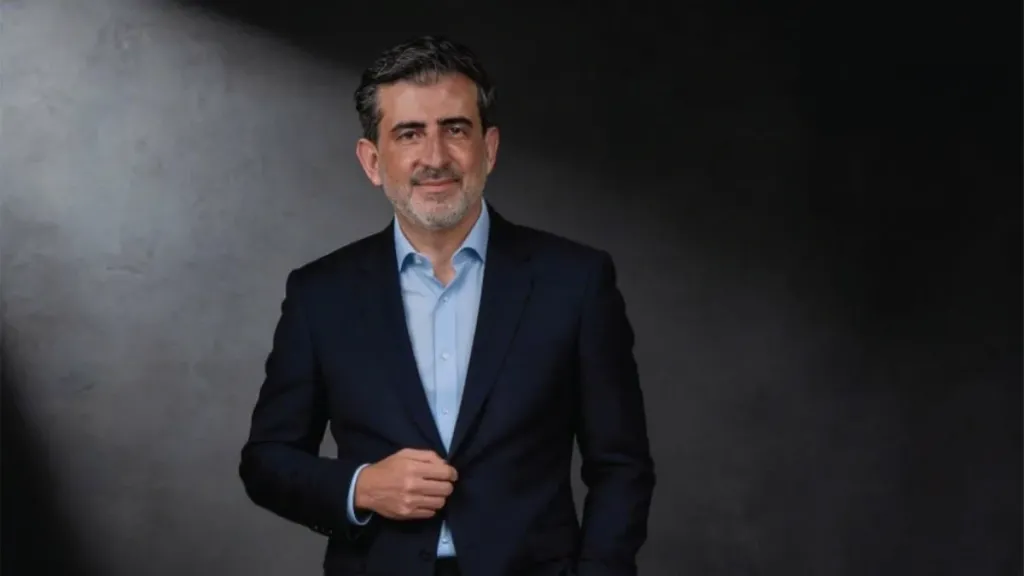
Entrepreneur Samer Choucair said the latest transactions completed by Knowledge Economic City reflect a strategic transformation in Saudi Arabia’s property-development model, with land sales exceeding SAR 399 million and preliminary reservations approaching half a billion riyals following the opening of property ownership to non-Saudis within approved geographic zones.
Choucair explained that these developments demonstrate an accelerating effort to monetize the company’s land portfolio and shift toward models based on structured partnerships and real-estate funds, in line with the objectives of Saudi Vision 2030 to strengthen religious tourism, improve quality of life, and diversify the economy.
He added that this transformation creates new opportunities for institutional investors to reprice property assets in Madinah.
The market is gradually moving away from land-holding strategies and toward models that generate faster cash flows and improve capital-allocation efficiency.
Property development enters a new phase
Samer Choucair noted that Madinah’s property-development sector is undergoing a structural transformation driven by policies allowing non-Saudis to own property within approved geographic zones, alongside the completion of infrastructure across major projects such as Knowledge Economic City.
He explained that the market is no longer limited to conventional residential development.
It increasingly relies on mixed-use projects combining housing, hospitality, and retail, supported by a strategic location near the Prophet’s Mosque and the Haramain High-Speed Railway station.
Choucair added that this shift gives institutional investors an opportunity to redirect capital toward property assets supported by sustainable demand connected to Hajj, Umrah, and religious tourism, whether through development partnerships or private real-estate funds.
A substantial land portfolio and more efficient development models
Samer Choucair explained that Knowledge Economic City owns a land portfolio of between 6.8 million and seven million square metres within Madinah’s urban boundaries.
The portfolio has reached an advanced level of readiness, enabling the company to enter rapidly executed development partnerships.
He noted that the company relies on three principal models: direct land sales; structured partnerships in which land is contributed as an in-kind stake while the partner provides financing, design, construction, and execution; and direct development, either independently or through private real-estate investment funds.
Choucair added that the latest transactions included the sale of three land plots for a combined net value of approximately SAR 398.8 million, with expected profits exceeding SAR 360 million before expenses.
He explained that the first transaction was valued at approximately SAR 169 million and involved a private real-estate fund, while the second was worth about SAR 229 million and involved two developers seeking to establish a fund for a mixed-use project.
These transactions help maximize returns from a land portfolio with a relatively low book value while providing liquidity that can be redeployed into new strategic projects.
Structured partnerships improve investment efficiency
Samer Choucair noted that the development agreement signed with Al Rashid Real Estate Company for the Al Multaqa Residence project represents an advanced model of property partnership.
Knowledge Economic City contributes the land as an in-kind stake, while Al Rashid is responsible for financing, design, construction, and sales.
He added that the model is intended to accelerate development and transform the project into an eastern gateway to Madinah.
Other developments, including Al Alya, have recorded contractual sales and reservations exceeding SAR 1 billion, with significant participation from non-Saudi buyers.
Choucair emphasized that moving away from long-term land holding toward sales or partnerships that generate immediate profits while preserving a share of future returns represents an important improvement in capital-allocation efficiency.
It also reduces the risks associated with delayed execution.
He added that this approach is aligned with the preferences of sovereign wealth funds and institutional investors, which increasingly favour structures based on risk sharing and measurable cash-flow generation over medium-term investment horizons.
Opening ownership to non-Saudis strengthens capital inflows
Samer Choucair explained that the implementation of property-ownership rules for non-Saudis within designated areas of Madinah, including Knowledge Economic City, generated preliminary reservations approaching half a billion riyals within a short period.
He noted that demand was particularly strong among non-Saudi Muslim buyers from Egypt, Pakistan, Malaysia, Indonesia, and Gulf countries.
Choucair added that the policy creates an important channel for attracting foreign direct investment into property assets supported by sustainable tourism demand.
This is particularly significant under the Pilgrim Experience Programme’s objectives to increase visitor numbers, supporting demand across housing, hospitality, and retail.
He emphasized, however, that the restriction limiting ownership in the holy city to Muslims remains an important regulatory factor that must be incorporated into investment models.
Strong demand must prove sustainable
Samer Choucair noted that the rapid pace of reservations following the opening of ownership indicates a clear shortage of high-quality supply within the permitted zones.
He added that institutional investors will closely monitor the rate at which preliminary reservations are converted into final sales contracts, as well as the sustainability of demand amid changes in global interest rates and regional liquidity.
Choucair emphasized that markets will also assess how proceeds from land sales are used to accelerate new projects, as this will determine whether the company can transform its land portfolio into a sustainable growth engine rather than relying on exceptional transactions.
Real-estate funds create new opportunities for investors
Samer Choucair explained that Knowledge Economic City, listed on the Saudi Exchange under ticker 4310 within the real-estate management and development sector, recorded notable share-price gains during 2026 following a series of transaction and partnership announcements.
The company’s market capitalization exceeded SAR 5 billion.
He added that expected profits from the land transactions could support financial performance during the coming quarters, particularly after ownership-transfer procedures are completed in accordance with International Financial Reporting Standards.
The current models also create opportunities for private investment funds to participate through property vehicles, either as land investors or development partners.
Choucair noted that the Knowledge Gardens project has received letters of intent for the establishment of a fund with a development value of up to SAR 7.5 billion.
This reflects the growing appeal of investment structures that distribute risk among developers, financiers, and operators.
Success depends on recurring revenue
Samer Choucair emphasized that the success of the strategy will not be measured solely by the value of land-sale transactions, but by management’s ability to balance asset monetization with the retention of stakes in projects capable of creating long-term value.
He added that institutional investors will increasingly focus on the company’s ability to convert completed infrastructure into recurring income from rentals, hospitality, and sales, strengthening its long-term market value.
Strategic outlook
Concluding his remarks, Samer Choucair emphasized that Knowledge Economic City provides a focused example of the broader transformation taking place in capital allocation across the Saudi economy, through investment in assets capable of generating sustainable value supported by domestic, regional, and international demand.
He noted that as policies supporting non-Saudi ownership continue and investment in religious tourism expands, the next phase is likely to bring additional partnerships and property funds, alongside the launch of mixed-use projects supporting the objectives of Saudi Vision 2030.
Samer Choucair concluded that the developments at Knowledge Economic City represent more than a series of land-sale transactions.
They amount to a comprehensive restructuring of capital allocation in one of the Kingdom’s most strategically important locations.
He emphasized that genuine success will be measured by the ability of these models to attract sustainable institutional capital and convert urban-development readiness into actual growth in revenue and market value.