
Samer Choucair: The Gulf Is No Longer a Secondary Market, but a Global Platform for Long-Term Capital Allocation
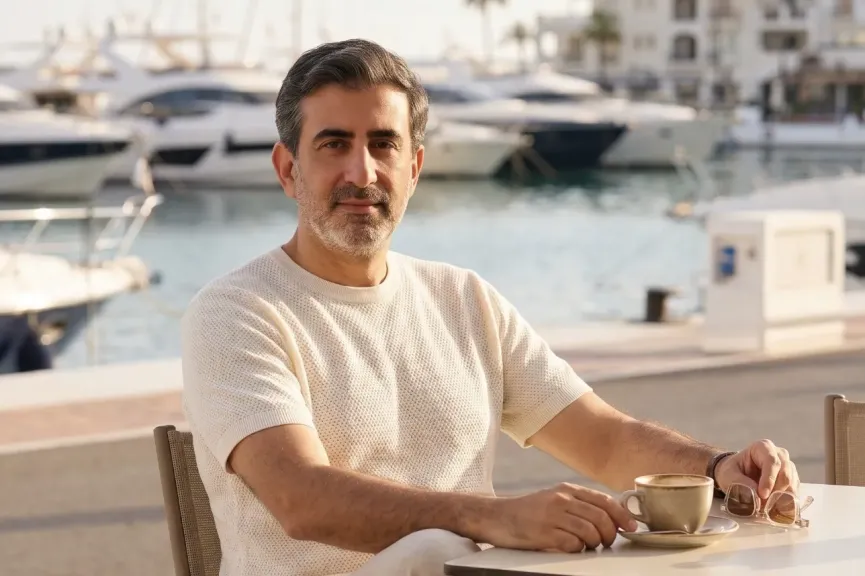
Entrepreneur Samer Choucair said the first close of Brookfield Middle East Partners at approximately $2 billion provides clear evidence of the profound transformation taking place across Gulf institutional-investment markets.
The region is increasingly attracting global capital as a strategic platform for investment in private assets, supported by sovereign partnerships and long-term economic-diversification programmes.
Samer Choucair explained that Brookfield’s announcement of the fund’s approximately $2 billion first close, with Saudi Arabia’s Public Investment Fund participating as an anchor investor alongside several global and regional institutional partners, reflects growing confidence in the Gulf investment environment.
Brookfield’s commitment to invest $500 million of its own capital further aligns the interests of the fund manager with those of its investors.
The fund plans to allocate approximately 50% of its investments to Saudi Arabia while focusing across Gulf Cooperation Council markets on financial, business and consumer services, industrials, technology, and healthcare.
Choucair noted that the first close confirms the continuing flow of institutional capital into the region despite geopolitical tensions.
It also supports the Public Investment Fund’s 2026–2030 strategy, which seeks to maximize investment returns, attract additional foreign capital, and deepen domestic financial markets.
He added that the fund provides an important platform for institutional investors seeking long-term exposure to private assets while benefiting from sovereign partnerships that can reduce execution risks and create new channels for local transactions.
A structural transformation in Middle Eastern private equity
Samer Choucair said the Middle East’s private-equity market is undergoing a clear structural transformation.
It is no longer dependent primarily on direct sovereign liquidity, but is moving toward partnership models that combine global operating expertise with local capitalization.
Brookfield Middle East Partners illustrates this approach through its approximately $2 billion first close led by the Public Investment Fund, alongside Brookfield’s commitment to invest $500 million of its own capital.
He added that the fund will target companies operating in Saudi Arabia and wider regional markets, with nearly half of its capital allocated to the Saudi market.
Its strategies will include buyouts, growth-supporting minority investments, and other opportunities across financial, business and consumer services, industrials, technology, and healthcare.
Choucair noted that Brookfield already manages a regional portfolio worth more than $16 billion across private equity, property, and infrastructure, giving it a strong operating presence developed over more than a decade.
The fund aligns with the Public Investment Fund’s new strategy
Samer Choucair emphasized that the timing of the first close coincides with the new phase of the Public Investment Fund’s 2026–2030 strategy, approved by its board under the chairmanship of the Crown Prince and Prime Minister.
The strategy focuses on maximizing financial returns, improving investment efficiency, and increasing private-sector participation.
Choucair explained that the strategy organizes the fund’s investments into three principal portfolios.
These include a Vision portfolio supporting domestic ecosystems in tourism, urban development, advanced manufacturing, logistics, clean energy, and NEOM; a strategic portfolio for managing core assets; and a financial portfolio targeting sustainable returns.
He noted that the Public Investment Fund’s assets grew from $150 billion in 2015 to more than $900 billion by 2025, while domestic investment exceeded $199 billion between 2021 and 2025.
This demonstrates the scale of Saudi Arabia’s economic transformation.
Choucair added that the new fund supports efforts to deepen the Saudi capital market through international partnerships that expand financing options for local companies and introduce new investment products.
The establishment of the Brookfield Academy in the Kingdom also adds an important dimension of knowledge transfer and national talent development, consistent with Vision 2030’s objective of strengthening institutional capabilities.
Geopolitical volatility has not weakened long-term conviction
Samer Choucair explained that continuing investment commitments from global and regional institutions despite geopolitical challenges, including tensions connected to the conflict involving Iran, reflect an institutional assessment that economic diversification in Saudi Arabia and the Gulf represents a long-term structural opportunity extending beyond short-term risks.
He noted that the fund followed an initial memorandum of understanding signed by the two parties in October 2024 on the sidelines of the Future Investment Initiative.
This reflects a carefully managed negotiation process that culminated in a successful first close.
“This type of partnership represents a transformation in institutional market psychology,” Samer Choucair said. “Global capital no longer views the Gulf as a secondary market dependent on oil-price cycles, but as a platform for allocating capital to private assets connected to clear and tangible economic-diversification agendas.”
He added that the fund manager’s commitment to invest approximately 25% of the first-close amount strengthens alignment among the parties and reduces the agency risks often associated with newly established regional funds.
A new platform for institutional investors
Samer Choucair emphasized that the fund provides institutional investors, sovereign wealth funds, asset managers, and family offices with an important opportunity to gain exposure to private equity in a region experiencing expanding merger and acquisition activity and private financing.
He noted that data for the first half of 2026 indicated a relative recovery in the value of private-equity transactions in Saudi Arabia compared with the previous year, despite a decline in the number of deals.
This reflects a shift toward larger and more selective transactions.
Choucair added that the model’s appeal lies in its combination of sovereign liquidity and global operating expertise, helping reduce execution risks in markets whose secondary markets remain less developed than those in Europe and North America.
Allocating approximately 50% of the fund’s investments to Saudi Arabia is consistent with the Public Investment Fund’s objective of increasing domestic investment while continuing to attract foreign direct capital in support of Vision 2030 priorities across manufacturing, technology, healthcare, and services.
Opportunities remain accompanied by risks
Samer Choucair noted that risks remain, including potential geopolitical volatility, the effect of global interest rates on private-asset valuations, and exit challenges in markets still developing institutional depth.
However, the presence of an anchor sovereign partner and Brookfield’s established regional network can mitigate these risks to some extent.
He explained that the targeted sectors offer broad investment opportunities.
Financial services provide significant potential through the expansion of payment solutions and non-bank financing, while growth in technology and healthcare is linked to localization and digital-transformation agendas.
Industrial companies and business-service providers, meanwhile, stand to benefit from manufacturing and logistics programmes under Vision 2030.
Choucair added that the fund’s launch comes as global asset managers compete increasingly to establish regional investment platforms supported by sovereign liquidity.
Sovereign investors are seeking to participate as active investment partners rather than passive providers of capital, helping raise governance standards and introduce more advanced operating practices into local companies.
Long-term success depends on genuine value creation
Samer Choucair emphasized that the fund’s long-term success will depend on its ability to generate transactions that create genuine added value rather than merely recapitalizing assets.
It will also require the development of capable local teams able to manage investments efficiently.
He added that platforms of this kind will accelerate the maturation of Saudi Arabia’s private-equity market, potentially paving the way for larger domestic funds and more advanced financing rounds in the future.
Concluding his remarks, Samer Choucair said the first close is likely to prepare the ground for additional closings during the year, with capital deployment expected to begin over the coming months.
Investment activity is likely to focus on growth and acquisition opportunities in high-potential GCC markets, with priority given to Saudi Arabia.
Choucair noted that the fund offers institutional investors further evidence of the region’s continuing attractiveness as a destination for private-capital allocation despite global volatility.
He emphasized that the decisive factor will be the ability of partnerships between sovereign institutions and global asset managers to convert investment commitments into assets capable of generating sustainable returns under the objectives of Vision 2030.
Samer Choucair concluded that global institutions are gradually repricing the region’s risks and increasingly favouring models that combine local capitalization with international expertise.
This trend is likely to sustain global asset managers’ interest in Gulf private-equity markets throughout the coming decade.