
Samer Choucair: Gulf Sovereign Wealth Funds Can Lead Investment in the New Nuclear-Energy Cycle
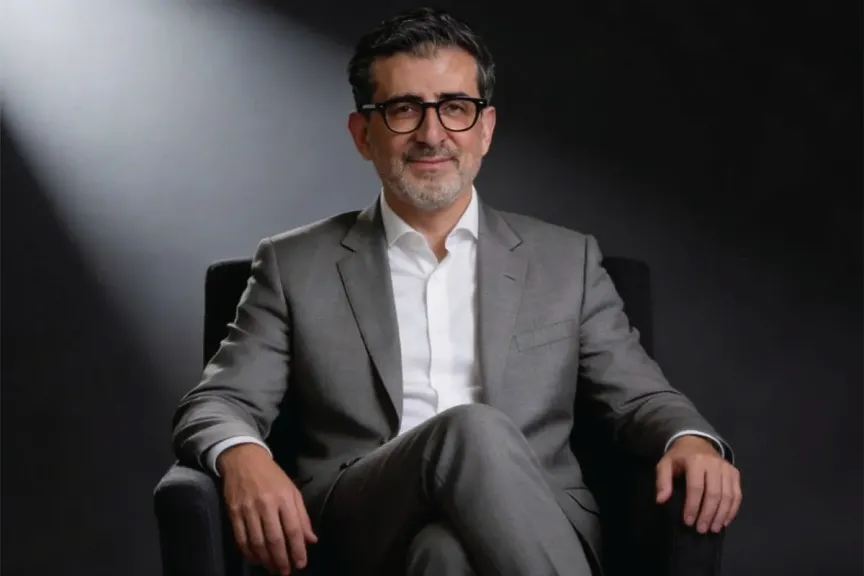
Entrepreneur Samer Choucair said the nuclear-energy sector is entering a period of global structural transformation as demand rises for large-scale investment in reliable, low-emission electricity.
He noted that the principal challenge for investors is not the availability of capital, but the development of financing structures capable of turning nuclear projects into a clearly priced asset class that can be compared with conventional infrastructure investments.
Samer Choucair explained that estimates from the World Nuclear Association indicate that achieving government targets to more than triple global nuclear capacity by 2050 will require average annual investment of $250 billion.
This represents cumulative investment of approximately $6 trillion across the entire nuclear-fuel cycle, from mining to decommissioning.
He noted that these investment requirements come as global demand for reliable baseload electricity accelerates, driven by the rapid expansion of data centres and artificial intelligence, alongside the growing importance of energy security following disruptions to global supply chains.
Choucair emphasized that the nuclear transition represents a structural opportunity for institutional investors across several areas, including supply chains, uranium, small modular reactors, and services connected to the fuel cycle.
It also has direct implications for Gulf economies seeking to diversify their energy sources under long-term strategies.
Nuclear energy returns as a central source of reliable power
Samer Choucair explained that nuclear power is experiencing a strong revival after years of relative decline, as governments and investors increasingly view reactors as a major source of low-emission electricity capable of providing continuous output around the clock.
He noted that the World Nuclear Association’s July 2026 report indicated that current global operating capacity of approximately 403 gigawatts could reach 1,446 gigawatts by the middle of the century if announced government plans are implemented.
Achieving this would require annual investment to rise to approximately $250 billion, compared with current levels of between $65 billion and $75 billion.
Choucair added that the required investment extends beyond the construction of new reactors.
It also includes extending the operating lives of existing units, expanding mining and enrichment capacity, developing global supply chains, and providing the infrastructure and specialized workforce needed to support the sector’s growth.
He noted that the International Energy Agency presents different investment pathways.
Annual expenditure could reach $120 billion by 2030 if announced commitments are implemented and exceed $150 billion under a net-zero scenario, while the nuclear industry association’s higher estimates correspond with the full scale of government ambitions.
Three drivers support the nuclear-investment cycle
Samer Choucair said the current momentum in nuclear energy is supported by three principal drivers: the rapid growth in electricity demand created by data centres and artificial intelligence, the need to strengthen energy security, and nuclear power’s ability to provide baseload capacity supporting intermittent renewable-energy sources.
He explained that major technology companies have already begun seeking long-term power-purchase agreements with existing or planned nuclear plants to secure reliable electricity supplies.
This increases the sector’s appeal to investors seeking assets supported by long-term structural demand.
Choucair noted that China currently leads most additions to global nuclear capacity and is expected to overtake the United States in installed nuclear capacity by the end of the decade.
Advanced economies, meanwhile, are focusing on extending the lives of existing reactors and launching new projects across Europe, Japan, and the United States with government financing support.
The Gulf joins the global nuclear transition
Samer Choucair emphasized that developments in the Gulf reflect the broader global transformation.
The Barakah Nuclear Energy Plant in the United Arab Emirates represents a prominent example, with capacity of 5.6 gigawatts and the ability to provide approximately one-quarter of the country’s electricity requirements following the completion of its four units.
He added that Saudi Arabia took a strategic step in July 2026 by signing a civil nuclear cooperation agreement with the United States.
The agreement opens the way for American companies to participate in developing new reactors and allows the possibility of examining domestic enrichment under specified standards and controls.
Choucair explained that these initiatives support the objectives of Saudi Vision 2030 to diversify the energy mix and reduce domestic dependence on oil.
This would release additional oil volumes for export and create opportunities for the Public Investment Fund and other regional funds to finance long-term projects or invest across global nuclear supply chains.
“Institutional investors no longer view nuclear energy solely as a conventional high-risk sector, but as an opportunity to reprice long-term assets connected to structural electricity demand,” Samer Choucair said. “The challenge is to convert regulatory and construction risks into risks that can be priced through blended-finance structures and public-private partnerships.”
Investment opportunities extend across the fuel cycle
Choucair explained that the sector requires greater private-capital participation alongside public financing.
The principal opportunities include mining and uranium, where global demand for nuclear fuel is expected to increase, as well as conventional reactors and small modular reactors.
Small modular reactors may capture a growing share of new investment because of their flexibility and potential deployment near major centres of demand.
Samer Choucair added that opportunities also extend to enrichment equipment, fuel production, fuel-cycle services, supporting infrastructure, and programmes for training and developing specialized workers.
He cautioned that the main challenge is not a shortage of liquidity, but confidence in project execution.
Institutional investors tend to prefer integrated national programmes over individual projects because such programmes reduce delay risks and create economies of scale across supply chains.
“Capital is available, but confidence in execution is the missing element,” Samer Choucair said. “Institutional investors prefer integrated national programmes to isolated projects because they reduce the risk of delays and allow supply chains to achieve economies of scale.”
Gulf sovereign funds can act as investment catalysts
Samer Choucair said Gulf sovereign wealth funds could play a central role as catalysts by acquiring stakes in global supply companies or financing joint ventures.
This would connect domestic economic-diversification objectives with global returns generated by the nuclear-energy sector.
He noted that the sector continues to face risks, including cost and schedule overruns, the concentration of certain supply-chain components in a limited number of countries, the need for consistent regulatory frameworks, and the importance of public acceptance of nuclear projects.
Choucair explained that financing nuclear projects typically requires long-term revenue guarantees or clearly defined mechanisms for sharing risk between governments and investors.
Continued political and financial support could accelerate expenditure during the 2030s, while failure to reform financing structures could push growth closer to the more conservative scenarios presented by the International Energy Agency.
Transforming nuclear power into a mainstream asset class
“The successful transformation of nuclear energy into a mainstream asset class depends on three elements: standardized commercial frameworks, the development of risk-pricing instruments, and the creation of local and regional supply capabilities,” Samer Choucair said. “Investors who understand these dynamics early will be better positioned to allocate capital across an investment cycle that could last for decades.”
Concluding his remarks, Choucair emphasized that nuclear energy is no longer a marginal option within energy-diversification portfolios.
It has become a major capital opportunity linked to structural changes in electricity demand and energy security.
He said investors who approach the sector as long-term strategic infrastructure will be best positioned to capture value during the coming years.