
Samer Choucair: Saudi Women-Led Beauty Brands Represent a New Consumer Asset Class for Institutional Capital
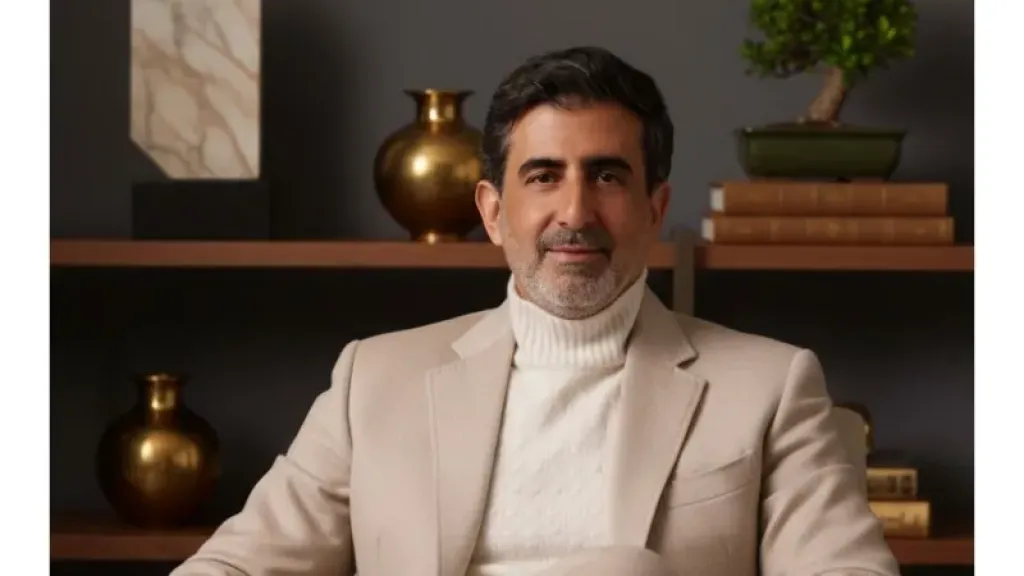
Entrepreneur Samer Choucair said the transformation of the global beauty industry, combined with the rise of women-led entrepreneurial models in Saudi Arabia, is reshaping capital allocation toward a new category of consumer assets combining rapid growth, local identity, and the potential to expand regionally and internationally.
Samer Choucair explained that the global beauty sector is undergoing a structural shift toward direct-to-consumer and organically developed business models that reduce dependence on conventional distribution channels.
This is demonstrated by global entrepreneurs such as Marcia Kilgore, who built five international brands, including Beauty Pie, using operating models focused on developing customer communities, increasing loyalty, and improving capital efficiency.
Choucair noted that this global transformation coincides with clear progress in the Saudi market, where a new generation of women entrepreneurs is establishing local brands capable of competing regionally.
These businesses are benefiting from the economic and social changes supported by Vision 2030, as well as the growth of Saudi Arabia’s entrepreneurial ecosystem and programmes supporting women’s economic participation.
He said the intersection of international expertise and local business models creates an important investment opportunity for sovereign wealth funds, asset managers, and institutional investors, particularly as interest increases in scalable consumer assets capable of generating long-term value.
Samer Choucair added that growth in the beauty industry no longer depends solely on advertising expenditure or distribution through traditional retailers.
It is increasingly determined by brands’ ability to build direct relationships with customers, develop products adapted to local market requirements, and create recurring cash flows with stronger profit margins.
He explained that Beauty Pie provides a clear example of this transformation.
The brand generated revenue exceeding £70 million after raising approximately $100 million in funding, using a membership model that gives consumers access to beauty products at prices close to manufacturing cost.
This followed earlier acquisitions of brands founded by Marcia Kilgore by global groups including LVMH and the Boots alliance.
Choucair noted that the model demonstrates the ability of serial entrepreneurs to transfer operating expertise across different categories and products while building brands capable of expanding through multiple growth cycles.
Samer Choucair emphasized that Saudi Arabia’s beauty and personal-care market is growing rapidly, supported by changing consumer behaviour, higher female participation in the workforce, and rising demand for products designed around the Kingdom’s climate, culture, and specific consumer requirements.
He explained that forecasts indicate the Saudi beauty and personal-care market could exceed $10 billion by the end of the decade, strengthening the sector’s appeal to investors seeking growth opportunities connected to domestic consumption and digital transformation.
Choucair highlighted prominent Saudi brands such as Moonglaze, founded by Yara Alnamlah, which became the first Saudi beauty brand to join Sephora’s Middle East platform following an earlier successful presence at Selfridges.
He also cited Asteri Beauty, founded by Sara Al Rashed, which has expanded into several Gulf markets with a focus on vegan and halal formulations designed to withstand desert conditions, as well as MZN Skincare, founded by Muzon Ashgar, which uses local botanical ingredients and women-led production in Saudi Arabia’s Eastern Province.
Samer Choucair emphasized that the genuine investment value of these models is not determined solely by initial sales volumes, but by their ability to build a measurable and expandable base of repeat customers through membership programmes or loyalty connected to cultural identity.
“The real value of these models does not lie solely in initial sales,” Choucair said. “It lies in the brand’s ability to build a recurring customer base that can be measured and developed, whether through membership or cultural loyalty.”
He added that investment funds and financial institutions increasingly favour assets combining high gross margins, operating flexibility, and the ability to grow without depending heavily on conventional expansion through physical stores.
Choucair noted that Saudi brands connecting their products to local identity, climatic conditions, and cultural preferences possess a competitive advantage that international brands may struggle to reproduce quickly.
This makes them potential candidates for private equity and sovereign wealth fund investment focused on supporting local content.
“Women entrepreneurs who connect their products with local identity and climate create a competitive advantage that global brands cannot easily replicate,” Samer Choucair said. “This makes their businesses natural candidates for private equity and sovereign wealth funds seeking to support domestic content.”
He explained that this trend is consistent with the continuing increase in women-owned small and medium-sized enterprises within the Saudi economy, whose share has exceeded 40% according to some estimates, supported by economic-empowerment programmes under Vision 2030.
Choucair added that Vision 2030 provides a clear institutional framework for supporting consumer industries, digital retail, tourism, and customer experiences.
This gives emerging women-led brands an opportunity to develop from local ventures into scalable investment assets with global potential.
He noted that the Public Investment Fund and other institutional investors could consider these brands strategic assets capable of increasing the non-oil sector’s contribution, strengthening cultural exports, and building Saudi brands with an international presence.
Samer Choucair emphasized that the experiences of Moonglaze and Asteri Beauty demonstrate the possibility of moving from the domestic market to global platforms while preserving identity and cultural distinctiveness.
“The most important lesson is to replicate operating efficiency rather than copy the business model itself,” Choucair said. “Success depends on a deep understanding of local behaviour and the ability to expand with discipline.”
He explained that the growth of e-commerce and improvements in Saudi Arabia’s digital infrastructure will increase opportunities for capital to flow toward brands combining pricing innovation, sustainability, and the ability to satisfy consumers’ cultural and lifestyle requirements.
Choucair noted that the sector is not without risk.
Globally, businesses face increasing regulatory pressure regarding product-marketing claims, while domestic challenges include intensifying competition and the need for sufficient working capital to support expansion.
He added that any slowdown in discretionary consumer spending could affect growth rates, although the broader outlook remains supported by government policies promoting women’s entrepreneurship and digital transformation.
Samer Choucair emphasized that institutional capital is increasingly moving toward business models combining recurring cash flows with strong operating flexibility.
The experiences of successful international entrepreneurs provide valuable lessons in building multiple brands, while Saudi women entrepreneurs offer locally rooted models with considerable potential for expansion.
“Investors who focus on the quality of the operating model and its connection to local identity will be better positioned to capture opportunities during the current cycle,” Choucair said.
Concluding his remarks, Samer Choucair emphasized that the continued implementation of Vision 2030 programmes and the expanding participation of women in the Saudi economy will make consumer brands led by Saudi women an increasingly important area of interest for sovereign wealth funds and asset managers.
He said these businesses represent investment opportunities combining long-term growth, digital transformation, and the ability to create sustainable value across the beauty industry and modern retail sector.