
Samer Choucair: The Federal Reserve’s Decision to Hold Rates Is Reshaping Global Capital Flows
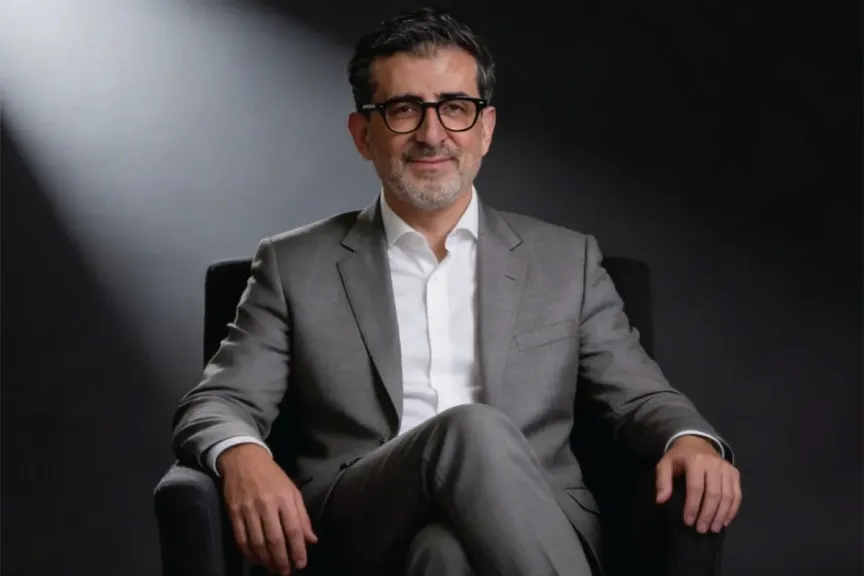
Entrepreneur Samer Choucair said the US Federal Reserve’s decision to keep interest rates within a range of 3.50% to 3.75% reflects a new phase of caution in the management of global monetary policy.
He noted that the continuing commitment to the 2% inflation target is reshaping investor expectations regarding the cost of capital and the direction of investment allocation during the coming period.
Samer Choucair explained that the decision to hold interest rates unchanged for the fifth consecutive meeting, although widely anticipated by markets, sends important signals about the current environment, particularly amid continuing uncertainty over the inflation outlook and the future direction of US monetary policy.
He noted that the committee’s nine-to-three vote confirms the existence of a broad debate regarding the need for further monetary tightening to address inflationary pressure.
Choucair said Federal Reserve Chair Kevin Warsh’s reaffirmation of the institution’s full commitment to the 2% inflation target reflects a determination to preserve long-term monetary credibility and avoid compromising in the face of rising prices.
He explained that markets are increasingly focusing on actual economic data rather than relying on predetermined expectations regarding the future path of interest rates.
Samer Choucair added that the rise in long-term bond yields following the decision reflects investors’ reassessment of inflation risk and the possibility that financing costs will remain elevated for longer.
It does not necessarily indicate an immediate expectation of further interest-rate increases, but is encouraging investment institutions to review their strategies across fixed-income markets and assets that are highly sensitive to borrowing costs.
He noted that US monetary policy has become a central factor in redirecting global capital flows.
Investors are increasingly seeking markets capable of generating sustainable growth under tighter financial conditions, while economies with strong fundamentals and clear diversification programmes are becoming better positioned to attract long-term investment.
Choucair explained that global markets reacted to the decision in a complex manner.
Some expectations of future interest-rate increases declined, while long-term bond yields rose as inflation concerns persisted.
Sectors most exposed to financing costs, including technology and real estate, also came under pressure as investors reassessed the value of future cash flows.
“The current environment is encouraging institutional investors to reconsider the meaning of asset quality,” Samer Choucair said. “Companies with strong cash flows and resilient balance sheets are better equipped to manage elevated interest rates, while economies with independent productive capacity are becoming more attractive to global capital.”
Choucair emphasized that Saudi Arabia possesses several advantages that position it to benefit from the current transformation, particularly as it continues implementing Vision 2030 and economic-diversification programmes designed to reduce dependence on traditional sectors and expand investment in technology, industry, and renewable energy.
He noted that the Saudi corporate earnings season will provide an important indicator for investors during the coming period.
Several sectors, particularly banking and petrochemicals, are expected to deliver strong performance, supported by domestic economic growth and the continuing development of the business environment.
Samer Choucair explained that investment in artificial intelligence represents one of the principal drivers capable of strengthening Saudi economic growth during the coming years.
The Kingdom is working to build an integrated ecosystem encompassing digital infrastructure, talent development, and a regulatory environment that supports innovation and investment.
He said the widespread adoption of artificial-intelligence technologies could create long-term opportunities across several sectors, including the digital economy, financial technology, digital healthcare, and advanced logistics.
These areas are attracting increasing attention from venture capital funds and institutional investors worldwide.
Choucair added that higher global financing costs increase the importance of projects capable of generating strong structural returns, particularly those connected to long-term economic transformations and demonstrating a clear ability to create sustainable value.
He said investors increasingly view Gulf economies as better positioned to withstand global interest-rate volatility because of their strong fiscal positions, sovereign reserves, and ambitious development programmes.
This gives them a competitive advantage in attracting foreign direct investment.
Samer Choucair explained that the coming phase will place greater emphasis on the quality of capital allocation, as investors shift away from pursuing rapid growth and toward assets combining financial stability with the capacity to deliver sustainable expansion.
He identified the possible return of inflationary pressure caused by supply shocks or geopolitical developments as one of the principal risks requiring close monitoring.
Such developments could encourage the Federal Reserve to maintain a restrictive monetary policy for longer, increasing financing costs globally.
Choucair said the current environment offers important opportunities in Islamic finance, sustainability-linked bonds, and private investments in projects generating positive real returns, alongside sectors connected to digital transformation and future energy systems.
Concluding his remarks, Samer Choucair said: “In an environment characterized by monetary uncertainty, investing in economies building their own productive capabilities is more important than ever. Saudi Arabia provides a clear example of an economy developing new growth engines through Vision 2030 and artificial intelligence, making it a market worthy of attention from investors seeking long-term value.”