
Samer Choucair: Saudi Economic Contraction Demonstrates the Strength of Diversification and the Non-Oil Sector’s Ability to Absorb Shocks
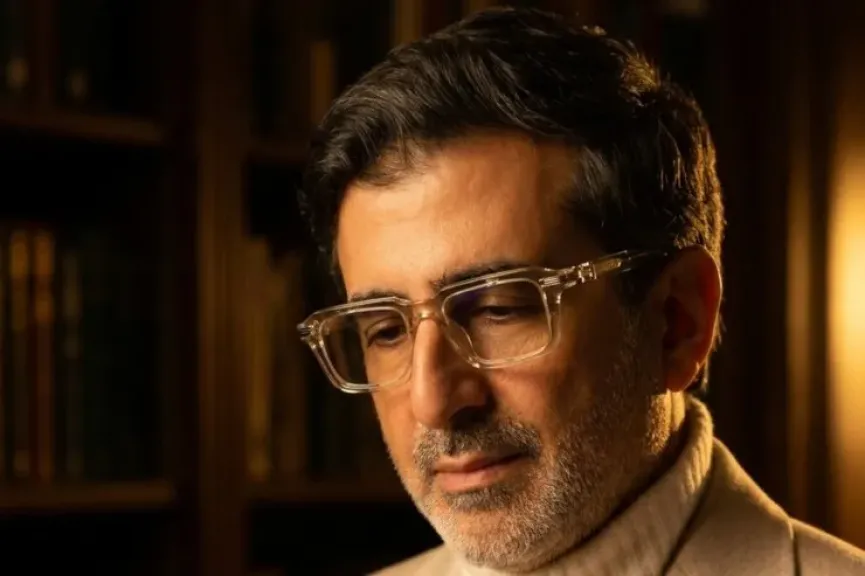
Entrepreneur Samer Choucair said Saudi Arabia’s real gross domestic product contracting by 4.8% year on year during the second quarter of 2026 represents an important test of the resilience of the Kingdom’s economic model.
He noted that continued growth in non-oil activities confirms the success of the structural transformation led by Vision 2030 in building an economy better equipped to withstand energy-market volatility and geopolitical challenges.
Samer Choucair explained that the contraction recorded during the second quarter was driven primarily by a sharp 24.7% decline in oil activities, which were affected by regional disruption and changes in oil-export flows.
However, the effect did not spread across the entire economy to the extent that might have occurred during previous cycles, owing to the broader base of non-oil activities and continued investment in emerging sectors.
Choucair said the 0.6% growth in non-oil activities despite current conditions reflects an important transformation in the structure of the Saudi economy.
Sectors including manufacturing, tourism, logistics, and technology are increasingly capable of supporting growth and reducing dependence on the oil cycle.
He noted that the current contraction is the largest since the COVID-19 pandemic in 2020, but differs in the nature of its impact.
The Saudi economy now possesses a more diverse range of tools for responding to shocks, including a strong fiscal position, expanding strategic investment, and the growth of sectors connected to Vision 2030.
Samer Choucair added that weaker oil activities were the principal contributor to the overall decline, while non-oil and government activities made positive contributions.
This reflects a gradual shift in the sources of economic growth compared with earlier periods, when performance was more closely tied to movements in oil prices and production.
“The current oil shock has not developed into a broad-based economic contraction because the non-oil economy has become larger and more capable of absorbing pressure,” Choucair said. “This demonstrates the success of the transition from a model dependent on a single source of growth to a more diversified model driven by investment, productivity, and new sectors.”
Samer Choucair emphasized that institutional investors view the current phase as a test of the Saudi economy’s ability to distinguish between short-term volatility and long-term opportunity.
Their focus is no longer limited to quarterly GDP performance, but increasingly extends to the economy’s capacity to build productive and sustainable sectors.
He noted that continuing strategic investment, led by the Public Investment Fund and programmes designed to attract foreign direct investment, strengthens the appeal of the Saudi market to international capital seeking opportunities connected to structural growth.
Choucair explained that the economic slowdown may lead to some short-term repricing in debt markets.
However, strong financial reserves and a balanced approach to public-debt management reduce financing and restructuring risks while giving the economy greater capacity to navigate periods of uncertainty.
Samer Choucair added that equity-market performance may vary considerably between sectors, with companies linked to the non-oil economy likely to retain their appeal.
Infrastructure, commercial real estate, financial services, and technology are particularly well positioned because they benefit from long-term economic transformation.
“Investors who focus solely on quarterly growth figures may fail to see the full picture,” Choucair said. “The decline in oil activity is connected to temporary factors, while non-oil growth reflects accumulated investment in productivity, infrastructure, and new capabilities that can support expansion over the coming years.”
He emphasized that the current phase is creating important investment opportunities across several sectors, led by infrastructure and logistics, supported by the expansion of ports, railways, and supply-chain development.
Manufacturing and processing industries connected to Vision 2030 and renewable energy also offer significant long-term potential.
Choucair noted that tourism and entertainment continue to gain importance as domestic and regional demand expands.
Meanwhile, the digital economy and artificial intelligence represent some of the most promising future investment areas as expenditure on technology infrastructure and digital solutions increases.
He explained that energy companies and oil-related service providers may face temporary pressure on earnings as activity declines.
However, this period could create opportunities for restructuring and merger and acquisition activity, while banks may benefit from continued demand for financing connected to non-oil projects and stable domestic liquidity.
Samer Choucair said the outlook suggests that the Saudi economy could return to a stronger growth trajectory as regional conditions stabilize and oil-production levels improve.
He emphasized that investment opportunities in the Kingdom are increasingly connected to structural transformation rather than short-term volatility.
“An investor who interprets the current contraction as a signal to exit may misjudge the nature of the Saudi economy,” Choucair said. “The real opportunity lies in selective investment in sectors building the productive capacity of the future, particularly those connected to diversification, technology, and infrastructure.”
He added that stronger governance and higher transparency across the Saudi Exchange have reinforced investor confidence and helped attract more stable capital flows, even during periods of regional tension.
Concluding his remarks, Samer Choucair said: “The true test of the Saudi economy is not whether it can avoid shocks, but whether it can transform them into opportunities to accelerate diversification and improve productivity. The current data reinforces the importance of selectivity and patience when building long-term investments in one of the region’s most dynamic economies.”