
Egypt’s Western Desert Attracts Saudi and Global Competition: Samer Choucair Explains the Investment Implications
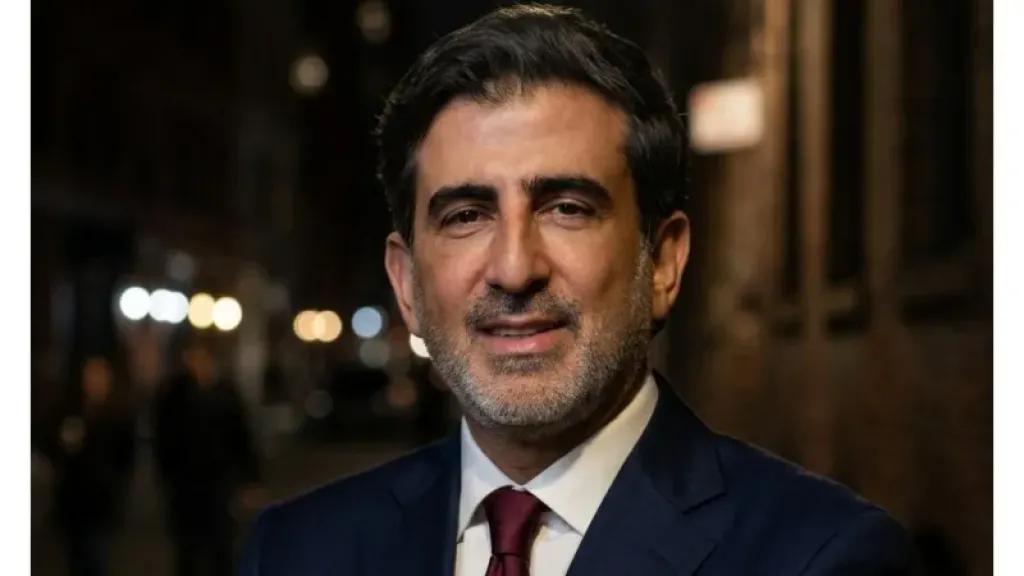
Entrepreneur Samer Choucair said the competition among three geophysical-survey companies, including a Saudi firm, for a seismic-survey project tendered by the Egyptian General Petroleum Corporation in the Western Desert provides a clear indication of growing global investor interest in North Africa’s underexplored energy basins.
He explained that it also reflects a shift in capital-allocation priorities toward assets supported by more accurate geological data.
Choucair noted that the project’s first phase involves a seismic survey covering more than 50,000 square kilometres near the Libyan border in areas believed to contain promising oil and gas reservoirs.
Following completion of the technical studies, the territory is expected to be divided into exploration blocks and offered progressively to investors.
He emphasized that the initiative aligns with Egypt’s strategy to increase oil and gas production and reduce its import gap, while reflecting a broader regional trend toward investment in exploration infrastructure as the essential foundation for attracting long-term institutional capital.
The Western Desert returns to the forefront of exploration investment
Samer Choucair explained that the new tender forms part of Egypt’s plan to accelerate exploration activity in the Western Desert, support domestic natural-gas and crude-oil production, and restore the country’s position as a natural-gas exporter by 2027.
He noted that the Egyptian government aims to increase gas production to approximately 6.6 billion cubic feet per day by 2030, compared with around 3.8 billion cubic feet per day at present.
Developing new basins has therefore become a strategic requirement for strengthening energy security and improving the balance of payments.
Choucair added that the Western Desert is one of Egypt’s most important production centres, accounting for more than 60% of crude-oil output and approximately 18% of natural-gas production.
The region also hosts investments by major international companies, including Apache, Eni, and Cheiron Petroleum.
He emphasized that these factors are increasing the area’s importance to investors and sovereign wealth funds seeking new opportunities in the energy sector.
International competition highlights the importance of geophysical data
Samer Choucair noted that the current competition includes Saudi company ArdiSeis, part of the ARGAS Group, China’s BGP, and US-based WesternGeco, all of which possess extensive experience in advanced seismic surveying.
He explained that winning the tender would involve more than performing the survey itself.
The successful company would secure a leading position in supplying technical data to businesses that may subsequently undertake exploration and production, potentially creating additional opportunities in drilling and field development.
Choucair added that Saudi companies have strengthened their presence in the Western Desert in recent years by executing seismic-survey projects covering more than 100,000 square kilometres using advanced nodal technologies.
He said this reflects a broader strategy of exporting Gulf expertise to North African markets in support of the objectives of Saudi Vision 2030.
Economic challenges increase the importance of new discoveries
Samer Choucair said Egypt faces the dual challenge of natural production declines at several existing fields and the need to reduce dependence on imports as domestic energy demand continues to grow.
He explained that any new discoveries or improvements in recovery rates in the Western Desert would have a direct positive effect on the balance of payments, ease pressure on foreign-currency reserves, and support macroeconomic stability.
Choucair noted that the location of the proposed areas near the Libyan border gives the project an additional strategic dimension.
The geological data may relate to shared or adjacent basins, potentially creating new opportunities for regional investment.
Investors redirect capital toward exploration services
Samer Choucair explained that the seismic-survey services sector continues to retain its investment appeal despite fluctuations in oil and gas prices because producers increasingly depend on accurate data to reduce exploration risk and improve success rates.
He added that companies possessing advanced geophysical-survey technologies and data-processing systems enjoy a clear competitive advantage in projects of this nature.
Choucair emphasized that such contracts create opportunities for institutional investors and infrastructure and energy funds to participate directly or indirectly in specialized oilfield services.
They may also pave the way for new concession rounds and acquisition activity in the Egyptian market.
He noted that institutional capital increasingly favours projects supported by reliable geological data and operating within clear regulatory frameworks, as these characteristics reduce risk and improve the potential for long-term returns.
Choucair added that Saudi companies building strong operating records in Egypt improve their prospects of attracting international partners and financing from Gulf funds seeking exposure to conventional energy investments while accounting for the sector’s gradual transition.
Promising opportunities and risks requiring close attention
Samer Choucair identified the acceleration of the exploration-to-production cycle, improved understanding of undeveloped basins, and support for Egypt’s plan to restore its role as a natural-gas exporter as the principal investment opportunities.
He noted that these developments also align with Gulf investment funds’ efforts to diversify their energy-sector exposure geographically, with emphasis on assets capable of generating stable cash flows.
Choucair added that Saudi Vision 2030’s objective of building exportable technical capabilities is being applied practically through Saudi companies’ participation in regional survey projects, strengthening their role within global energy value chains.
He explained that the project nevertheless faces several risks, including possible administrative delays, oil and gas price volatility, intensifying competition for advanced technologies, and the potential effect of changes in the investment environment on subsequent development decisions.
Choucair emphasized that long-term investors should focus not only on the result of the tender, but also on how quickly the seismic data can be converted into financeable exploration concessions.
Governance and transparency in the offering of exploration areas will be decisive in attracting additional global capital.
A strategic outlook
Concluding his remarks, Samer Choucair said the completion of seismic-survey work and the division of the territory into exploration blocks could trigger a new wave of investment in the Western Desert over the coming years, provided that Egypt maintains economic and financial stability.
He explained that specialized oilfield-services companies will benefit from increasing demand for advanced technologies, while institutional capital flows will remain closely linked to the quality of geological data and the clarity of future development plans.
Choucair added that the most attractive investment opportunities will be concentrated among companies combining operating expertise with the ability to finance subsequent exploration stages.
He emphasized that intelligent capital allocation at this early stage could generate returns exceeding broader market averages over the medium and long term.
Samer Choucair concluded that economic trends during 2026 and beyond indicate continuing investor interest in assets that strengthen regional energy security while preserving flexibility amid ongoing changes in global energy demand.