
Samer Choucair: North-East Riyadh Master Plan Signals the Emergence of One of Saudi Arabia’s Largest Urban Growth Corridors
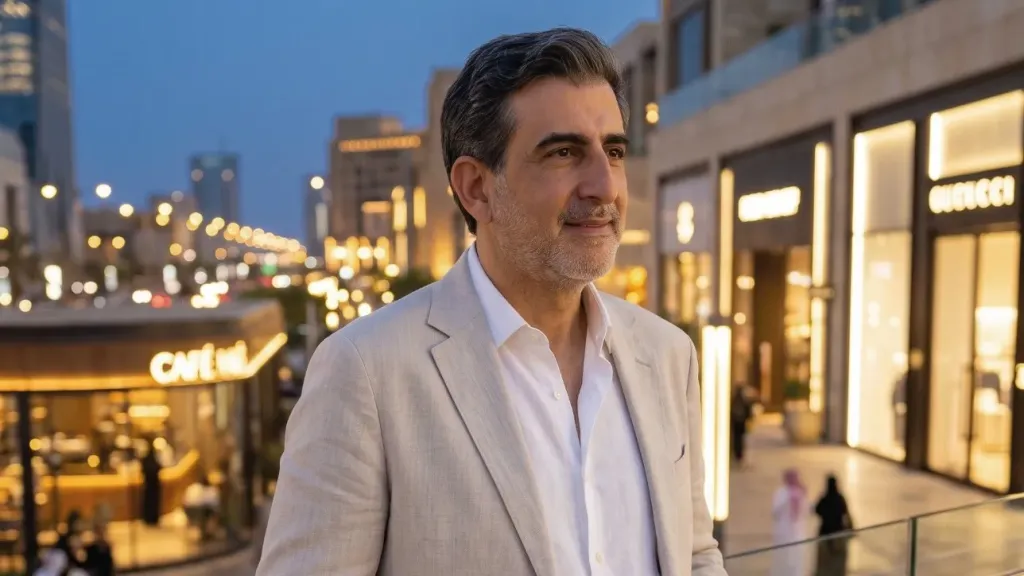
Entrepreneur Samer Choucair said the Royal Commission for Riyadh City’s preparation of a preliminary master plan for an area of approximately 456 square kilometres in the north-east of the capital represents a strategic step in Riyadh’s long-term urban expansion.
He explained that the plan reflects Saudi Arabia’s transition toward a new phase of urban development based on integrated growth centres supporting the objectives of Saudi Vision 2030.
Choucair noted that the area occupies a strategic location connected to King Khalid International Airport, Wadi Al-Sulay, and the Dammam and Janadriyah roads.
He emphasized that the plan represents an initial planning framework rather than the announcement of an immediate development project. Nevertheless, it creates extensive opportunities for institutional investors to direct capital toward real estate, infrastructure, and integrated services.
Samer Choucair added that such master plans reflect a structural transformation in the allocation of assets within the Saudi economy, as the emphasis gradually shifts from investment in individual projects toward scalable, long-term urban growth corridors capable of generating sustainable returns.
Riyadh continues to build a sustainable urban-growth ecosystem
Samer Choucair noted that the master plan is being developed as part of Riyadh’s continuing urban expansion in response to rapid population and economic growth, alongside rising demand for housing, services, and infrastructure.
He explained that the plan provides a broad framework for land use based on the development of a long-term urban model capable of expanding gradually.
It envisages integrated communities combining housing with essential daily services while maintaining a balance among residential, economic, recreational, and natural uses.
Choucair added that the plan places particular emphasis on improving quality of life, expanding green spaces, and preserving natural valleys within a connected urban structure that supports environmental sustainability.
Vision 2030 drives the capital’s urban transformation
Samer Choucair explained that since the launch of Saudi Vision 2030, Riyadh has become one of the fastest-growing cities in the region, supported by national housing programmes, expanding economic activity, and the attraction of regional headquarters belonging to global companies.
He added that the north-east Riyadh master plan extends the Royal Commission for Riyadh City’s long-term planning approach by organizing one of the capital’s most important urban expansion corridors in a manner capable of accommodating future growth without compromising environmental balance or quality of life.
Choucair noted that the planning philosophy is based on developing integrated communities that reduce the need for long-distance travel and are connected to existing and future road and public-transport networks, in line with leading international practices in sustainable urban development.
He emphasized that this approach creates substantial investment opportunities in water and electricity networks, digital infrastructure, transportation systems, and services supporting the new communities.
The area’s strategic location near King Khalid International Airport and major transport routes also gives it strong potential to attract logistics, commercial, and light-industrial activities alongside residential development.
Institutional investors monitor a new growth corridor
Samer Choucair said the announcement of the plan provides institutional investors and investment funds with an early signal of a new economic growth corridor that will require close monitoring as detailed plans are developed.
He explained that opportunities at this stage are concentrated in land surrounding the planning area and adjacent districts that could experience gradual value appreciation as the planning process advances, as well as in property developers, construction businesses, and building-material manufacturers.
Choucair added that the logistics sector is also likely to benefit from the area’s proximity to King Khalid International Airport, while the balance between economic and recreational uses creates opportunities across hospitality and leisure facilities.
He emphasized that institutional investment in projects of this nature requires a carefully phased entry strategy rather than premature or insufficiently assessed investment.
“Intelligent capital will increasingly move toward assets connected to infrastructure and integrated communities because the balance between residential and economic uses creates sustainable, cumulative value over the long term,” Choucair said.
He added that the principal risk is the time gap between approval of the general plan and the adoption of detailed implementation plans, making it essential to monitor regulatory developments, government-financing programmes, and the level of private-sector participation.
Urban expansion supports economic diversification
Samer Choucair noted that the master plan represents one of the tools supporting the economic-diversification objectives of Vision 2030 by creating new growth centres capable of accommodating a wide range of economic activities beyond traditional dependence on the oil sector.
He added that such developments could increase foreign direct investment flows into real estate and infrastructure, particularly as Saudi Arabia continues to improve its regulatory environment, strengthen transparency, and expand programmes supporting foreign investors.
Choucair emphasized that the successful implementation of these projects would reinforce Riyadh’s position as a regional economic and investment centre capable of attracting global capital.
Opportunities and risks for investors
Samer Choucair explained that the plan creates substantial opportunities to develop integrated residential communities centred on essential daily services, in line with increasing demand for high-quality housing across the capital.
He added that green infrastructure and natural spaces have become important factors in attracting long-term investment because of their direct effect on quality of life and their ability to attract talent and international companies.
Major property developers, companies associated with the Public Investment Fund, contractors, and building-material suppliers are likely to be among the principal beneficiaries during the project’s later phases.
Choucair identified possible delays in preparing detailed plans, challenges in coordination among different authorities, and rising construction costs as the principal risks.
He added that any slowdown in global economic growth or change in interest rates could also affect the pace of capital flows into the real-estate sector.
Choucair emphasized that managing risk at this stage requires diversification across different areas of the capital, with priority given to districts connected to airports and logistics corridors because of their stronger potential to generate stable medium- and long-term returns.
A future outlook
Concluding his remarks, Samer Choucair said north-east Riyadh is positioned to become one of the capital’s most important corridors for accommodating population and economic growth through 2030 and beyond.
Institutional investors will continue to monitor announcements concerning detailed plans, land allocation, and infrastructure projects, as these will be the principal determinants of the scale of future investment opportunities.
He added that investment success during this phase will depend on investors’ ability to interpret early planning signals and translate them into disciplined capital-allocation decisions rather than short-term speculation.
Choucair emphasized that long-term urban plans such as the north-east Riyadh master plan strengthen the Saudi economy’s appeal to sovereign wealth funds and global asset managers by providing a clear vision for sustainable growth and a more predictable framework for future returns.
“Phased implementation, disciplined capital allocation, and strong governance will remain the essential foundations for converting major urban plans into sustainable economic value and long-term investor returns,” Samer Choucair concluded.