
Samer Choucair: The Space Economy Is Becoming a New Driver of Global Institutional Capital Allocation up
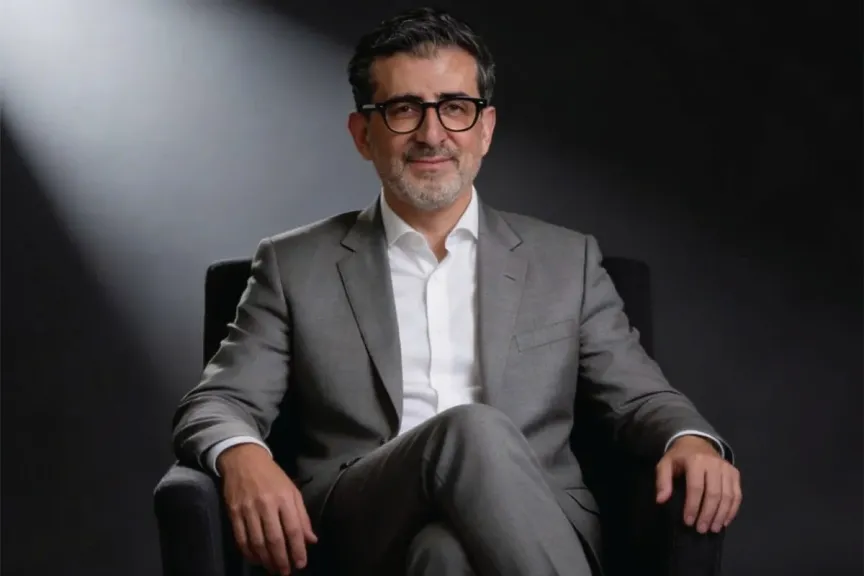
Entrepreneur Samer Choucair said the return of a joint US-Russian crew after completing a 241-day mission aboard the International Space Station provides a clear indication that technical cooperation between the two major space powers continues despite geopolitical tensions.
He noted that this strengthens investor confidence in the sustainability of global space infrastructure until at least 2030.
Choucair explained that the continued operation of the International Space Station creates new capital-allocation opportunities across satellites, space manufacturing, and value-added services.
He emphasized that institutional investors increasingly regard the space economy as a future driver of long-term growth, particularly in emerging markets seeking to develop domestic capabilities under their economic-diversification strategies.
The International Space Station demonstrates the continuity of technical cooperation
Samer Choucair said the return of NASA astronaut Chris Williams and his Roscosmos colleagues Sergey Kud-Sverchkov and Sergey Mikayev following an eight-month mission confirms that the International Space Station remains a reliable operational platform for scientific research and advanced technology testing.
He explained that the continuing exchange of crews through Soyuz spacecraft and US capsules reflects economic pragmatism extending beyond political disagreements.
It also provides institutional investors with positive indications regarding the stability of the global space supply ecosystem as the sector transitions toward commercial operating models.
Choucair added that the success of these missions strengthens confidence in the continuity of joint space projects and reduces concerns about potential disruptions to orbital infrastructure.
Extension to 2030 supports the space economy
Samer Choucair explained that continued cooperation between the United States and Russia aboard the International Space Station since 2022, despite political tensions, reflects a shared recognition of the importance of maintaining the stability of space programmes.
He noted that the two countries’ decision to continue operating the station until 2030 gives companies and investment institutions sufficient time to develop new commercial stations in low-Earth orbit.
Choucair added that this extension reduces the possibility of an operational gap and supports the continuity of research related to cancer treatment, manufacturing in microgravity, and the development of advanced electronics and materials.
He emphasized that this continuity gives investors greater visibility when assessing opportunities connected to space infrastructure.
The space economy approaches the trillion-dollar stage
Samer Choucair noted that the global space economy was valued at between $626 billion and $686 billion during 2025, with commercial activities accounting for approximately 78% to 79% of the sector.
He explained that compound annual growth rates ranging from 8% to 12% support forecasts that the space economy could reach approximately $1 trillion by the middle of the next decade.
Choucair added that this growth is being driven primarily by the expansion of satellite communications, navigation systems, remote sensing, and space-related digital services.
He emphasized that these indicators position space among the fastest-growing technology sectors over the coming years.
Investors redirect capital flows
Samer Choucair explained that the continuation of joint US-Russian missions sends a reassuring message to markets that geopolitical risks have not yet disrupted commercial investment in the space sector.
He noted that institutional investors are increasingly focusing on companies operating in satellite components, advanced supply chains, and space-manufacturing technologies.
“Markets are beginning to reprice space assets according to their ability to deliver operational sustainability rather than daily political volatility,” Choucair said.
He added that capital-allocation strategies are increasingly favouring companies with dual-use technologies serving both civilian and defence markets, particularly those capable of expanding across emerging economies.
Commercial-launch companies and satellite operators also benefit directly from the stable operation of the International Space Station, which serves as a testing platform for new technologies.
Choucair emphasized that research into in-space manufacturing can generate positive effects across semiconductors, advanced materials, and high-performance electronics.
Saudi Arabia and the Gulf strengthen their presence in the space economy
Samer Choucair explained that these developments directly align with Saudi Arabia’s objectives under Vision 2030.
He noted that the launch of the Public Investment Fund-backed Neo Space Group represents a strategic step toward building an integrated national ecosystem encompassing satellites, space communications, remote sensing, navigation, and the Internet of Things, alongside the establishment of a specialized venture capital fund.
Choucair added that the National Space Strategy aims to develop a constellation of Earth-observation satellites before the end of the decade, with estimated investment of between $2 billion and $5 billion in space manufacturing and between $3 billion and $8 billion in space-data services.
He emphasized that these plans strengthen opportunities for technology transfer and foreign direct investment through partnerships with international agencies and global companies.
“Investment in Saudi space capabilities is not merely a form of sector diversification,” Choucair said. “It represents strategic infrastructure supporting the digital economy, artificial intelligence, energy, and smart agriculture.”
He added that Gulf sovereign wealth funds have an early opportunity to allocate capital across space value chains while benefiting from continuing international cooperation in the sector.
Opportunities and risks for investors
Samer Choucair explained that the continued operation of the International Space Station and the crew’s safe return strengthen investor confidence in the sustainability of government and commercial demand for space services.
He identified investment opportunities in space-data services, artificial intelligence-powered analytics, microgravity manufacturing, ground infrastructure for commercial stations, and public-private partnerships across Gulf countries.
However, Choucair noted that several risks remain, including the ageing of certain International Space Station components, possible delays in the development of replacement commercial stations, and the potential effect of continuing geopolitical tensions on sensitive supply chains.
He emphasized that long-term investors should view the space economy as a strategic asset class complementing investment in clean energy and advanced technology rather than as an isolated sector.
Choucair added that strong governance and disciplined capital allocation will remain the most important factors in achieving sustainable returns.
A future outlook
Concluding his remarks, Samer Choucair said the space sector is gradually moving from government-operated platforms toward commercial stations in low-Earth orbit, a transition expected to support the expansion of the space economy toward trillion-dollar levels in the years ahead.
He added that opportunities in Saudi Arabia and other Gulf countries will depend heavily on local companies’ ability to develop exportable operating and manufacturing capabilities and benefit from existing international partnerships.
Choucair noted that institutional investors will continue directing capital toward companies combining advanced technology with operational sustainability, as these businesses will be best positioned to create long-term value.
He concluded that successful investment in the space economy during 2026 will depend on balancing technical cooperation with strategic competition—a balance that has so far supported the sector’s continuity and attracted increasing institutional capital to one of the most promising areas of the global economy.