
How Did Long-Term Vision Drive Some of History’s Greatest Investment Deals? Samer Choucair Explains
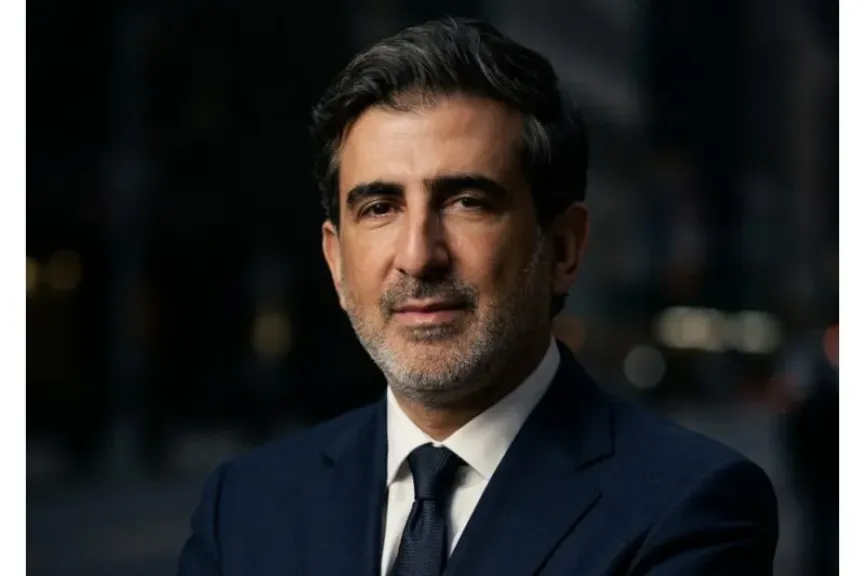
Entrepreneur Samer Choucair said investment history clearly demonstrates that the greatest fortunes were not built through boldness alone, but through the ability to identify economic and structural transformations before they became widely accepted by the market.
Choucair explained that historic investments such as Warren Buffett’s acquisition of a major stake in Apple, Masayoshi Son’s bet on Alibaba, Naspers’ investment in Tencent, and Charlie Munger’s backing of BYD—alongside the renowned trades of George Soros, Michael Burry, John Templeton, Peter Lynch, and Benjamin Graham—all proved that exceptional investors did not buy the assets that were popular at the time. Instead, they invested in what they believed would become a principal driver of the future economy.
He noted that these lessons are especially important in 2026, as global capital is rapidly being reallocated toward artificial intelligence, the digital economy, advanced manufacturing, and infrastructure, while management quality and capital-allocation efficiency are gaining greater importance relative to short-term bets.
Understanding trends matters more than predicting the news
Samer Choucair said financial markets do not deliver their greatest rewards to those who receive the news first, but to those who understand its economic implications before others.
He added that many of the most famous investment decisions in history appeared risky or inconsistent with prevailing market logic when they were made. Over time, however, it became clear that the investors behind them were not attempting to predict the future, but were identifying the economic forces already shaping it.
Choucair explained that conventional investors search for the best share, while institutional investors focus on the economic transformation most likely to produce the best companies over the coming years.
True value extends beyond the current price
Samer Choucair noted that markets price available information, while long-term investors assess future potential. This is why major opportunities often emerge when the gap between an asset’s true economic value and its traded price becomes unusually wide.
He added that this philosophy formed the basis of Benjamin Graham’s modern value-investing school before Warren Buffett and his partner Charlie Munger adapted it to an economy increasingly driven by technology and intellectual property.
Choucair emphasized that value in the modern era no longer means simply buying the cheapest assets. It means investing in companies capable of compounding profits at high rates over extended periods.
Warren Buffett and Apple: when value investing redefined itself
Samer Choucair explained that Warren Buffett avoided technology companies for many years because of the difficulty of valuing them and the rapid pace of change in the sector.
However, Berkshire Hathaway’s decision to invest in Apple in 2016 was not based primarily on the technology itself. It was based on the strength of the brand, exceptionally high customer loyalty, and the company’s ability to generate sustainable cash flow.
Choucair added that Apple later became the largest investment in Berkshire Hathaway’s portfolio and generated returns exceeding 1,100% from the beginning of the investment, at times accounting for approximately 40% of the portfolio’s total value.
He said the transaction demonstrated that sector classifications can occasionally be misleading, as the real value may lie more in the business model and customer relationship than in the nature of the industry itself.
Peter Lynch: investment begins with everyday life
Samer Choucair said Peter Lynch followed a simple principle that later became one of the most widely recognized rules in investing: observe the companies encountered in everyday consumer life before the broader market notices them.
He noted that Lynch’s investment in the expansion of Dunkin’ Donuts was not based on highly complex financial models, but on a direct understanding of consumer behaviour and the scalability of the business model.
This approach helped the Magellan Fund deliver exceptional performance during his leadership and demonstrated that practical market knowledge can sometimes outperform even the most sophisticated financial modelling.
George Soros: macroeconomics creates the greatest opportunities
Samer Choucair noted that George Soros bet against the British pound in 1992 after concluding that UK monetary policy could no longer sustain the currency’s exchange rate within the European Exchange Rate Mechanism.
Following Britain’s withdrawal from the system on what became known as Black Wednesday, Soros’s fund generated close to $1 billion in profit in a single day.
Choucair explained that the trade was not merely a currency speculation. It was a precise assessment of the contradiction between official economic policy and financial reality.
He emphasized that markets may delay the correction of structural imbalances, but they cannot eliminate them, making macroeconomic analysis an essential component of portfolio management.
Michael Burry: the details make the difference
Samer Choucair said Michael Burry began analysing US mortgage files loan by loan between 2004 and 2005, eventually discovering that the market depended on assumptions that could not be sustained.
He used complex financial instruments to bet against the housing market at a time when major institutions regarded mortgage-backed securities as among the safest available assets.
When the 2008 crisis began, that analysis became the foundation of one of the most famous investment trades in history, generating returns of more than 700% for his fund’s investors.
Choucair emphasized that an exceptional investor is often distinguished by a willingness to examine details ignored by most other market participants.
John Templeton: investing when fear dominates
Samer Choucair explained that John Templeton made one of his most famous investment decisions at the beginning of the Second World War, when he borrowed money and invested in more than 100 US companies trading at extremely low prices, some below $1 per share.
Templeton did not know which individual businesses would succeed, but he believed the market had excessively priced in fear.
Choucair added that the decision later became one of the foundations of long-term contrarian investing and demonstrated that crises often distort prices more significantly than they alter underlying value.
Naspers and Tencent: betting on the economy of the future
Samer Choucair noted that Naspers invested approximately $32 million in Tencent in 2001, when the company was still a small Chinese digital platform.
He explained that the real investment thesis was not based merely on a messaging application, but on the future of China’s digital economy.
As Tencent expanded into gaming, digital services, payments, and cloud computing, the value of the investment rose above $100 billion at its peak.
Choucair emphasized that the greatest investment opportunities often come from understanding structural transformations rather than remaining within the traditional sectors investors already know.
Masayoshi Son and Alibaba: investing in the founder
Samer Choucair said Masayoshi Son invested approximately $20 million in Alibaba in 2000, even though the company was not profitable and had yet to prove its business model.
He explained that Son focused on the capabilities of Jack Ma and his executive team, believing they could build a company capable of leading Chinese e-commerce.
The investment later became one of the most profitable in the history of the technology sector.
Choucair added that when assessing early-stage companies, management quality can be more important than financial statements alone.
Charlie Munger and BYD: investing in an entire industrial cycle
Samer Choucair noted that Berkshire Hathaway, with the support of Charlie Munger, invested approximately $230 million in BYD in 2008 for a stake of nearly 10%.
At the time, the company was not yet an electric-vehicle giant and was known primarily as a battery manufacturer. The investment thesis centred on management’s ability to transform that technical expertise into an integrated industrial business.
Choucair explained that the stake increased in value by more than twenty times as the global transition toward electric vehicles accelerated, before Berkshire began gradually reducing its holding.
He emphasized that successful investors often position themselves for an entire industrial cycle rather than a single product.
Benjamin Graham and GEICO: when knowledge justifies concentration
Samer Choucair said Benjamin Graham was among the first investors to recognize that certain opportunities can justify a high level of portfolio concentration.
His investment in GEICO was not based solely on a low share price, but on the identification of a business model with a competitive advantage and a cost structure that differed from those of its rivals.
The transaction later became one of Graham’s most important investment successes.
Choucair added that the experience established a lasting principle: diversification protects investors from ignorance, while deep knowledge may justify greater concentration in selected opportunities.
What history’s greatest investors had in common
Samer Choucair emphasized that despite taking place in different periods and sectors, these investments shared several core principles: identifying economic trends before the market, investing in management as well as assets, focusing on long-term competitive advantages, using periods of fear as opportunities rather than reasons to withdraw, distinguishing temporary volatility from structural transformation, maintaining an investment horizon measured in years, and being prepared to disagree with market consensus when supported by evidence.
He noted that the investors who created the greatest fortunes were not necessarily the best at predicting the future. They were the most disciplined in analysing information and the most patient in allowing their investment theses to develop.
Direct implications for the Saudi and Gulf economies
Samer Choucair explained that these lessons coincide with a historic period for the Saudi and Gulf economies, as Vision 2030 drives a broad wave of investment in technology, artificial intelligence, infrastructure, manufacturing, tourism, and logistics.
He added that future value for institutional investors may not lie in the sectors currently recording the highest growth rates, but in the companies capable of developing sustainable competitive advantages within the emerging economic ecosystem.
Choucair noted that the expansion of sovereign wealth funds, rising capital expenditure, and increasing foreign direct investment flows all reinforce the importance of long-term analysis in regional capital-allocation decisions.
A strategic outlook
Concluding his remarks, Samer Choucair emphasized that accelerating innovation, the restructuring of supply chains, and intensifying global competition for capital have made identifying structural transformations more valuable than attempting to predict daily market movements.
He added that investment history may not repeat itself exactly, but it continues to reproduce the same fundamental principles.
Sustainable wealth is not created by pursuing daily market noise, but through understanding major trends, maintaining discipline in capital allocation, and exercising the patience required for an investment vision to become an economic reality.