
Samer Choucair: Private Aviation Is No Longer a Symbol of Wealth, but an Operational Asset Class
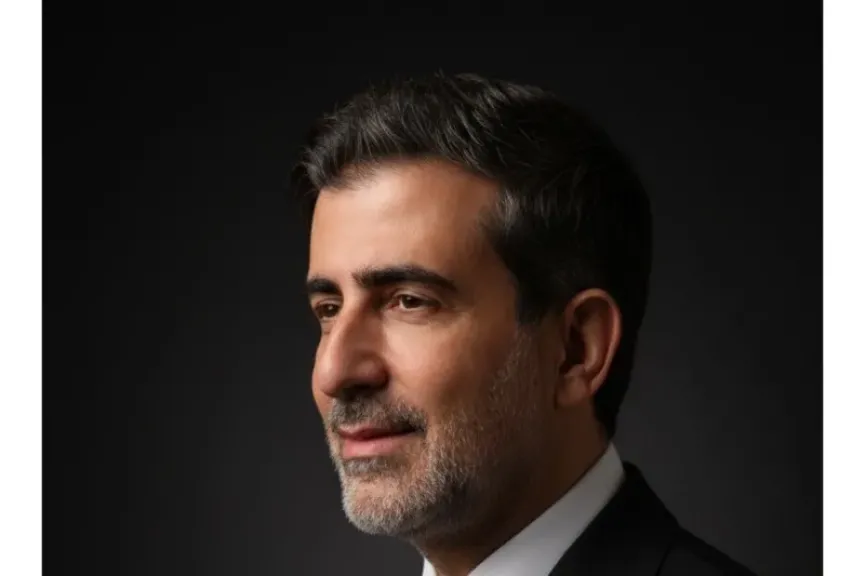
Entrepreneur Samer Choucair said the private-aviation sector is undergoing an unprecedented structural transformation, shifting from full aircraft ownership toward more flexible access models based on fractional ownership, jet cards, subscription programmes, and structured leasing.
He noted that this change is reshaping capital allocation within an industry valued at tens of billions of dollars and enabling a broader range of investors and institutions to benefit from the sector.
Samer Choucair explained that private aviation is no longer viewed solely as a symbol of extreme wealth. It has become an operational asset class assessed by investors according to efficiency, return on capital, and risk management.
He added that the transition from owning the asset to accessing the service reflects a profound change in the behaviour of investors, high-net-worth individuals, and institutions.
Choucair noted that private-flight activity continues to reach record levels, supported by the expansion of fractional-ownership programmes and structured leasing.
These models are now growing faster than traditional ownership as global demand shifts clearly from acquisition toward use, driven by higher operating costs and the need for greater flexibility in asset management.
Samer Choucair added that available data indicates global private-flight activity increased by approximately 4% year on year during the first half of 2026, while charter and fractional-ownership operations grew by more than 40% compared with pre-pandemic levels.
He said these figures reflect a fundamental change in the structure of the market and in customer preferences.
Choucair emphasized that the development comes as the sector faces growing pressure on new-aircraft supply chains, alongside higher fuel prices and maintenance costs.
At the same time, the priorities of a new generation of wealthy clients are changing, with many preferring guaranteed and flexible access to private aircraft without assuming long-term capital commitments.
He explained that the direct result is a redefinition of the value of access itself.
A growing segment of customers is turning to platforms that combine operational certainty with capital efficiency rather than committing to ownership of a high-cost asset carrying substantial fixed operating expenses.
The transformation of ownership and access models in private aviation
Samer Choucair said the private-aviation market has shifted in recent years from a model based primarily on full ownership toward a multi-tiered ecosystem comprising fractional ownership, jet cards, subscription programmes, and on-demand charter services.
He explained that these models have changed how investors approach assets connected to private aviation.
Choucair noted that fractional ownership typically allows an investor to acquire a share of an aircraft beginning at one-sixteenth ownership in exchange for a specified number of flight hours each year.
The investor pays monthly management fees and operating costs linked only to the hours used.
Jet cards, by comparison, provide prepaid flight hours at relatively fixed rates, while subscription programmes offer access to multiple fleets without requiring direct ownership.
He emphasized that these models have materially lowered the capital barrier to entering the sector.
Participation no longer requires investing tens of millions of dollars in a single aircraft while assuming its fixed costs.
Family businesses, family offices, and institutions can instead secure flight hours with more predictable expenditure.
Choucair explained that estimates place the private-jet fractional-ownership market at approximately $11 billion in recent years.
The jet-card market continues to record strong growth and is expected to double in size during the coming decade.
Samer Choucair added that this transformation reflects a deeper change in how upper-tier investors think about capital allocation.
An aircraft is no longer regarded solely as an asset to be held. It is increasingly treated as an operational service measured by utilization efficiency and the return generated on deployed capital.
He noted that institutions incorporating these models into their investment and operating strategies gain greater flexibility in liquidity management, particularly during periods of interest-rate volatility.
These structures allow them to exercise greater control over capital commitments and deploy funds more efficiently.