
Samer Choucair: The Scale of Saudi Arabia’s Infrastructure Transformation Is Reshaping Institutional Capital Allocation
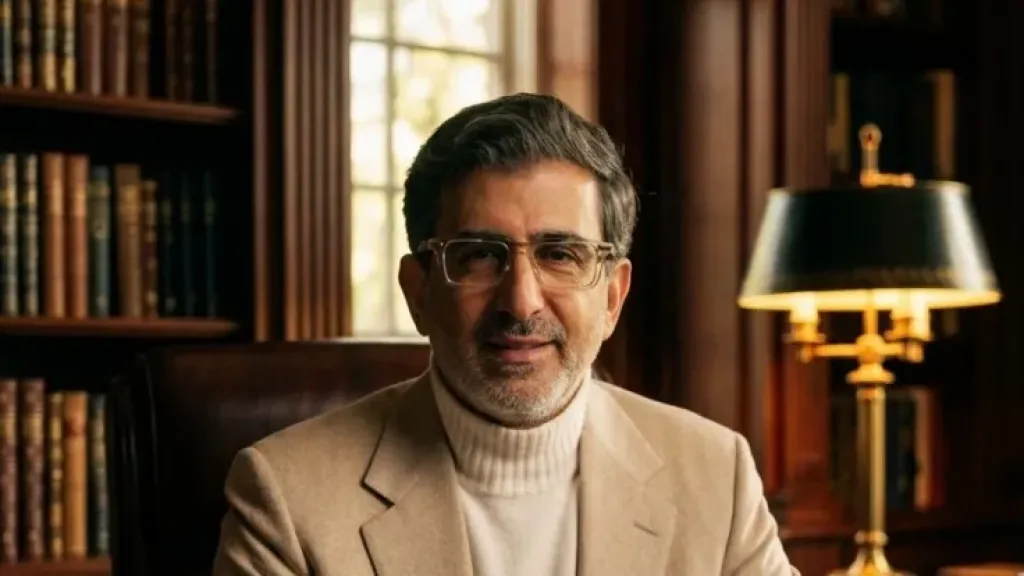
Entrepreneur Samer Choucair said the structural transformation underway in Saudi Arabia’s infrastructure sector is reshaping institutional capital allocation across the region.
He noted that the scale of major projects being developed under Saudi Vision 2030 has become a central factor in how global investors reassess opportunities linked to long-term growth.
Samer Choucair explained that the participation of major international engineering companies in strategic projects spanning airports, metro systems, logistics, and infrastructure management for global events reflects the Kingdom’s transition from developing essential projects to building an integrated economic ecosystem designed to support diversification, technology transfer, and local capability development.
He emphasized that this transformation extends beyond the engineering execution of projects. It also involves attracting institutional capital, strengthening long-term partnerships, and developing investment models based on governance, sustainability, and returns connected to the economy’s structural growth.
Samer Choucair added that the involvement of global companies such as Bechtel, whose projects in the Kingdom are valued at tens of billions of dollars, confirms that legislative reforms and institutional stability have become major influences on global capital-allocation decisions.
He said Saudi Arabia has become a strategic destination for investors seeking exposure to long-term economic transformation rather than returns linked solely to short-term commodity cycles.
Vision 2030 transforms the infrastructure investment model
Samer Choucair explained that since launching Vision 2030, Saudi Arabia has focused on building infrastructure capable of supporting non-oil sectors including tourism, logistics, manufacturing, and renewable energy.
This has attracted international engineering companies with extensive experience in managing complex projects.
Choucair identified Bechtel as an example of a long-term partner in the Kingdom. The company has operated in Saudi Arabia for more than eight decades and delivered over 300 projects, ranging from oil-sector developments such as the Ras Tanura refinery to a new generation of projects including the Riyadh Metro, King Salman International Airport, and infrastructure management for Expo 2030.
Samer Choucair said comments by Martina Strong, Bechtel’s regional president for the Middle East and Central Europe, regarding the scale of reforms and transformations that had not been fully apparent before her arrival in the Kingdom illustrate the difference between external perceptions and conditions on the ground.
He emphasized that this gap is encouraging sovereign wealth funds and asset managers to reassess the relationship between risk and return.
Greater strategic clarity and regulatory stability reduce the traditional risk premium and create room for larger allocations of long-term capital to infrastructure assets.
“Institutional investors no longer view the Kingdom solely as a cyclical commodity market,” Samer Choucair said. “They increasingly regard it as a platform for structural growth supported by major projects whose economic impact will extend well beyond 2030.”
He added that capital flows will increasingly favour partnerships combining engineering execution, knowledge transfer, and the development of local capabilities.
Major projects attract institutional investment
Samer Choucair noted that Saudi Arabia’s engineering and construction sector is expanding through strategic developments such as King Salman International Airport, which is expected to become one of the world’s largest airports, with capacity reaching 185 million passengers annually by 2050.
The sector is also benefiting from Expo 2030, for which Bechtel is managing infrastructure across an area of six square kilometres.
Choucair explained that the importance of these projects is not limited to the construction phase.
Their long-term impact includes creating sustainable urban transformation and supporting tourism, logistics, and transportation.
He emphasized that institutional investors view these developments as creating multiple opportunities, including infrastructure-linked debt instruments, public-private partnerships, and direct investment in domestic supply chains.
Samer Choucair noted that Saudi nationals now account for approximately 30% of Bechtel’s workforce in the Kingdom, reflecting progress in employment localization and technology transfer.
This contributes to lower long-term operating risk and strengthens the social and economic sustainability of projects.
He added that this momentum coincides with a shift in the Public Investment Fund’s strategy toward building new economic ecosystems centred on tourism, manufacturing, clean energy, and logistics.
This creates opportunities for private capital to participate in projects offering relatively stable returns linked to genuine economic growth.
Samer Choucair explained that investors focused on institutional governance and technology transfer are finding distinctive opportunities in the current Saudi environment.
International companies that successfully develop local capabilities do more than execute contracts. They create sustainable added value that makes them preferred partners for future investment opportunities.
Artificial intelligence and digital transformation in infrastructure projects
Samer Choucair emphasized that modern infrastructure is no longer defined solely by concrete and steel. It increasingly depends on technology, data, and artificial intelligence.
He explained that engineering companies integrating artificial intelligence into design, management, and monitoring processes can achieve greater efficiency while reducing time and financial costs.
This makes investment in such companies a strategic opportunity for investors seeking technology-driven growth.
Choucair noted that combining traditional engineering expertise with digital solutions has become essential to improving the management of major projects, raising productivity, and strengthening execution capabilities.
He added that the empowerment of women in engineering and project-management roles, which has been praised by leaders of international companies operating in the Kingdom, represents an important development in expanding the talent pool and reducing labour-market bottlenecks.
This is aligned with Vision 2030 objectives to increase women’s participation in the workforce and strengthen Saudi Arabia’s appeal to modern investment.
Capital trends and opportunities for institutional investors
Samer Choucair explained that the current momentum in infrastructure supports expectations for stronger non-oil gross domestic product growth and reduces the Saudi economy’s sensitivity to oil-price volatility.
He said institutional investors are currently focusing on three principal areas: direct investment in major infrastructure projects, participation in financing instruments linked to those projects, and investment in domestic companies benefiting from technology transfer and localization.
Choucair noted that equity markets could benefit from expanding activity across construction, materials, and finance, while debt markets linked to major projects offer relatively attractive returns amid changing global interest rates.
He emphasized that growing interest in Expo 2030 is also strengthening the appeal of associated tourism and logistics assets and broadening the range of opportunities available to domestic and international investors.
Samer Choucair cautioned against focusing on project scale without assessing execution capacity and governance.
Institutional capital requires transparency in risk management, the ability to meet project timelines, and a demonstrated capacity to deliver the intended outcomes.
“Companies combining global expertise with local efficiency will be best positioned to attract new investment allocations during the years ahead,” Samer Choucair said.
A strategic outlook for the future of investment in Saudi Arabia
Samer Choucair said Saudi Arabia is demonstrating its ability to convert economic vision into tangible implementation.
The participation of major international engineering companies, together with the redirection of sovereign investment priorities, indicates that the Saudi economy is entering a more mature phase in attracting capital.
He explained that the opportunity for institutional investors lies in building portfolios combining assets exposed to long-term structural growth with instruments offering high levels of liquidity and governance.
Choucair noted that the broader trend points toward continuing capital flows into sectors supporting economic diversification, with increasing emphasis on technology, sustainability, and human-capability development.
Concluding his remarks, Samer Choucair emphasized that investment success in the next phase will not belong to those pursuing rapid returns.
It will belong to investors capable of building positions that benefit from the structural transformations taking place across Saudi Arabia and the wider region during the coming decade by connecting macroeconomic analysis with long-term capital allocation.