
Samer Choucair: Gulf Currency Stability Is Becoming a Competitive Advantage in Attracting Global Capital
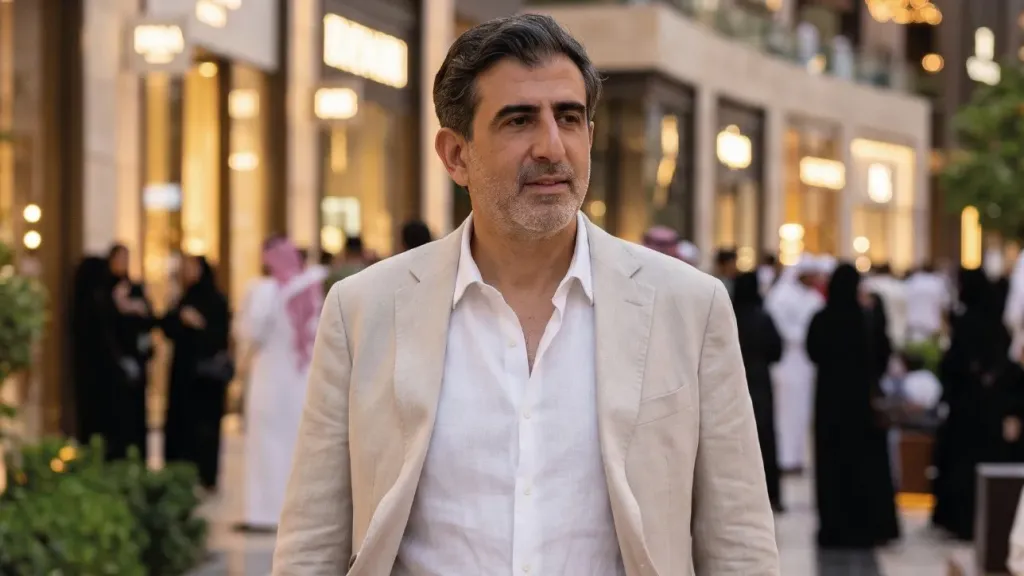
Entrepreneur Samer Choucair believes the monetary stability enjoyed by Gulf currencies has become one of the region’s most important investment advantages at a time when institutional investors worldwide are seeking markets that combine economic growth with the ability to manage currency risk.
Most Gulf Cooperation Council currencies have maintained long-term stability against the US dollar. The Saudi riyal remains pegged at approximately SAR 3.75 to the dollar, while the UAE dirham is fixed at around AED 3.6725. The Bahraini dinar and Omani rial remain stable at approximately BHD 0.376 and OMR 0.384 to the dollar respectively, while the Kuwaiti dinar operates under a currency-basket system in which the US dollar carries significant weight.
Samer Choucair emphasized that this stability represents more than a monetary-policy framework. It has become an influential factor in capital-allocation decisions.
“Global investors do not look only at growth rates,” Choucair said. “They place currency stability among the principal criteria used to assess markets because lower foreign-exchange risk improves their ability to measure long-term returns.”
This comes as Gulf economies, particularly Saudi Arabia and the United Arab Emirates, undergo substantial transformation through expanding investment in non-oil sectors including technology, tourism, financial services, renewable energy, and infrastructure.
Currency stability gives international companies and investors greater confidence in financial planning and the valuation of long-term projects.
Samer Choucair noted that Gulf markets offer a distinctive combination of emerging-market growth potential and the lower currency risk associated with more stable economies.
This makes the region an increasingly attractive destination for sovereign wealth funds and global asset managers.
Choucair added that monetary-policy stability also supports the development of domestic capital markets, including equity markets, sukuk, and other long-term financing instruments.
It also helps companies obtain more competitive financing to support their expansion plans.
He explained that future challenges will relate primarily to energy-price volatility, changes in US monetary policy, and global inflationary pressure.
However, substantial financial reserves and conservative economic policies provide important support for continued confidence in Gulf currencies.
Concluding his remarks, Samer Choucair said: “The next phase will bring greater investor interest in assets connected to economies that combine monetary stability with structural growth. The Gulf has an opportunity to strengthen its position as a regional centre for capital flows through a combination of fiscal discipline and development ambition.”