
Samer Choucair: US–Canada Tensions Are Redefining the Value of Resilient Supply Chains in the Global Economy
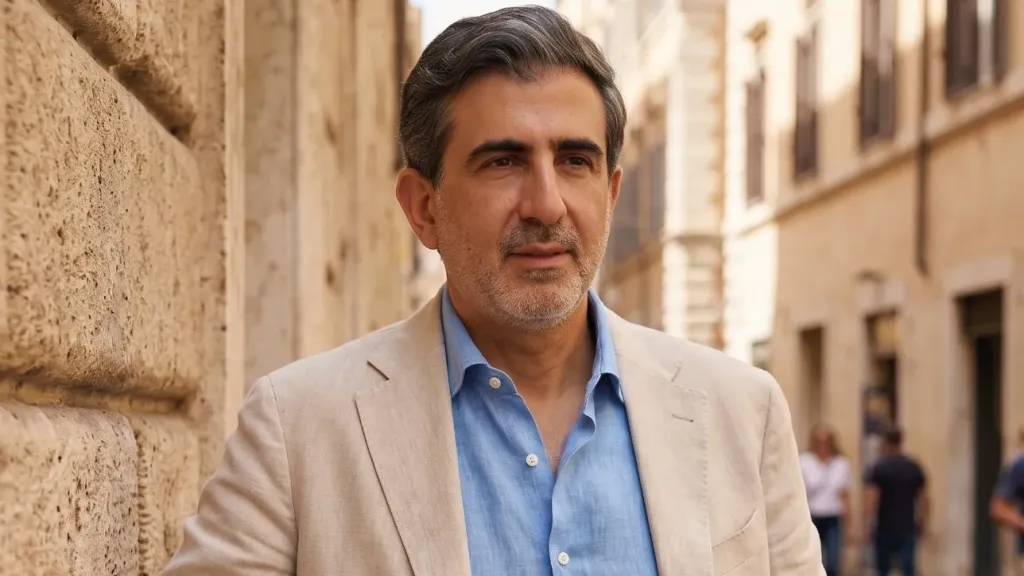
Entrepreneur Samer Choucair said escalating trade tensions between the United States and Canada reflect a broader shift in how institutional investors assess the risks surrounding cross-border supply chains.
He noted that the era of relying almost entirely on operating efficiency is gradually giving way to an investment model focused on resilience, geographic diversification, and the ability to absorb political shocks.
Samer Choucair explained that the opening of the Gordie Howe International Bridge between Windsor, Ontario, and Detroit, Michigan, comes at a sensitive moment for North American trade relations.
The C$6.4 billion project has become an example of the challenges facing strategic assets connected to international trade amid the rise of protectionist policies.
“Geopolitical disruption raises the cost of capital for assets that depend more heavily on supply-chain efficiency than resilience,” Samer Choucair said.
“This is encouraging investors to redirect capital toward infrastructure capable of preserving essential economic flows even in changing political environments.”
Choucair noted that the Windsor–Detroit corridor represents one of North America’s most important trade arteries, supporting a substantial volume of bilateral commerce, particularly in the automotive sector, where production networks are deeply integrated across the United States, Canada, and Mexico.
He explained that delays affecting the project’s operation because of disagreements over revenue management and new tariffs demonstrate that even the most integrated economic relationships can be exposed to political risks that undermine the efficiency of trade and investment.
Samer Choucair added that institutional investors are reassessing the meaning of global economic integration.
Production costs are no longer the sole consideration in investment decisions. The continuity of market access and the stability of trade rules have become central factors in determining the attractiveness of assets.
Choucair emphasized that the automotive sector is among the industries most sensitive to these changes because components and finished products may cross borders several times during the manufacturing process.
Higher tariffs or additional trade restrictions could therefore increase operating costs and force companies to redesign their production networks.
“The next phase will bring a stronger preference for supply chains that combine efficiency with resilience,” Samer Choucair said.
“Reducing operational risk has become a central component of investment strategy rather than merely a logistics decision.”
Choucair noted that global trade tensions could influence inflation and interest-rate expectations, particularly if tariffs raise the cost of goods and services.
Investors in equity and fixed-income markets are increasingly monitoring the effect of trade policies on corporate earnings and cash flows.
Samer Choucair explained that some sectors could benefit from the restructuring of global trade flows, particularly infrastructure, logistics, and technology companies providing supply-chain management solutions.
Companies that remain highly dependent on cross-border production models, however, may face pressure on their margins and competitive position.
He emphasized that strategic infrastructure gains additional value in an uncertain economic environment because projects that reduce bottlenecks and improve trade efficiency can develop into attractive long-term investment assets despite political volatility.
“Investors focused on creating value over decades view major infrastructure projects as real assets capable of generating relatively stable cash flows, provided that political and governance risks are managed effectively,” Samer Choucair said.
Choucair explained that investment trends in 2026 point to growing interest in assets that offer strategic flexibility, including ports, trade corridors, industrial zones, and geographically diversified supply chains.
He noted that changes in North American trade provide important lessons for Gulf markets, particularly as the region continues implementing economic-diversification programmes and Saudi Vision 2030 initiatives focused on strengthening industrial and logistics capabilities and attracting foreign direct investment.
Samer Choucair added that the reassessment of risk in traditional markets could create opportunities for economies offering a stable investment environment and alternative solutions for global supply chains, particularly in advanced manufacturing, electric vehicles, energy, and emerging technologies.
He emphasized that sovereign wealth funds and institutional investors are increasingly seeking greater geographic diversification and reduced dependence on individual regions.
This strengthens the appeal of markets combining political stability, advanced infrastructure, and the capacity to absorb long-term investment.
Choucair explained that continued trade escalation could slow certain economic activities and increase production costs, while simultaneously creating new investment opportunities for companies providing resilience solutions and supply-chain restructuring services.
“Risk management in the current environment requires a focus on assets that create long-term value by strengthening resilience and reducing bottlenecks rather than relying on assumptions of unrestricted trade integration,” Samer Choucair said.
Concluding his remarks, Samer Choucair said geopolitical and trade developments are reshaping the map of global capital flows.
He emphasized that the most successful investors will be those capable of balancing the pursuit of returns with the construction of portfolios resilient enough to withstand the structural volatility ahead.