
Samer Choucair: Britain’s Transfer of Power Opens a New Phase of Capital Reallocation
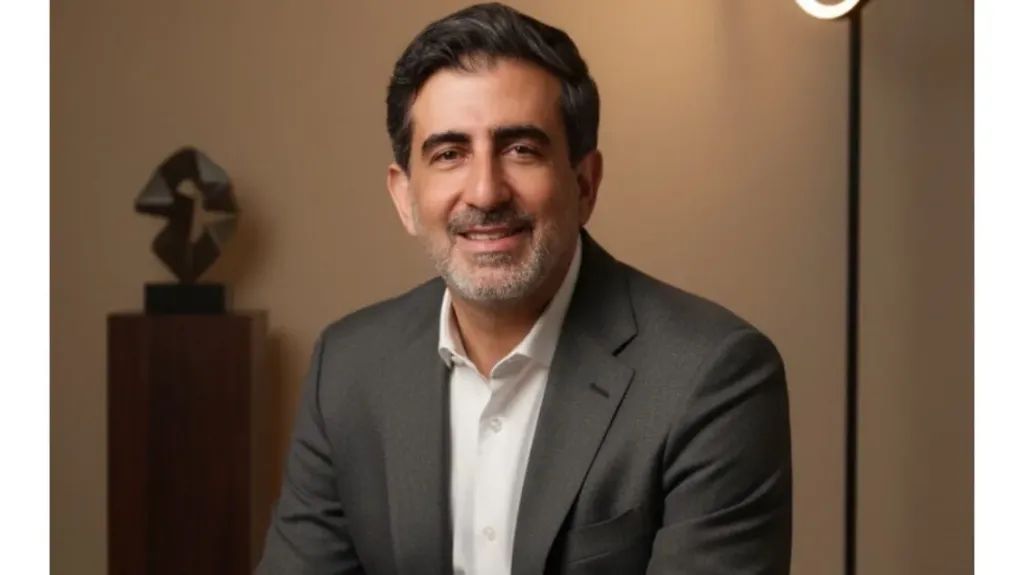
Samer Choucair: Britain’s Transfer of Power Opens a New Phase of Capital Reallocation
Entrepreneur Samer Choucair said the appointment of Andy Burnham as Prime Minister of the United Kingdom represents a structural turning point in British economic policy that could reshape the balance of risks and opportunities across European capital markets.
He noted that the transfer of power in London gives institutional investors a new opportunity to reassess their asset-allocation strategies across sovereign bonds, equities, and infrastructure.
Samer Choucair explained that the transfer of power from Keir Starmer to Andy Burnham on July 20, 2026, came less than two years after the Labour Party’s landslide election victory and amid domestic pressures that ultimately led to Starmer’s resignation.
He said the change reflects a clear shift toward a model described as “business-friendly socialism,” centred on decentralization and reindustrialization.
Rapid political transitions of this kind often result in the repricing of risk premiums in developed markets, particularly when accompanied by commitments to redistribute economic powers away from the centre.
Choucair added that the development gives sovereign wealth funds and asset managers an opportunity to reconsider their exposure to the British market at a time when global interest-rate trends intersect with the need for long-term investment in housing, energy, and transportation.
Samer Choucair noted that Andy Burnham, born in Liverpool in 1970, began his parliamentary career as the member for Leigh in 2001.
He subsequently held several ministerial positions in the governments of Tony Blair and Gordon Brown, including Chief Secretary to the Treasury, Secretary of State for Culture, Media and Sport, and Secretary of State for Health.
After leaving Parliament in 2017, Burnham served as Mayor of Greater Manchester until 2026, building a strong reputation for managing regional growth and addressing homelessness.
He returned to Parliament as the member for Mirfield in June before assuming the Labour leadership and becoming Prime Minister.
Samer Choucair explained that Burnham’s initial government program focuses on ending homelessness in England and launching the largest council-housing construction initiative since the end of the Second World War.
It also includes expanding public control over water, energy, and transportation services and establishing a “Number 10 North” unit in Manchester to serve as a centre for advancing decentralization policies.
Choucair added that the new government announced immediate measures intended to ease the cost of living, including removing the 5% value-added tax on household electricity bills from October 2026 and capping bus fares at £2 across England outside London during 2027.
The government also launched a ten-year economic plan that rejects the “trickle-down” model in favour of reindustrialization and regional empowerment.
Assessing the shift in fiscal policy, Samer Choucair said the appointment of John Healey as Chancellor of the Exchequer raises questions about the flexibility of fiscal rules during the next phase.
Healey is a veteran politician who previously resigned in protest against the rigidity of earlier fiscal policies.
Shabana Mahmood retained her position as Home Secretary, Ed Miliband moved to the Foreign Office, and Louise Haigh assumed a prominent government role as the effective Deputy Prime Minister.
“Government appointments of this kind reflect an effort to balance institutional continuity with a willingness to pursue more interventionist policies in strategically important sectors,” Samer Choucair said.
“This could have a direct effect on inflation expectations and real interest rates.”
Choucair added that the focus on increasing capital expenditure in housing and infrastructure could lead to a larger supply of British government bonds, or gilts, particularly if the government needs to finance a wider fiscal deficit over the medium term.
Equity markets could benefit from the new policies, particularly companies operating in housing, construction, public transportation, and renewable energy.
Privately owned utility companies, however, could face pressure if efforts to expand public control over essential services accelerate.
Samer Choucair emphasized that Burnham’s “Manchester model” creates broad investment opportunities for British cities outside London, including integrated transportation projects, affordable housing, and industrial transformation.
He explained that logistics and manufacturing could become among the principal beneficiaries of policies designed to rebalance economic activity geographically.
Private-capital and venture-capital markets will also monitor any additional incentives introduced to support innovation and scientific development under the new government structure.
Addressing economic relations with the Gulf, Samer Choucair explained that the Saudi economy and Vision 2030 are closely connected to British economic developments through foreign direct investment flows and trade in energy and financial services.
“Relative political stability in London, when combined with a clear focus on regional growth, could encourage Gulf investment funds to increase their exposure to British infrastructure and real estate assets outside London, particularly if the government supports this with a clearer regulatory framework,” Choucair said.
He added that any future move toward wealth taxes or higher capital-gains taxation could encourage some capital to seek alternative investment opportunities in other markets.
Samer Choucair noted that Burnham’s proposal to restructure government by creating a new Office of the Prime Minister and Cabinet and a unified implementation agency represents an attempt to improve public-spending efficiency and increase government-sector productivity.
Such changes would nevertheless require substantial investment in technology and digital transformation.
Choucair explained that these priorities create significant opportunities for institutional investors in artificial intelligence and digital infrastructure, alongside public-private partnerships that could also support the economic-diversification objectives of Gulf countries.
Samer Choucair added that the appointment of Miatta Fahnbulleh as Energy Secretary could influence the future of North Sea investment and the transition toward lower-carbon energy sources, while oil and gas continue to play an essential role in Britain’s energy-security framework.
He emphasized that the coming months will provide a genuine test of the new government’s ability to convert political commitments into executable policies without causing severe volatility in sterling or government-bond yields.
“Long-term investors are monitoring three principal indicators: the speed of housing-program implementation, the government’s adherence to fiscal rules, and the success of decentralization policies in attracting private investment to regions outside the southeast,” Samer Choucair said.
Choucair added that Britain’s emphasis on reindustrialization and infrastructure could create selective opportunities for private equity funds and sovereign investors seeking returns linked to real economic growth, particularly amid elevated global financing costs and the possibility of slower European growth.
Political risks nevertheless remain, as the government continues to operate under the current parliamentary mandate until the next general election, expected in approximately three years.
Concluding his remarks, entrepreneur Samer Choucair said the principal challenge facing the new British government will be achieving a careful balance between ambitious social spending and maintaining market confidence in the sustainability of public finances.
“Long-term investors monitor execution rather than political slogans,” Samer Choucair said.
“For investment funds and Gulf investors, developments in British industrial and energy policy will be decisive in determining the appeal of UK assets within portfolios focused on Vision 2030, the digital economy, and investment trends throughout 2026.”