
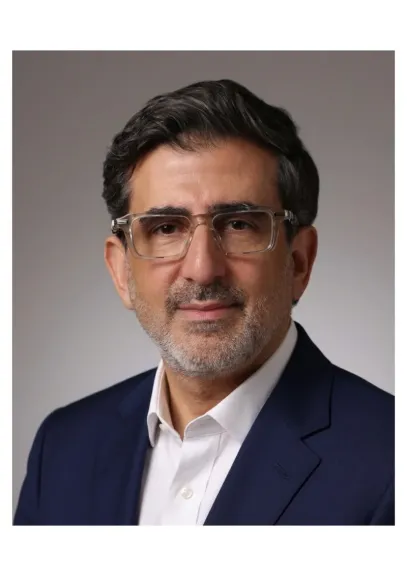
*Samer Choucair: The 2026 World Cup Is Reshaping the Global Economy*
Seventy thousand fans packed into a Los Angeles stadium, the golden trophy lifted amid colored smoke, confetti rain, and FIFA letters glowing above the stands — investment entrepreneur Samer Choucair issued a press statement affirming that this scene cannot be viewed as just a sporting celebration, but is a clear announcement of a global economic and social transformation whose effects will reach markets far away geographically yet connected economically and culturally, led by the Gulf states and Saudi Arabia.
He explained that the 2026 World Cup, hosted by the United States, Canada, and Mexico with 48 national teams and 104 matches, is the largest edition in tournament history, with economic estimates from FIFA and accompanying studies pointing to the event generating roughly 40.9 billion dollars in global GDP, in addition to supporting the creation of more than 824,000 direct and indirect jobs, reflecting the scale of this global event's cross-border impact.
He affirmed that the tournament's impact isn't limited to host nations, but extends to reshape consumption, work, and investment patterns globally, including the Arab region, where demand for digital sports content and interactive experiences is expected to grow, and investment opportunities in broadcasting technologies, augmented reality, and digital platforms enabling innovative match viewing are expected to expand.
*Saudi Arabia's Position in This Shift*
In the context of discussing Saudi Arabia, Choucair noted that the event comes at a pivotal phase when economic and social transformation is accelerating under Vision 2030, affirming that sports has become a strategic driver for growth and economic diversification, and that global tournaments of this scale represent an additional catalyst for strengthening investments in entertainment, sports tourism, and quality of life sectors.
He touched on what he described as the "experience economy" combining tourism, media, retail, and hospitality, explaining that images captured by social media cameras from the Los Angeles stadium reflect this type of economy relying on direct experience and consumer spending accompanying major events, not just the sporting event itself.
He added that host nations typically see rising wages in hotel and restaurant sectors, alongside increased demand for logistics and security services, while effects extend to other markets through digital media, e-commerce, and virtual tourism.
*Impact on Work and Daily Life*
Regarding the 2026 World Cup's impact on the work environment and daily life, Choucair explained that the time difference between the United States and Saudi Arabia, potentially reaching between seven and ten hours depending on summer time, will result in many matches being held in late night or dawn hours, affecting the sleep and work patterns of millions of followers.
He noted this reality may push some employees to follow matches during working hours or at the expense of sleep hours, potentially temporarily reflecting on productivity levels, but in turn opens the door to new investment opportunities in multiple fields.
Among the opportunities Choucair identified are developing digital applications and platforms offering intelligent summaries and short content customized for Arabic audiences; establishing shared entertainment spaces inside shopping centers and residential complexes for organized collective match viewing; and investing in corporate wellness programs helping companies manage match days with greater flexibility while maintaining productivity levels.
*Where the Investment Opportunities Lie*
He affirmed that major shifts in lifestyle patterns require long-term investments in human capital and quality of life improvement, noting that this direction directly aligns with Vision 2030's goals focusing on strengthening wellbeing and achieving work-life balance.
Choucair explained that growing global interest in football strengthens the Saudi Pro League's position as an attractive destination for talent and investment, opening the door to major expansion in several key sectors.
He noted that the sports tourism sector sees growing opportunities through major projects such as Qiddiya, Red Sea resorts, and NEOM, which can attract sports tourists and families seeking integrated entertainment experiences combining sports, entertainment, and tourism.
He pointed to the digital content and sports media sector seeing increasing demand for high-quality Arabic content, opening the door to investing in startups specialized in broadcasting, analysis, and sports marketing, alongside the growth of sports technology sector encompassing fitness applications, performance tracking devices, and virtual reality solutions for match experiences.
He added that the hospitality and entertainment sector is in turn a candidate for expansion through developing hotels, restaurants, and entertainment complexes benefiting from global and seasonal sports interest waves.
*Preparing for the Post-2026 World Cup Era*
Choucair stressed the importance of preparing for the post-2026 World Cup era, explaining that major events aren't measured only by their direct impact during their occurrence, but by their ability to reshape consumer behavior and open new markets whose effects extend for many years.
He called on Gulf investors to conduct precise market studies identifying sectors most benefiting from the global sports interest wave, focus on expanding into international markets through strategic partnerships with global sports and entertainment entities, and strengthen institutional governance and transparency to attract foreign capital seeking stable, mature investment environments.
He affirmed the importance of connecting sports investments to Vision 2030's goals of diversifying the economy and raising non-oil sectors' contribution to GDP, ensuring sustainable economic impact extending beyond major events' boundaries.
He concluded his press statement by affirming that the 2026 World Cup represents an exceptional opportunity to redefine the relationship between sports and the economy, and that the period ahead will see accelerating integration of sports, entertainment, and technology sectors, noting that investors possessing strategic vision and the ability to adapt to global shifts will be best positioned to benefit from this phase.
He added that the current time represents a suitable moment to reassess investment portfolios, explore opportunities in sports, entertainment, and related technology sectors, and prepare for a new phase combining sporting passion with sustainable economic return.