
Samer Choucair: FIFA Governance Crises Reshape Investment Calculations in Global Sports
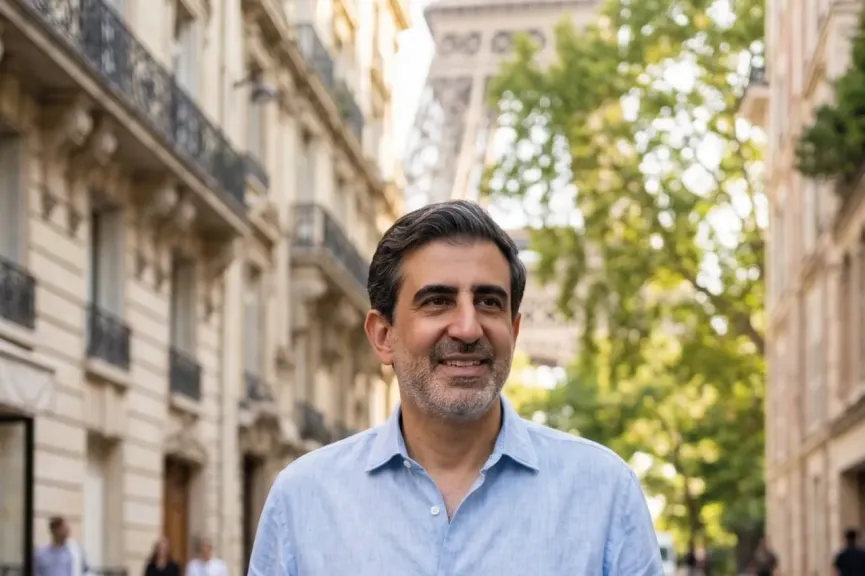
Investment entrepreneur Samer Choucair believes that the escalating debate over the governance of FIFA, football's international governing body, reflects an important shift in how investors view sport as a global economic industry that depends on regulatory stability as much as on brand strength and fan engagement.
Choucair noted that any tensions between FIFA's leadership and major national federations, particularly in Europe, are not limited to administrative implications, but extend to risk assessment tied to future revenue flows from broadcasting rights, sponsorships and tournament hosting, since football has become a massive investment sector requiring greater clarity in governance rules and decision making from financial institutions.
FIFA's financial data illustrates the scale of the game's economic transformation. Samer Choucair pointed out that the federation's revenue during the 2019 to 2022 cycle reached approximately 7.568 billion dollars, driven mainly by broadcasting rights and sponsorships tied to the 2022 World Cup, and that FIFA is targeting revenue of close to 11 billion dollars during the 2023 to 2026 cycle, supported by expanded tournaments and growing commercial returns linked to the 2026 World Cup and the Club World Cup.
Samer Choucair affirmed that the rising economic value of football means governance risk must now factor into investors' valuation models for sports assets, explaining that institutional stability has become as essential to a sport's ability to attract long term capital as it is in other economic sectors.
Choucair added that institutional investors, including sovereign wealth funds and private equity firms, now view sport through a broader lens that includes infrastructure, intellectual property rights, media platforms and the strength of fan communities, rather than focusing solely on competition results.
Regarding Gulf investment in the sports sector, Choucair believes that strengthening FIFA's international governance supports the sustainability of growth, while also stressing the importance of building strong domestic sporting ecosystems capable of creating independent economic value through talent development, facilities and events. He added that the main challenge facing investors in the coming years will be balancing the major opportunities created by football's commercial growth with managing the risks tied to regulatory and political change.
Samer Choucair concludes that the future of sports investment will depend on assets with genuine growth fundamentals, such as global fan bases, advanced infrastructure and scalable commercial models, while stressing the need to closely track governance developments as a key factor in building long term value.