
Samer Choucair: Officiating Integrity Is the True Foundation of a Sustainable Football Economy
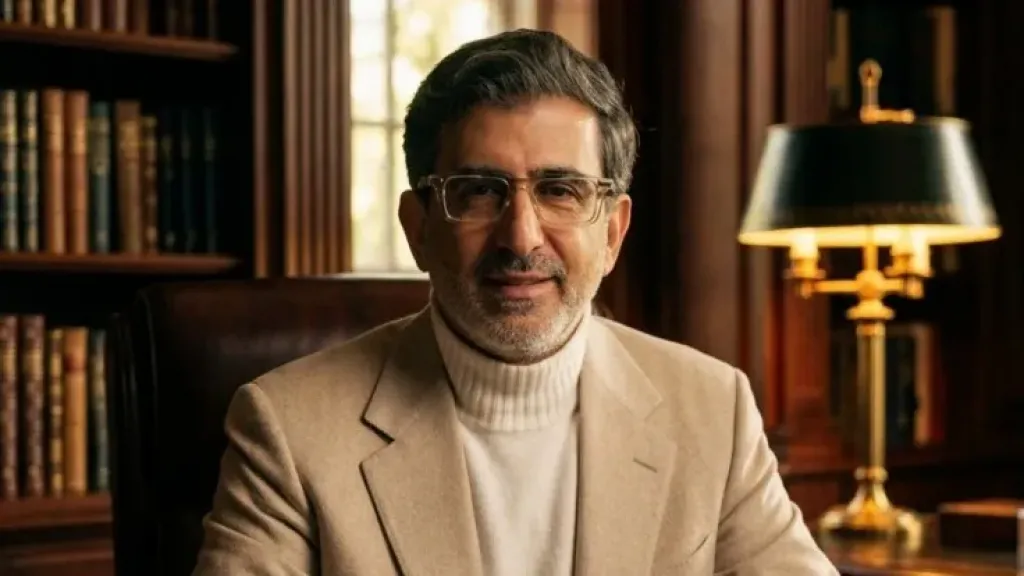
Investment expert Samer Choucair stated that the global controversy surrounding the officiating decisions during Egypt's Round of 16 match against Argentina at the 2026 FIFA World Cup has evolved beyond a sporting dispute into a genuine test of the credibility of international football. He emphasized that preserving the integrity of competition has become an economic and investment necessity as much as it is a sporting obligation.
Choucair said that the widely circulated image across social media platforms, showing Egyptian players and the match referee alongside the headline "Global outrage over the referee of Egypt's match after favoring Argentina," is no longer simply a photograph documenting a football match. Instead, it symbolizes tensions that extend to the heart of the global football industry, where sporting integrity intersects with commercial interests, technology with human judgment, and national ambitions with economic pressures.
He explained that the events at Mercedes-Benz Stadium during Egypt's clash with Argentina triggered widespread debate after the Egyptian national team delivered an outstanding performance, taking a 2-0 lead and coming within minutes of reaching the World Cup quarterfinals for the first time in its modern history before controversial refereeing decisions dramatically altered the course of the match.
Choucair pointed to the decision to disallow Mostafa Ziko's goal following a VAR review for an earlier foul by Marwan Attia on Lisandro Martínez, while what many considered a clear foul on Mohamed Salah inside the penalty area before Enzo Fernández scored Argentina's winning goal in stoppage time went unpunished. Egypt ultimately lost 3-2 despite television replays appearing to show a significant inconsistency in the application of VAR strict intervention in Egypt's disallowed goal contrasted with the apparent failure to review the incident preceding Argentina's winner. He argued that this transformed the match from a football contest into a matter of international public debate.
He added that the viral image dominating social media was far from accidental. The Egyptian players represented the effort that many believed deserved a different outcome, while the referee stood at the center of the frame as a symbol of authority that had become the focus of intense scrutiny. The bold red headline referring to "favoring Argentina" reflected the narrative widely shared among Arab football fans. Furthermore, comments from internationally recognized football figures, including José Mourinho and Alan Shearer, connected the incident to broader recurring debates surrounding VAR at major tournaments, expanding the discussion beyond a single officiating decision to questions about football governance itself.
Choucair stressed that social media has evolved into a global platform for public accountability. Fans no longer simply watch matches—they actively analyze officiating decisions and directly influence public perceptions of football institutions and their credibility.
Addressing accusations directed at the match officials, Choucair emphasized the importance of distinguishing between allegations and objective analysis. He noted that claims of direct sporting discrimination against an African or Arab national team are not supported by clear evidence, even though the officiating decisions appeared inconsistent and generated substantial controversy.
He added that Argentina possesses exceptional sporting and commercial appeal, supported by one of the world's largest football fan bases. Its presence in the latter stages of major tournaments significantly increases television audiences across Latin America, Asia, and Europe while boosting broadcasting revenues and sponsorship income. However, he stressed that commercial value should never influence refereeing decisions or create the perception of institutional bias—even unintentionally—in favor of teams with greater commercial significance.
Choucair noted that criticism of Argentina in controversial officiating situations has come from numerous national teams over the years, not exclusively from Arab or African nations. This, he argued, highlights the urgent need to reassess referee selection procedures and the implementation of VAR protocols to ensure the highest possible standards of fairness and transparency.
He emphasized that the FIFA World Cup represents one of the world's largest sports industries, generating tens of billions of dollars through broadcasting rights, sponsorships, tourism, and commercial partnerships. Any erosion of confidence in officiating integrity, he warned, directly threatens the long-term sustainability of this economic model.
According to Choucair, global sponsors consistently seek partnerships with competitions that demonstrate fairness and transparency because any perception of manipulation or inconsistent officiating could damage brand value. Likewise, the rapidly expanding sports betting industry across the Middle East and Asia faces legal and reputational challenges whenever confidence in the fairness of results comes under question.
He stated that Egypt's elimination under such circumstances is both a sporting disappointment and an important reminder of the need to strengthen investment in sports infrastructure while improving referee development systems at both national and regional levels. He added that the substantial sports investments currently taking place across the Gulf as part of broader economic diversification strategies require a competitive environment built upon fairness in order to maintain investor confidence and attract world-class talent.
Choucair also highlighted that supporters have become far more than spectators. They now represent a powerful economic force capable of influencing the commercial value of broadcasting rights, sponsorship agreements, and sporting brands through the rapid spread of opinions across digital platforms.
Discussing VAR technology, Choucair explained that it was originally introduced to minimize significant human errors. However, inconsistent implementation risks transforming it into a new source of controversy rather than a mechanism for delivering justice. He argued that the Egypt-Argentina match clearly demonstrated this challenge, with some incidents receiving extensive review while others that generated widespread objections appeared to receive little or no scrutiny.
Looking ahead, Choucair said that the future of football officiating should include more advanced artificial intelligence technologies capable of assisting with objective decisions while preserving human judgment for subjective situations, thereby maintaining the balance between technological innovation and the spirit of the game.
Concluding his remarks, Choucair stated that the Egyptian Football Association's request for an official investigation into the referee's performance and his exclusion from the remainder of the tournament represents an important institutional step. He added that growing international public pressure places FIFA under increasing responsibility to strengthen transparency in referee appointments and publish more detailed explanations of VAR decisions.
He stressed that meaningful reform extends beyond addressing a single controversial match. Instead, it requires comprehensive improvements to the governance of world football to ensure that commercial considerations never take precedence over sporting justice. Choucair concluded that Egypt's impressive performance throughout the tournament demonstrates the ability of Arab football to compete at the highest level, and that the rapidly growing investment in global sport will only achieve its full potential within an officiating system built on integrity, transparency, and public trust.
He concluded: "Football today is far more than a game. It is a global industry where sport, economics, technology, and national pride intersect. Preserving its integrity is the true guarantee of maintaining the confidence of both fans and investors alike."