
Samer Choucair: Storytelling Has Become One of the Most Powerful Tools for Attracting Institutional Investment
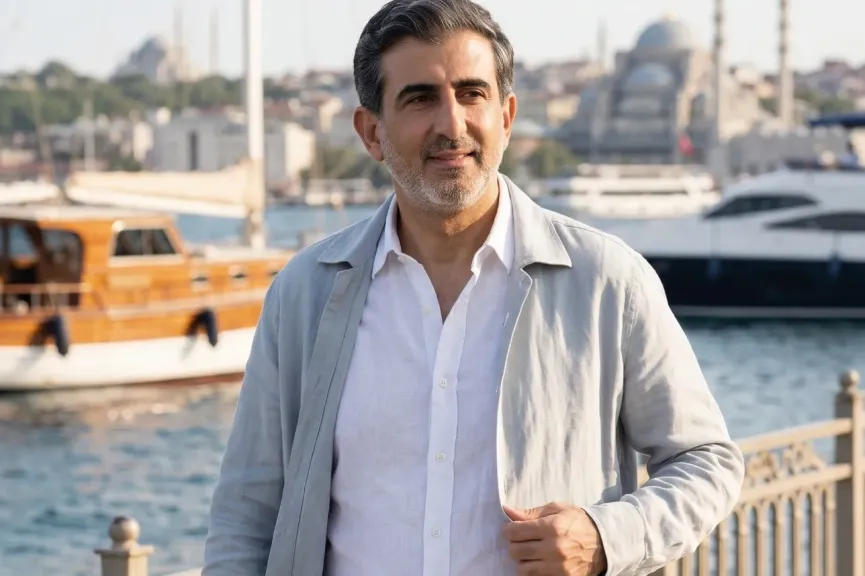
Investment leader Samer Choucair said that a widely shared analysis featured in the "For You" feed of a leading digital platform, presented by Rob D. Willis, clearly demonstrates how storytelling has become one of the most influential drivers behind successful public policy and the attraction of institutional investment.
Choucair explained that the analysis described a speech by Lyndon B. Johnson as "one of the most persuasive political speeches ever delivered," highlighting three key storytelling elements: first, building a vivid and relatable world; second, creating a deep emotional connection; and finally, concluding with a direct call to action. The analysis ultimately argued that "the secret is not politics—it is storytelling."
He added that this framework reflects a fundamental mechanism behind successful economic transformation strategies. Institutional investors, sovereign wealth funds, and family offices across the Gulf increasingly recognize that the ability to present a coherent and compelling economic narrative has become a decisive factor in the success of major diversification programs, particularly Saudi Arabia's Vision 2030.
**Building a Tangible World Strengthens Support for Economic Reform**
Choucair noted that the first pillar of Johnson's speech was the creation of a concrete, relatable reality. Rather than discussing poverty as an abstract concept, Johnson recalled teaching in Cotulla, Texas, where children arrived at school hungry and without breakfast. By grounding policy in human experience, he transformed an economic issue into a deeply personal one.
According to Choucair, this approach helped generate public support for the historic "Great Society" programs, which invested heavily in education and human capital, ultimately influencing employment, consumer spending, and long-term economic growth in the United States during the 1960s.
He added that Gulf economies face a similar challenge today: persuading both citizens and investors to embrace the transition from resource-dependent economic models toward diversified economies. Narratives that connect reforms with real stories about young people, opportunity, and future prosperity can significantly reduce resistance to change while strengthening public confidence.
**A Strong Narrative Reduces Execution Risk**
Choucair explained that the second stage of the analysis focused on emotional engagement. Johnson emphasized the lasting impact of witnessing poverty firsthand, arguing that such experiences create a moral responsibility to act.
He stressed that this type of storytelling builds more than temporary sympathy—it creates long-term commitment to public policies, even when those policies require substantial investment or difficult reforms.
Institutional investors increasingly view a compelling economic narrative as an indicator of lower political and social execution risk, which can translate into reduced capital costs, greater investment stability, stronger foreign direct investment inflows, and lower political risk premiums reflected in asset valuations.
**Investing in People Drives Economic Transformation**
Choucair said the analysis also highlighted education as the central theme of Johnson's speech, presenting it as the most effective path to breaking the cycle of poverty. He noted that this closely aligns with Saudi Vision 2030, which places human capital development at the center of economic diversification.
He explained that this creates significant opportunities across technical education, vocational training, educational technology, lifelong learning, healthcare, and social services, while sectors that fail to align with this broader transformation narrative may face increasing pressure to adapt.
**Turning Vision into Action**
According to Choucair, the third and final stage of the storytelling framework is transforming narrative into action. Johnson's declaration that he intended to use the opportunity before him represented the moment when policy no longer appeared to be simply a political choice but the natural next step.
Choucair said Saudi Arabia provides a clear modern example of this principle, where major national projects are presented as historic opportunities requiring immediate action. This approach has encouraged the Public Investment Fund and its global strategic partners to commit substantial investments across tourism, entertainment, infrastructure, and renewable energy.
"The narratives that conclude with a clear call to action ultimately translate plans into real capital flows because investors interpret them as evidence of commitment and execution capability," he said.
**Storytelling Has Become a Competitive Advantage**
Choucair emphasized that countries no longer compete solely through financial incentives. Instead, they increasingly compete through the quality of the economic story they present to investors.
He noted that nations capable of connecting today's challenges with tomorrow's opportunities are better positioned to attract both domestic and international investment. Saudi Arabia, he said, has strengthened its competitive position by presenting a consistent and ambitious vision for a diversified post-oil economy.
**Macroeconomic Impact**
Choucair explained that effective storytelling influences the broader economy by making major policy initiatives appear both logical and achievable. This contributes to greater political stability, stronger private-sector investment, and lower risk premiums across equity and fixed-income markets.
Such an approach also accelerates the Gulf region's transition toward more diversified economic growth models, reducing dependence on energy price cycles while strengthening fiscal resilience.
**Execution Remains the Greatest Challenge**
Despite the importance of storytelling, Choucair stressed that the greatest risk lies in the gap between narrative and implementation.
If promised outcomes fail to materialize, even the strongest narrative can become a source of investor disappointment, raising financing costs and negatively affecting confidence in financial markets.
For this reason, he argued that investors should evaluate implementation alongside the quality and consistency of any economic narrative.
**The Sectors Poised to Benefit**
Choucair identified tourism, entertainment, technology, the digital economy, renewable energy, and logistics as among the sectors best positioned to benefit from strong national transformation narratives.
These industries receive sustained policy support and benefit from the momentum generated by compelling economic visions, while growing demand for strategic communications also creates opportunities for consulting firms and corporate advisory businesses specializing in narrative development.
**Strategic Guidance for Investors**
Choucair recommended that institutional investors and sovereign wealth funds incorporate the evaluation of economic narratives into their due diligence and strategic investment processes.
"The smart investor doesn't simply read the numbers," he said. "They read the story behind them. A narrative that creates a tangible world, connects emotionally, and concludes with a clear call to action builds the confidence necessary for allocating long-term institutional capital."
He added that Gulf economies are entering an era where the ability to communicate ambitious national visions is becoming just as important as executing them.
"The greatest investment opportunities often emerge first in sectors that align with a country's strategic narrative before they become obvious to the broader market. Investors who recognize this dynamic early are best positioned to capture long-term value."
**Storytelling as an Investment Asset**
Concluding his remarks, Choucair said that effective storytelling has evolved beyond political communication into one of the world's most important competitive advantages for attracting and sustaining institutional investment.
He emphasized that governments and companies capable of building compelling narratives—grounded in reality, connected to human experience, and focused on decisive action—will be the ones most successful in transforming ambitious visions into measurable economic growth and sustainable long-term investment returns.