
Samer Choucair: AI and Economic Shifts Open Investment Horizons Under Vision 2030
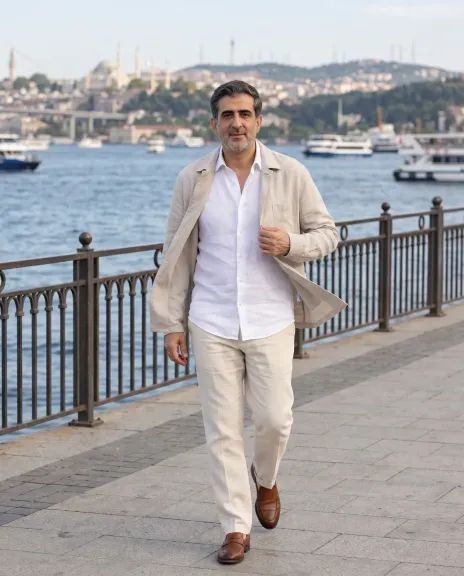
In light of the accelerating global economic shifts, and the growing role of artificial intelligence in reshaping productive and service sectors, investment entrepreneur Samer Choucair affirmed that Saudi Arabia is entering 2026 as a pivotal stage in its economic transformation journey, driven by Vision 2030's momentum, and expanding investment in digital infrastructure, artificial intelligence, tourism, energy, and logistics services.
He explained that the current global scene reflects a clear transition from the traditional economy to an economy based on knowledge, data, and computing, as computing power, artificial intelligence, and big data have become central elements in reshaping global value chains, and in determining investment flows and capital, adding that this shift isn't limited to technology companies, but extends to energy, tourism, financial services, trade, and infrastructure sectors.
He noted that among the most prominent emerging global trends in 2026 is the development of computing power markets as a priceable, tradable economic asset, with the concept of data centers expanding from being operational infrastructure to being strategic assets tied to new financial markets, including futures contracts and derivative financial instruments, considering that this shift represents a new phase in the development of the digital economy, similar to what happened in energy, transport, and commodity markets.
*Saudi Arabia's Position to Benefit*
In the same context, Choucair affirmed that Saudi Arabia enjoys a unique strategic position qualifying it to be one of the most prominent global hubs in the AI economy, thanks to abundant energy, the rapid expansion in data centers, direct government support through the Public Investment Fund, and advanced national initiatives in data and artificial intelligence fields, in addition to international partnerships with global technology companies.
He explained that launching major projects in digital infrastructure, including giant data centers, cloud computing, and Arabic language models, strengthens the Kingdom's ability to transition from a technology consumer to a producer and exporter of digital capabilities, aligning with Vision 2030's targets of diversifying the economy and strengthening non-oil sectors' contribution.
*Tourism's Shift Toward the Experience Economy*
In another aspect, Choucair noted that the Saudi tourism sector is undergoing a qualitative transformation driven by changing consumer behavior, rising tourism spending, and growing reliance on AI technologies in trip planning and travel decisions, pointing out that Saudi Arabia welcomed more than 122 million visitors in 2025, with record tourism spending exceeding 304 billion Saudi riyals, reflecting strong local and international demand for the sector.
He added that the shift from the concept of "traditional travel" to the "experience economy" represents one of the most important structural changes in the tourism sector, as consumers no longer just seek accommodation or a destination, but an integrated experience encompassing entertainment, culture, adventure, and personalized digital services, affirming that this shift opens broad investment opportunities in luxury hospitality, major entertainment projects, smart digital platforms, and traveler-oriented services.
*Where the Opportunities Lie*
Regarding digital transformation, Choucair explained that the spread of artificial intelligence in travel planning, e-commerce, and financial services is reshaping consumer behavior in the Kingdom and the region, as a large proportion of users now rely on AI tools in making travel decisions and choosing destinations and services, considering that this trend creates new investment opportunities in integrated digital platforms linking data, consumer behavior, and actual services.
He affirmed that the Kingdom today represents an advanced model for integrating technology with the real economy, through massive investments in AI projects, data centers, and digital transformation, alongside supporting entrepreneurship and small and medium enterprises, helping strengthen the economy's resilience and raise its competitiveness regionally and globally.
In concluding his remarks, Choucair stressed that the period ahead in capital and investment markets won't depend on capital scale alone, but on the ability to understand deep structural shifts in the global economy, and deploy them within long-term investment strategies, affirming that investors who recognize the relationship between artificial intelligence, digital infrastructure, consumer behavior, and Vision 2030 will be best positioned to achieve sustainable returns in the coming years.