
The Bioplastics Boom: How Biodegradable Alternatives Are Advancing the Green Agenda
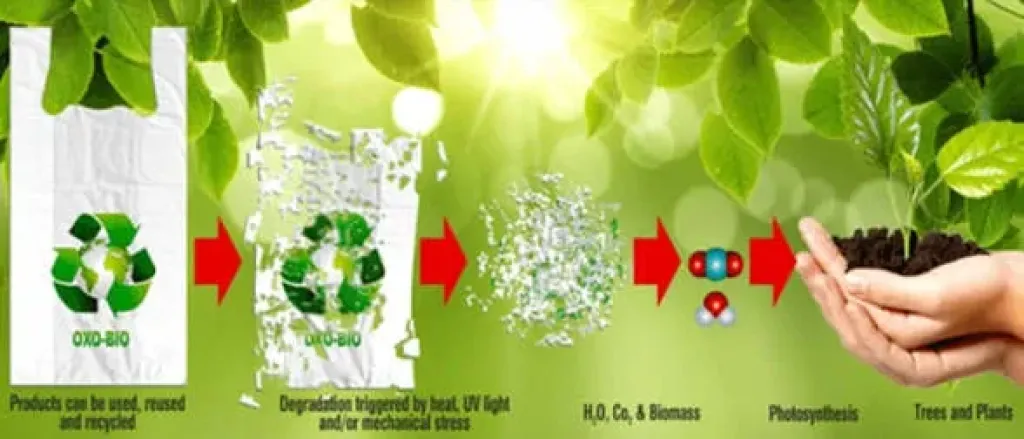
For decades, plastic has been both a marvel of modern convenience and one of the planet's most stubborn pollutants, lingering in landfills and oceans for centuries. Now a fast-growing class of biodegradable alternatives is changing that calculus, moving from laboratory curiosity to commercial reality and giving the broader environmental movement one of its most tangible victories. The numbers suggest this is no longer a fringe experiment but a genuine industrial shift.
The market data tells a story of rapid acceleration. The bioplastics market was valued at roughly $18 billion in 2025 and is projected to climb past $21 billion in 2026, with longer-term forecasts pointing toward $90 to $120 billion within the next decade. Growth rates hover consistently in the high teens, around 16 to 19 percent annually depending on the analysis, placing bioplastics among the faster-expanding segments of the materials industry. Biodegradable resins specifically now account for roughly half the market, a sign that compostable materials are leading the charge rather than trailing it.
The appeal rests on a fundamental environmental advantage. Unlike conventional plastics, which can take hundreds of years to break down, biodegradable polymers decompose through the action of microorganisms in a matter of months to a few years. The production benefits are equally striking: bioplastics derived from renewable resources can reduce carbon dioxide emissions by an estimated 30 to 70 percent and require substantially less energy to manufacture than their petroleum-based counterparts. For a movement long accused of offering sacrifice without solutions, these are concrete, measurable gains.
Much of the momentum is being driven not by consumer preference alone but by government policy. Single-use plastic bans across the European Union, North America, and parts of Asia-Pacific are forcing packaging manufacturers and brand owners to reformulate their product lines around certified compostable and bio-based materials. Legislation in more than 60 countries now mandates bio-based alternatives, creating regulatory-driven demand that exists regardless of cost competitiveness. What were once pilot-scale experiments have now entered commercial procurement specifications, meaning major buyers are being held to strict bioplastic content thresholds in their purchasing contracts.
Packaging sits at the heart of this transformation, representing the largest single application as food service, retail, and e-commerce shift away from petroleum plastics. Materials like polylactic acid, or PLA, derived from corn starch and sugarcane, dominate the field thanks to their compostability and ease of processing, while newer polymers like PHA and PBS are growing even faster. Established chemical giants including BASF, Total Corbion, and Mitsubishi Chemical have moved into the space, and a wave of biotech innovation, some of it using AI to accelerate the development of new bio-based materials, is steadily improving performance and lowering barriers.
Yet an honest account requires acknowledging the genuine obstacles, because the green agenda is best served by clear eyes rather than cheerleading. Cost remains the central challenge: bioplastics are still more expensive than conventional plastics, whose low prices make them hard to displace without regulatory pressure. There are also infrastructure gaps. Many biodegradable plastics require industrial composting facilities to break down properly, and that collection, certification, and composting infrastructure lags well behind the materials themselves. Improperly managed biodegradable waste can even release chemicals into the environment if not handled correctly, and reliance on food-crop feedstocks like corn raises its own sustainability questions, prompting researchers to shift toward agricultural residues, wood, and municipal organics.
These caveats matter, but they describe growing pains rather than fundamental failure. The trajectory is unmistakable: tightening regulation, rising corporate sustainability commitments, and steady technological improvement are together pushing biodegradable alternatives from the margins into the mainstream. Far from sidelining environmental goals, the bioplastics boom represents the green agenda doing exactly what it set out to do, namely turning ecological ambition into industrial practice. The challenge ahead is no longer proving that alternatives can exist, but building the composting systems, scaling the production, and closing the cost gap so that they can fully deliver on their promise.