
The Digital War of the Titans: How Zuckerberg and Musk Are Redefining Social Media
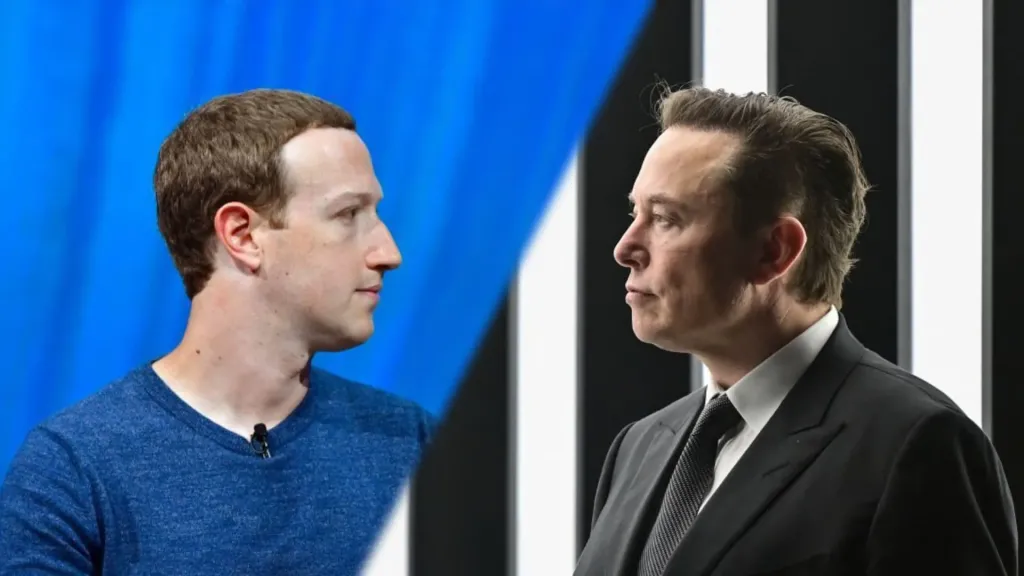
Few rivalries in the history of modern technology have captured global attention quite like the escalating war between Mark Zuckerberg and Elon Musk. What began as competitive posturing between two of the world's wealthiest individuals has evolved into a genuine strategic battle reshaping the global social media landscape, redefining how billions of people communicate, consume news, and participate in public discourse.
To understand this rivalry fully, one must understand what each man represents not merely as a businessman but as a philosophical archetype. Musk is the self-styled libertarian disruptor, the man who believes unfettered free speech is civilization's most important asset and that institutions, including social media platforms, have been captured by ideological interests that suppress dissenting voices. Zuckerberg is the methodical empire builder, the engineer who thinks in systems and network effects, who has survived congressional hearings, antitrust investigations, and repeated public relations catastrophes to build the largest social media ecosystem in human history.
Their collision was perhaps inevitable.
*Twitter Becomes X: The Acquisition That Changed Everything*
The immediate catalyst for the current rivalry was Musk's acquisition of Twitter in October 2022. After months of public offers, legal disputes, and what appeared to be genuine attempts to exit the deal, Musk completed the purchase for $44 billion, walked into Twitter's San Francisco headquarters carrying a physical sink, and posted the now-famous caption "let that sink in."
What followed was one of the most turbulent corporate transformations in technology history. Musk immediately laid off approximately half of Twitter's 7,500 employees, a decision he framed as necessary cost-cutting but which critics argued gutted the platform's trust and safety infrastructure at precisely the moment it needed strengthening. Advertisers, wary of brand association with a platform whose content moderation direction was suddenly unclear, began departing in significant numbers. Major brands paused their spending, and Twitter's advertising revenue reportedly fell by more than 50% in the months following the acquisition.
Musk introduced Twitter Blue, a paid subscription service that controversially allowed users to purchase the blue verification checkmark previously reserved for notable accounts. The decision created immediate chaos as impersonation accounts proliferated, including fake verified profiles of pharmaceutical companies, politicians, and public figures that caused real-world confusion and, in some cases, briefly moved financial markets.
The platform was rebranded as X in July 2023, with Musk articulating his vision of transforming it into an everything app encompassing social media, news, payments, video, and eventually AI-powered services. The famous bird logo disappeared. The brand identity Twitter had spent fifteen years building was discarded in a matter of weeks.
Through all of this disruption, Musk maintained that he was liberating a platform that had been ideologically captured, restoring free speech principles, and building something far more ambitious than his predecessors had imagined. His supporters celebrated. His critics warned that the chaos was destroying institutional trust that had taken years to build.
*Zuckerberg Strikes: The Birth of Threads*
While Musk was dismantling and rebuilding Twitter, Zuckerberg was watching, evaluating, and preparing. The opportunity was obvious. Millions of Twitter users, particularly those in media, academia, technology, and progressive political circles, were expressing profound discomfort with the platform's new direction. They wanted an alternative that offered the real-time conversational format they had grown accustomed to without what they perceived as Musk's increasingly partisan editorial direction.
Meta had the infrastructure, the user base, and the engineering talent to build that alternative. The question was whether it had the speed and the will.
The answer arrived on July 5, 2023, when Meta launched Threads, a text-based social network directly integrated with Instagram. The integration was the strategic masterstroke. Rather than building a new platform from scratch and facing the cold start problem that kills most social media challengers, Threads allowed Instagram users to create accounts instantly, porting their existing follower networks with a single tap. The result was unprecedented. Threads attracted 100 million users within its first five days, a record that shattered every previous benchmark for platform adoption.
The launch timing was clearly deliberate. It came at a moment when X was experiencing its deepest advertiser flight and user discontent, when the hashtag "Twitter is dead" was appearing with genuine frequency in mainstream media. Zuckerberg positioned Threads as a friendlier, safer, less chaotic alternative, and the initial response suggested millions of users agreed.
*The Cage Fight That Never Happened*
The personal dimension of this rivalry reached its most theatrical moment in June 2023 when Musk publicly challenged Zuckerberg to a cage fight and Zuckerberg, to widespread surprise, accepted. The spectacle generated enormous global media coverage, dominated social media for weeks, and achieved something genuinely remarkable: it made both men simultaneously more human and more absurd, stripping away the corporate veneer to reveal something closer to schoolyard competition.
Zuckerberg, who had quietly been training in Brazilian jiu-jitsu and mixed martial arts for several years, appeared genuinely willing and arguably prepared for the contest. Musk's enthusiasm appeared to cool as the date approached, and various logistical and health-related reasons were cited for the fight's indefinite postponement. The whole episode became a kind of performance art illustration of the rivalry itself, with Zuckerberg appearing disciplined and focused while Musk appeared to have impulsively committed to something without fully thinking through the consequences.
The fight never happened. But the publicity it generated significantly boosted awareness of Threads precisely during its launch window, an outcome that, intentional or not, benefited Zuckerberg considerably more than Musk.
*The Competitive Landscape in 2024 and 2025*
As both platforms evolved through 2024 and into 2025, the competitive picture became more nuanced than the simple Threads-versus-X narrative suggested. X under Musk gradually stabilized after its initial chaos, with some advertisers returning and the platform finding a more defined identity as a destination for real-time news, political commentary, and a particular kind of unfiltered public discourse. Musk's own posting habits, prolific and frequently provocative, kept the platform in constant headlines and maintained a level of attention that purely algorithmic metrics might not have sustained.
Threads, meanwhile, faced the harder challenge of converting initial curiosity into habitual daily use. The platform expanded its feature set, introduced a chronological feed, added greater search functionality, and worked to build the kind of real-time news and event discussion culture that had made Twitter distinctive. Progress was genuine but gradual, with monthly active user counts growing steadily without achieving the dominance that Meta's initial numbers had seemed to promise.
The fundamental challenge for Threads remained what analysts had predicted from the beginning: replicating not just the format of Twitter but the particular culture of public intellectual discourse, breaking news discussion, and witty commentary that Twitter had cultivated over fifteen years. Culture cannot be imported through infrastructure integration, and Threads found itself working to earn something that X, despite all its turbulence, still largely possessed.
*Different Visions for the Digital Public Square*
Beneath the product competition lies a genuine philosophical disagreement about what social media is for and who it serves. Musk's vision for X is explicitly political and ideological. He believes mainstream social media platforms systematically suppressed certain viewpoints, and he has used X's content moderation policies, or their deliberate loosening, as a form of editorial statement about free expression. The platform under his leadership has reinstated accounts previously banned for various violations, reduced the intensity of content warnings on disputed information, and positioned itself as a space where controversial speech faces fewer institutional constraints.
Zuckerberg's approach has been more corporate and more carefully calibrated to avoid political positioning while still making implicit choices through algorithmic design and content policy. Meta announced in early 2025 that it would end third-party fact-checking on Facebook and Instagram in the United States, a decision that drew criticism from some quarters and praise from others but reflected Zuckerberg's apparent strategic decision to reduce Meta's visibility as a content arbiter amid growing political pressure from multiple directions.
Both approaches represent genuine positions on genuinely contested questions about the proper role of private platforms in managing public discourse. Neither is obviously correct. The outcomes of both experiments will shape how the next generation of social media platforms are designed and governed.
*The Financial Stakes*
The economic dimensions of this rivalry are considerable. Social media advertising remains a multi-hundred-billion-dollar global market, and the question of which platforms command user attention directly determines which platforms command advertiser spending. Meta's advertising business recovered strongly after its 2022 difficulties, with revenues exceeding $164 billion in 2024 and the company's AI-powered advertising tools generating strong returns for marketers and strong margins for Meta itself.
X's financial trajectory under Musk has been more difficult to track given its private status, but various reports have suggested that advertising revenues remain substantially below their pre-acquisition peaks despite some recovery. Musk has pursued subscription revenue through X Premium and explored payments integration as alternative income streams, consistent with his everything-app vision but not yet demonstrably transformative to the platform's economics.
The introduction of xAI and its Grok assistant into the X ecosystem represents Musk's most ambitious bet that AI can create the kind of differentiated utility that justifies premium subscription spending and reduces dependence on advertising. Meta's own AI investments, including the open-source Llama models and Meta AI's integration across its family of apps, reflect Zuckerberg's parallel conviction that AI will fundamentally reshape how users interact with social platforms.
*What the Rivalry Means for the Future*
The Zuckerberg-Musk war is ultimately a proxy for a series of larger questions that the technology industry and society more broadly are only beginning to work through. What role should private platforms play in governing public discourse? Who decides what speech is acceptable and by what principles? Can a platform built around real-time controversy and conflict sustain itself as a mass medium, or does it inevitably appeal to a specific and self-selecting audience? Can an existing social network successfully colonize a new conversational format by leveraging its existing user base, or does authentic platform culture require authentic platform genesis?
Neither man has definitively answered these questions. Both are running experiments at extraordinary scale with real consequences for how billions of people experience public life. The rivalry between them, whatever its personal and theatrical dimensions, is also a genuine contest between competing models of how social technology should be built, governed, and monetized in the twenty-first century.
The story is far from over. Threads continues to evolve. X continues to surprise. And the two men at the center of this particular chapter of technology history continue to watch each other with the focused attention of competitors who understand, perhaps better than most observers, that the stakes extend well beyond market share.