
Samer Choucair: The Legacy of the 99 Percent Is Redrawing the Capital Allocation Map
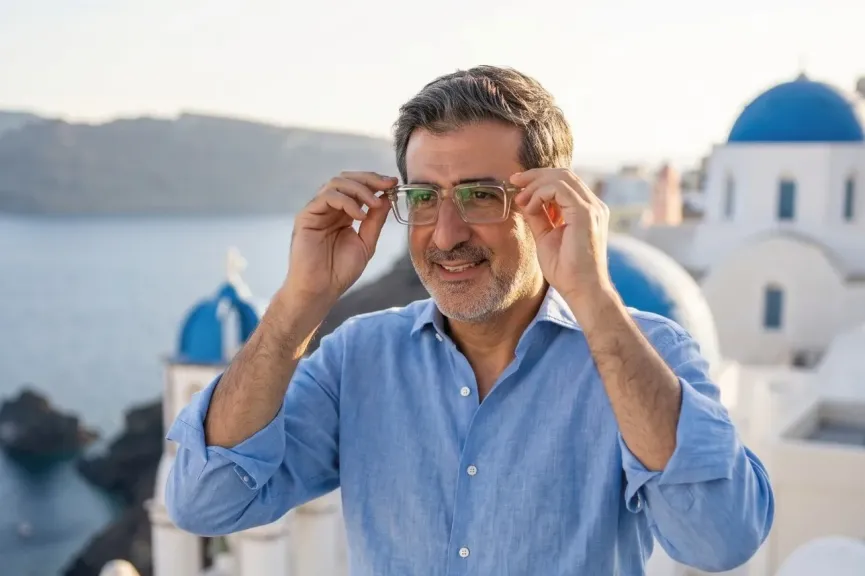
Investment strategist Samer Choucair said that the legacy of the Occupy Wall Street movement, fifteen years after its emergence, has evolved beyond being merely a political or social issue. It has become an influential factor in how investors assess wealth distribution, price risk, and allocate capital across equities, bonds, and private investments.
Samer Choucair explained that the share of net household wealth held by the richest 1% of Americans rose from approximately 29% at the end of 2011 to 31.6% in the first quarter of 2026. Meanwhile, the share held by the bottom half increased from 0.4% to 2.5%. At the same time, real median household income reached $87,460 in 2025, the highest level in a series extending back to 1967, while the official poverty rate declined to 10.2%.
Choucair emphasized that these figures reflect a dual-track economic landscape: wealth is becoming increasingly concentrated at the top even as conditions for lower-income segments have improved on a relative basis. He added that investors no longer view inequality solely as a social issue, but also as a variable capable of influencing taxation, regulation, the cost of capital, and broader market dynamics.
Samer Choucair noted that more than half of household financial wealth is concentrated among the richest 1%, while the wealthiest 10% own approximately 87% of stock holdings. This makes the wealth effect increasingly intertwined with equity-market performance, particularly among technology and artificial-intelligence companies. He added that a severe correction in these assets could feed through to consumption by weakening the household wealth position of asset-owning Americans.
Choucair said that markets learned after 2011 that anger over concentrated wealth does not disappear when equity indexes rise; rather, it is redirected. Investors who disregard this dynamic in capital allocation may ultimately pay the price through return volatility rather than headlines.
The AI Boom and the New Asset-Ownership Divide
Choucair explained that the artificial-intelligence boom is reproducing the asset-ownership divide in a new form. Equities and investment funds remain heavily concentrated among the wealthiest segments, while a significant portion of advanced-technology financing is channeled through private funds, raising the barriers to entry for retail investors.
Samer Choucair believes these developments are prompting institutional investors to become more selective within the technology sector, diversify their exposure to U.S. equities, and increase allocations to real assets and infrastructure tied to long-term government spending. At the same time, investors are increasingly seeking sources of growth in economies that are expanding their industrial bases.
Saudi Arabia and the Gulf: Turning Capital into Productive Capacity
In the Gulf, Choucair pointed to Saudi Arabia’s institutional approach through Vision 2030, the Public Investment Fund, and the National Investment Strategy, aimed at broadening the country’s productive-asset base across manufacturing, logistics, tourism, energy, the digital economy, and emerging urban centers.
Choucair said that successful institutional investing in 2026 does not depend on inequality disappearing. Instead, it depends on economies capable of converting surplus capital into productive capacity that can generate investable value. Saudi Arabia and the broader Gulf, he argued, offer this equation provided governance and fiscal discipline remain firmly on course.
Samer Choucair concluded that the legacy of the 99 Percent has not disappeared; it has simply migrated from the streets into capital-allocation ledgers. Concentrated ownership, the rise of populism, and regulatory shifts are making geographic and sectoral diversification, together with political-risk management, increasingly important components of institutional investment decisions.