
Samer Choucair: AI Governance Is Reshaping Capital Allocation Across Technology Markets
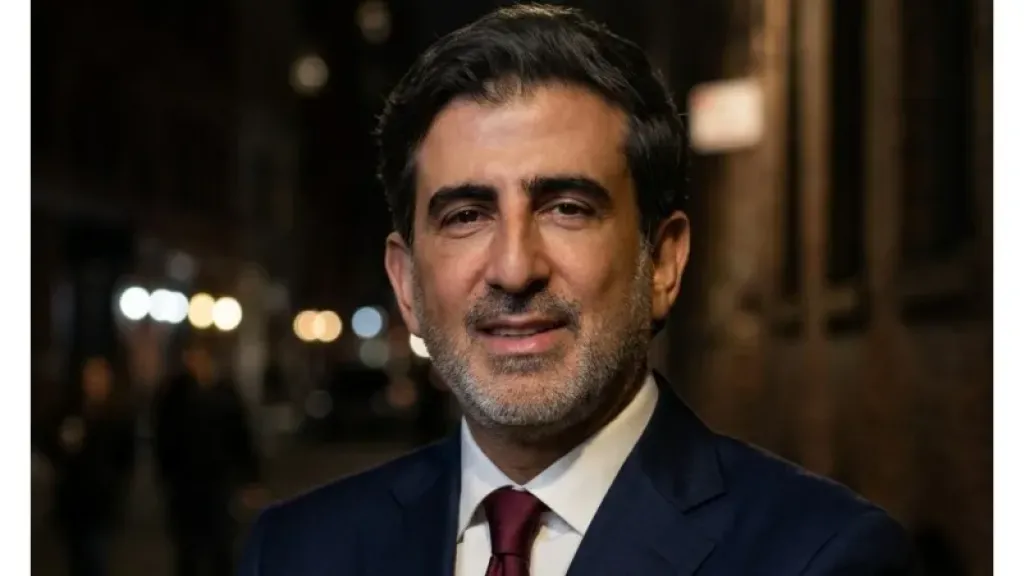
Investment leader Samer Choucair said the intensifying debate around artificial intelligence safety is no longer a regulatory issue separate from financial markets. It has become a direct factor in asset pricing and capital allocation.
Samer Choucair added that investors are increasingly viewing a company’s ability to subject its artificial intelligence models to independent evaluation as part of product quality rather than simply as a compliance burden.
He said capital is unlikely to divide in the next phase between supporters and opponents of faster model development. Instead, the distinction will be between companies that possess capabilities that can be governed and companies whose risks remain difficult for investment committees to assess.
Zuckerberg and Amodei Disagree on the Pace
Samer Choucair’s comments come as major artificial intelligence developers renew their debate over how risks should be managed.
Anthropic chief executive Dario Amodei has called for a slower pace of capability improvement so that alignment and safety systems have more time to keep up with model development. His position has received support from several prominent figures across the industry.
By contrast, Meta Platforms chief executive Mark Zuckerberg said each laboratory has both the incentive and the responsibility to move at a pace that allows training to remain safe.
He also pointed to the use of independent evaluators and advisers as one of the industry’s stronger practices and said Meta had delayed the release of its Muse tool for several months because of safety and security concerns.
Markets Balance a Slower Pace Against Continued Spending
Samer Choucair said markets may interpret any discussion of slowing the capabilities race as a threat to the capital expenditure cycle, even though moderating the pace of model development does not necessarily mean freezing investment in data centers, semiconductors, and cloud computing.
He added that competition among Meta, OpenAI, Google, Anthropic, and xAI is increasingly about regulatory legitimacy and institutional acceptance as well as technical performance.
Artificial intelligence has evolved in just three years into one of the largest capital expenditure programs in the technology sector, making governance increasingly relevant to the investment case.
New Opportunities for Investors
Samer Choucair said the repricing of risk could create opportunities for independent evaluation companies, model testing providers, agent security specialists, technology liability insurers, and compliance platforms.
He said these businesses could benefit if independent assessment becomes an institutional standard across banks, governments, and large corporations.
Choucair added that companies selling maximum speed without a verifiable control layer could face valuation discounts, while companies capable of demonstrating governance and operating stability may preserve stronger access to capital.
Saudi Arabia and the Gulf
Samer Choucair said the shift is particularly important for Saudi Arabia and the wider Gulf, where artificial intelligence has become part of economic diversification strategies and Vision 2030.
He said investment in data centers, semiconductors, and partnerships with global technology platforms is likely to continue.
However, the local governance layer, including evaluation, data controls, liability frameworks, and security, could increasingly become a condition for government contracts and institutional deployment.
Samer Choucair said the key question in the Gulf is no longer simply which model is more intelligent.
The more important question is which ecosystem can be audited and which control frameworks can be localized.
Risks and Outlook
Samer Choucair warned that independent evaluation will not meaningfully reduce regulatory risk if it remains superficial or commercially dependent on the laboratory being evaluated.
He also said a shortage of credible evaluators could create a new bottleneck in the artificial intelligence value chain.
Choucair believes the most likely path is that the artificial intelligence race will continue while governance standards become stricter.
That could increase the cost of capital for companies with weak disclosure while supporting growing demand for evaluation, insurance, and technical audit services.
Samer Choucair concluded that long term value in artificial intelligence will not be determined only by who reaches a more powerful model first.
It will also depend on who can make that capability trustworthy enough for sovereign, banking, and Gulf institutional portfolios.
He said that shift could materially reshape investment flows across the digital economy in 2026 and beyond.