
Samer Choucair: Expo Village Will Test Whether PIF and the Private Sector Can Create a Lasting Urban Asset
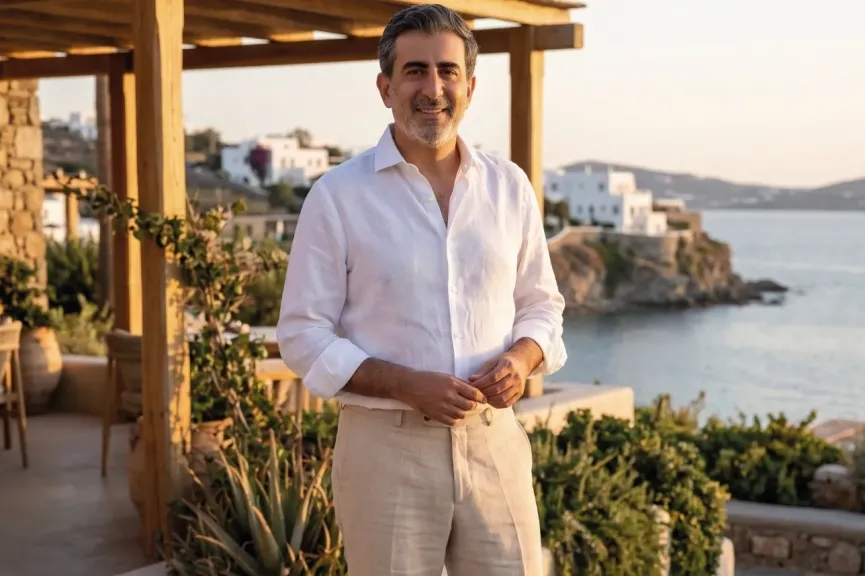
Investment leader Samer Choucair said the SAR 3.2 billion joint venture agreement to develop Expo Village as part of the Expo 2030 Riyadh ecosystem represents an important signal in the evolution of the partnership model between the Public Investment Fund and the private sector.
Samer Choucair said the project’s real investment value does not depend solely on the six month exhibition period, but on whether it can be transformed into a permanent residential and urban asset after the event ends.
Samer Choucair explained that Expo 2030 Riyadh Company, which is owned by the Public Investment Fund, signed the agreement with Mohammed Al Habib Real Estate Company to develop around 2,300 residential units with capacity for approximately 5,500 residents, alongside retail, service, and operational facilities.
The village is expected to accommodate official delegations and participants during Expo 2030 Riyadh, which will run from October 1, 2030 to March 31, 2031, before being converted into a permanent residential community in northern Riyadh.
Samer Choucair said: “The nominal value of the agreement is not the real story for institutional investors. The more important development is Expo moving from the phase of public infrastructure into the allocation of residential assets to the private sector in a location connected to King Khalid International Airport, the Expo station, and the wider transport network, while also sitting close to the King Salman International Airport corridor.”
Samer Choucair noted that Expo 2030 Riyadh, which will cover approximately 6 million square meters and is expected to attract participation from 197 official entities and more than 42 million visits, forms part of a much broader economic ecosystem.
Public Investment Fund estimates indicate that the event could contribute around SAR 241 billion to economic output during the construction and legacy phases and support approximately 171,000 direct and indirect jobs.
However, Samer Choucair stressed that these figures do not mean Expo Village will automatically capture the benefits of the broader sovereign spending program.
He said the project must ultimately be assessed as an independent asset once the event concludes.
Samer Choucair said: “An investor who prices the project on the basis of six months of official occupancy is using the wrong time horizon. The relevant horizon is a full decade, extending from construction through the stabilization of the neighborhood after the event.”
He added that the selection of Mohammed Al Habib Real Estate Company, which has more than five decades of experience and has delivered over 20,000 residential units, highlights the importance of combining capital and strategic oversight from the Public Investment Fund with the development and operating expertise of the private sector.
Samer Choucair believes the project benefits from the broader urban expansion cycle in northern Riyadh and from its links to transport infrastructure and airports.
At the same time, it faces risks including increased residential supply, construction costs, financing costs, labor pressures, and the challenge of repositioning and occupying the units after the Expo concludes.
Choucair said: “The Expo premium will fade after 2031. The location premium will remain only if the site proves to be genuinely connected to the transport network, the airport system, and the residential demand of northern Riyadh.”
Samer Choucair said the investment opportunity extends beyond residential units to construction financing, operations, retail, energy, transportation, and services.
He added that the partnership model could potentially be replicated across future legacy projects.
Samer Choucair concluded: “Expo is financed because it is a state project. The village is valued because it must function as a neighborhood after the lights go out. Investors who confuse the two standards will pay a premium that cash flow cannot justify.”
He said the success of the partnership will ultimately be measured by its ability to meet the development schedule, the clarity of the transition from delegation housing to permanent residential use, and the site’s ability to generate sustainable demand after 2031.
Samer Choucair added that these factors will represent the real test of the investment model’s long term value.