
Samer Choucair: Artificial Intelligence Is Shifting From a Productivity Story to an Asset Linked to Security and Sovereignty
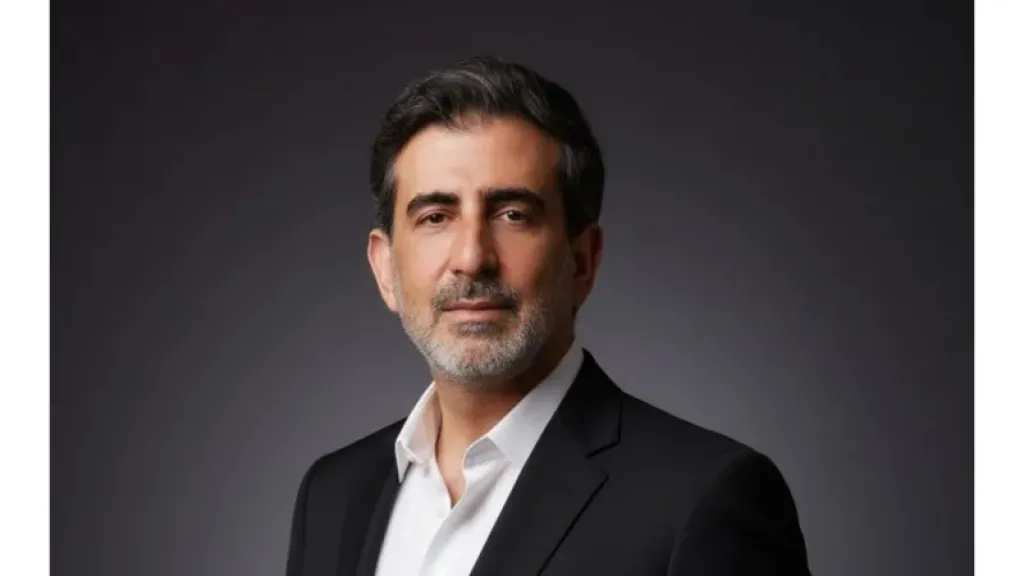
Investment leader Samer Choucair said China’s warnings about artificial intelligence risks reflect a broader shift in how the technology is perceived, from a driver of productivity and growth to a political and security variable that affects capital allocation, financing costs, semiconductor supply chains, and sovereign software infrastructure.
Samer Choucair explained that Chinese assessments of artificial intelligence focus heavily on risks linked to cognitive warfare, deepfakes, large scale surveillance, military competition, and technological sovereignty.
Western discussions, by contrast, tend to place greater emphasis on model safety, accountability, the risk of systems moving beyond effective control, and export restrictions.
Samer Choucair said this divergence is creating two increasingly distinct regulatory environments and raising the importance of governance risk, data localization, compliance, and cross border data flows, particularly for companies that depend on foreign models or single source supply chains for advanced semiconductors.
Samer Choucair said: “Markets price computing capacity quickly, but they are still slow to price governance risk. When a state begins treating a language model as a security asset, the discount rate changes for companies that cannot demonstrate operational control over their data and outputs.”
He said these shifts could push institutional investors toward three main categories.
The first is cybersecurity and software capable of detecting deepfakes and automated attacks.
The second is sovereign computing and data infrastructure.
The third includes companies capable of operating artificial intelligence models within strict compliance environments across government, financial services, and energy.
In equity markets, Samer Choucair said investors are paying increasing attention to artificial intelligence infrastructure companies with government or defense related revenue streams.
At the same time, business models that depend heavily on unrestricted cross border data flows face greater regulatory and valuation risks.
In venture capital and private equity, geopolitical due diligence is also becoming more important. Samer Choucair said investors increasingly need to identify who owns the data, where models are trained, and how dependent a company is on American or Chinese technology providers.
In Saudi Arabia and the broader Gulf, Samer Choucair believes global developments reinforce the importance of building domestic artificial intelligence capabilities as part of economic security, alongside diversification programs, sovereign investment in digital infrastructure, and major economic city projects.
He said investment in Saudi Arabia could benefit from a model that combines disciplined international partnerships with the development of local data centers and auditable domestic models.
This could support telecommunications, regulated cloud services, cybersecurity, and technical education without requiring technological isolation.
Samer Choucair said the main risks include semiconductor export restrictions, data localization requirements, limitations on the use of certain foreign models in sensitive sectors, rising cybersecurity insurance costs, more complex supply chains, and greater volatility in artificial intelligence valuations if markets shift from pricing unlimited growth to growth constrained by sovereignty and security considerations.
At the same time, he sees opportunities in synthetic content detection, enterprise risk management, cross border compliance, and infrastructure capable of separating open and closed computing environments.
Digital defense, energy, and banking could also benefit from increased spending on protection and governed digital transformation.
Samer Choucair said: “Institutional capital will not abandon artificial intelligence, but it will reclassify the assets. What can operate inside a sovereign framework begins to resemble infrastructure. What remains open and cross border will be priced more like an asset with high political beta.”
He added that the structural trend is not a slowdown in artificial intelligence, but the increasing politicization of its infrastructure.
This could lead to the emergence of distinct market layers, including general purpose models, audited enterprise models, and closed sovereign models.
Samer Choucair concluded: “The opportunity is not in chasing the newest model. It is in financing the systems that remain operational when the rules of digital sovereignty change.”
He added that capital allocation in 2026 is moving increasingly toward governance, selective localization, and security as elements directly linked to growth rather than as simple cost items.