
Samer Choucair: The Strait of Hormuz Is Shifting From a Trade Route to an Investment Variable
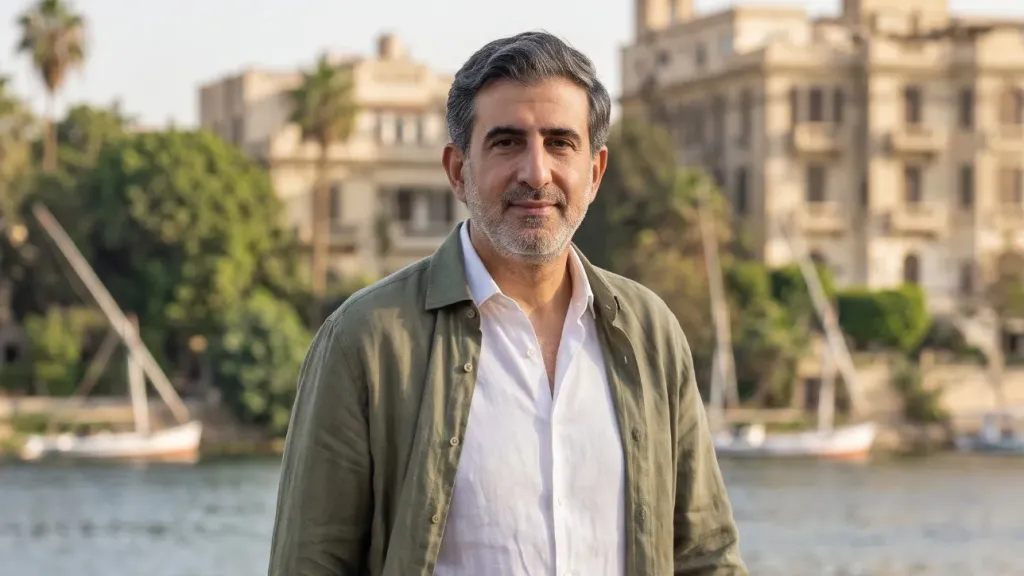
Investment leader Samer Choucair said the limited maritime attack in the Strait of Hormuz in early July, which targeted three commercial vessels including a Qatari gas tanker, pushed the war back to the forefront of energy markets and effectively undermined the US Iranian memorandum of understanding signed in June.
Samer Choucair explained that the 14 point memorandum had included an immediate cessation of hostilities, the reopening of the strait without fees for 60 days, the launch of nuclear negotiations, temporary exemptions on Iranian oil exports, and references to a broad reconstruction fund.
He added that the collapse of the agreement transformed Hormuz from a temporary bottleneck into a structural variable in the pricing of oil, gas, insurance, and shipping.
Samer Choucair said capital is increasingly reassessing alternative export routes, flexible production capacity, and assets that are less dependent on a single maritime corridor.
Markets Are Pricing Control, Not a Truce
Samer Choucair said that before the war that began in late February, the Strait of Hormuz carried roughly one fifth of global oil supplies and, by some estimates, close to 130 commercial vessels a day.
He noted that traffic fell on some days to fewer than 10 vessels, while flows later declined to approximately 4 to 5 million barrels a day on a moving average basis, compared with higher levels during the temporary period of easing.
Brent crude returned to levels around $100 a barrel in September and moved above that threshold in some sessions.
Choucair said the geopolitical premium can no longer be treated as a temporary event and has instead become part of the operating environment through at least the end of 2026.
Fragmented Decision Making Raises the Cost of Capital
Samer Choucair said the source of decision making inside Iran has become more important to investors than the scale of any individual attack.
He noted that investigations pointed to the involvement of a hardline network linked to former security figures at a time when President Masoud Pezeshkian was outside the capital. Reports also suggested that influential official actors, including elements within the leadership of the Islamic Revolutionary Guard Corps, had not been informed.
Choucair said this type of fragmentation raises the cost of capital for assets that depend on political commitments that can be reversed.
It also makes futures contracts, vessel insurance, tanker financing, and gas derivatives more sensitive to internal decision making risk.
Samer Choucair said: “Markets do not punish countries simply for internal disagreements. They punish investors who ignore the structure of decision making.”
He added that under these conditions, capital shifts away from bets on political easing and toward assets capable of operating without requiring daily political approval.
Saudi Arabia and Alternative Infrastructure
Samer Choucair said Saudi Arabia has offered a practical model of diversification through the East West pipeline to Yanbu, which increased Red Sea exports to around 4 to 5 million barrels a day during peak periods, against pipeline capacity of up to 7 million barrels a day.
He said drone attacks on the pipeline in September and its temporary shutdown also exposed the limits of diversification.
Port and terminal capacity remains narrower than pipeline capacity, while inventories in Yanbu would cover only a limited number of days if disruption were prolonged.
Choucair said this does not weaken the investment case for Saudi infrastructure. Instead, it clarifies which assets are most necessary.
These include port expansion, strategic storage, greater connectivity with the Suez Canal and the SUMED pipeline, and production systems capable of shifting volumes rapidly between markets.
Opportunities Beyond a Peace Scenario
Samer Choucair said the investment opportunities most aligned with the current environment are concentrated in alternative infrastructure, refining and petrochemicals, gas assets with lower dependence on Hormuz, marine insurance, vessel tracking, and cybersecurity for critical facilities.
He added that higher shipping and insurance costs spread the impact of the shock into inflation and interest rates, putting pressure on long duration growth assets.
At the same time, some gold and industrial metals assets may benefit from higher geopolitical risk and rising energy costs.
Three Paths Through the End of 2026
Samer Choucair said investors are watching three potential scenarios.
The first is continued partial passage through Hormuz with oil prices remaining elevated.
The second is an escalation that affects alternative routes and turns the geopolitical premium into a genuine global physical shortage.
The third is a delayed return to negotiations that reduces the risk premium without quickly returning markets to conditions seen before February.
Samer Choucair concluded that the appropriate hedge is no longer a conventional oil position alone.
He said it should instead consist of a broader mix of shipping, insurance, Gulf infrastructure, and reduced exposure to assets dependent on multiple political approvals.
Choucair added that capital does not simply buy the text of a political agreement. It buys the ability to continue operating if Hormuz remains a militarized arena for negotiation.
He said control over strategic corridors and the resilience of supply chains have become part of risk adjusted returns in 2026.