
Samer Choucair: King Charles Summit Brings AI Governance to the Investment Table
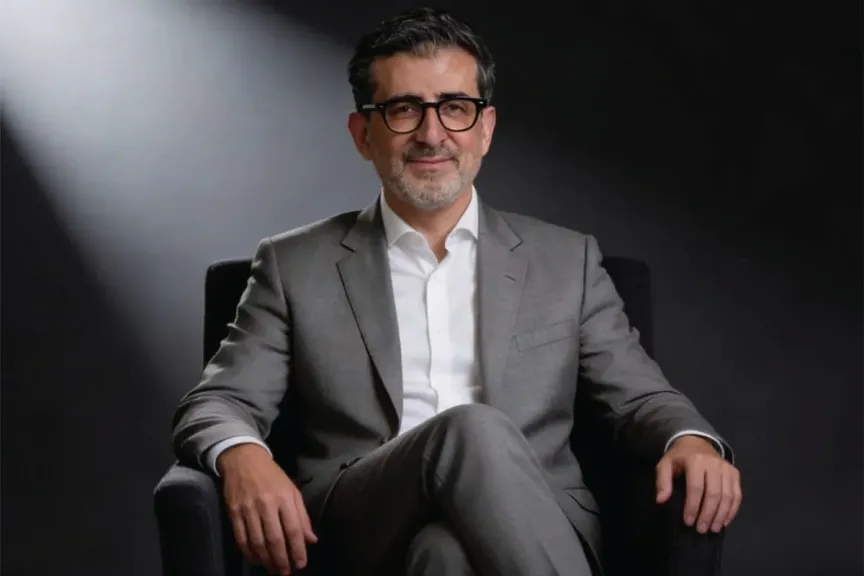
Investment leader Samer Choucair said King Charles III’s meeting with senior artificial intelligence executives in Scotland came at a moment when the pace of advanced model development is no longer purely a technical issue, but a factor influencing equity valuations, capital flows, and capital expenditure plans for computing infrastructure.
Samer Choucair explained that the gathering at Dumfries House in Ayrshire, which included representatives from Nvidia, Google DeepMind, OpenAI, Anthropic, as well as British officials and technology ethics advisers, gained additional significance following growing calls within the industry to moderate the pace of the capabilities race.
He added that the investment message was not purely ethical. The central question was whether stronger governance would reduce spending on computing infrastructure or redirect it toward inference, energy, data centers, cybersecurity, and defensive software.
Markets Reprice the Artificial Intelligence Race
Samer Choucair noted that Anthropic chief executive Dario Amodei called on September 12 for a more controlled pace at the frontier so that safety measures could catch up with the speed of model development. The direction later received support from Sam Altman and Elon Musk.
Choucair said markets responded quickly. The Philadelphia Semiconductor Index fell by around 5.9% during the September 14 session, with Nvidia, AMD, and Intel shares declining, while software stocks performed relatively better.
He said the reaction reflected a simple assumption, though not necessarily a fully accurate one, that any discussion of slowing the race immediately raises doubts about the sustainability of capital expenditure.
Massive Valuations and a Test of Returns
Samer Choucair said artificial intelligence has evolved in just three years from a consumer product story into the largest technology capital expenditure cycle since the expansion of cloud computing.
He noted that Nvidia’s market capitalization is around $5 trillion, while the combined value of the major technology companies most closely linked to artificial intelligence runs into tens of trillions of dollars.
Private market valuations have also reached extraordinary levels, with Anthropic estimated at around $965 billion in May and OpenAI valued at approximately $852 billion in an earlier funding round this year.
Samer Choucair said these valuations assume that the capabilities race will continue. However, a slowdown in training does not necessarily imply weaker demand for semiconductors, electricity, or data centers, because an increasing share of demand is shifting toward inference.
Where Does the Capital Go?
Samer Choucair said institutional investors are now asking a different question: will spending decline, or will it simply be redistributed?
He noted that major cloud computing companies are allocating more than $100 billion annually each at Alphabet, Amazon, and Microsoft toward infrastructure linked to artificial intelligence, while Anthropic’s long term computing commitments extend into the hundreds of billions of dollars.
Choucair said repricing could redirect capital toward energy, utilities, cooling, data centers, cybersecurity, compliance tools, and artificial intelligence applications in healthcare, financial services, logistics, and education.
Saudi Arabia Is Betting on Infrastructure
Samer Choucair said the British debate has direct relevance for the Gulf during a year in which Riyadh has designated 2026 as a year of artificial intelligence, with the Public Investment Fund placing technology among the central pillars of its strategy.
He pointed to efforts to build local capabilities through companies such as HUMAIN, while the Saudi Data and AI Authority continues to develop regulatory infrastructure, Arabic language models, and data center capacity.
Choucair said the Kingdom’s technology economy has grown to approximately $139 billion, alongside the creation of hundreds of thousands of jobs, while data center plans target capacity measured in gigawatts and substantial direct investment commitments.
Samer Choucair added that Saudi Arabia and the United Arab Emirates combine energy, financing, land, and governance advantages that could make them increasingly attractive locations for both training and inference.
However, he said that attractiveness will continue to depend on clear rules governing data, liability, and oversight.
Opportunities and Risks
Samer Choucair said investors are likely to divide capital flows across four main layers.
The first is semiconductors, networking equipment, and memory.
The second is energy, utilities, and cooling.
The third is cybersecurity, compliance, and independent evaluation.
The fourth is sector specific applications.
At the same time, he warned about the elevated valuations of private model companies, concentration within US equity indices, potential delays to public offerings, and continuing regulatory and geopolitical risks.
Samer Choucair concluded that the Scotland summit will not stop the artificial intelligence investment cycle, but it could redistribute capital away from unconditional growth and toward growth that can be managed, measured, and governed.
He said institutional investors are no longer choosing between artificial intelligence and other sectors. They are choosing between companies that sell computing capacity, companies that sell security, and companies that can convert models into recurring operating revenue.
Samer Choucair added that governance has become a direct variable in asset pricing.
He said capital will continue to flow into artificial intelligence as long as productivity and operating profits remain visible, but under a new condition: companies must prove that growth can be managed and sustained.