
Samer Choucair: Investors Are Moving From the Question of Innovation to the Question of Capacity
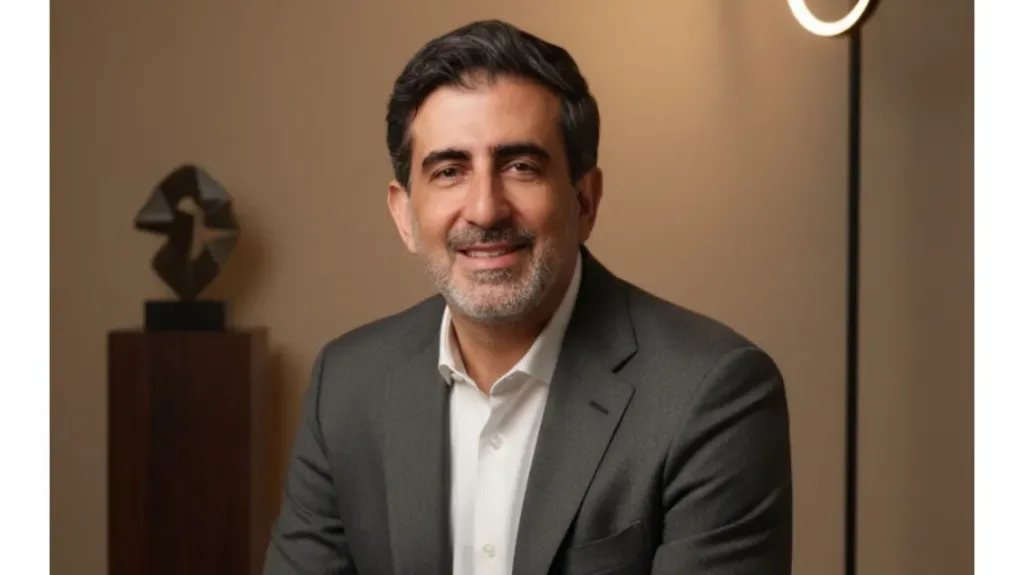
Investment leader Samer Choucair said the shift in the American debate around artificial intelligence risk, following comments by US President Donald Trump and Nvidia chief executive Jensen Huang, is reshaping the map of risk and capital allocation across the technology sector in 2026.
Samer Choucair explained that markets are no longer pricing only the question of whether artificial intelligence represents a major risk. Increasingly, they are pricing a more economically relevant question: who has the ability to build computing infrastructure and energy capacity at the fastest pace that remains politically and regulatorily acceptable.
He noted that Trump’s comments downplaying existential concerns around artificial intelligence, alongside Huang’s argument that doomsday scenarios lack a scientific foundation while still emphasizing the importance of safety, reflect a broader shift in the debate from whether the AI race should be slowed to how it can be accelerated while its risks are managed.
Samer Choucair said: “The market does not finance the ethical narrative. It finances the ability to convert policy into energy, computing capacity, and recurring revenue.”
Samer Choucair said this shift could continue to support capital expenditure on semiconductors, data centers, electricity grids, cooling systems, equipment, and digital infrastructure, even as governance risks, cybersecurity threats, and technological competition with China remain significant.
He believes institutional investors are now facing three distinct layers of risk.
The first is political risk, including the possibility of restrictions on the training of advanced models.
The second is industrial risk, linked to demand for processors, electricity, cooling, and network equipment.
The third is operational risk, including power and water consumption, cybersecurity, and shortages of specialized labor.
Choucair added that the declining probability of a sudden halt in artificial intelligence spending could increase the value of the physical assets underpinning the sector, particularly energy infrastructure, data centers, cooling systems, industrial land, and networks.
He said: “Institutional investors in 2026 need to distinguish between existential risk that is difficult to price, regulatory risk that can be hedged, and operational risk that can be measured and managed.”
Samer Choucair said Nvidia remains structurally well positioned as long as advanced models continue to depend on specialized processors for training and inference.
However, he said institutional attention is gradually shifting away from the question of who sells the chip and toward who provides the electricity, land, licenses, and network infrastructure required to operate it.
He added that comparisons between data centers and oil infrastructure reflect the strategic importance of data centers as capital intensive assets linked to sovereignty and industrial capacity.
Countries and regions that host these facilities can capture economic value through electricity, land, infrastructure, and related services.
At the Gulf level, Samer Choucair believes continued US support for accelerating artificial intelligence development could strengthen opportunities to attract investment in data centers, cloud partnerships, and knowledge transfer.
He said: “The opportunity in Saudi Arabia and the Gulf is not to replicate Silicon Valley. It is to own the layer of assets that cannot easily move elsewhere: energy, land, licenses, and the ability to operate data centers under sovereign standards.”
Samer Choucair said Saudi Arabia possesses several important advantages, including long term capital, scalable energy capacity, and an ambition to expand the digital economy.
These factors could support Riyadh’s role as a regional center for computing and inference, provided investment is accompanied by clear frameworks for governance and cybersecurity.
Choucair said opportunities extend across utilities, electricity grids, cooling, industrial real estate, and safety and compliance tools.
The risks include inconsistent regulatory tightening, cybersecurity incidents, semiconductor supply chain disruption, and excessive valuations for assets simply because they are associated with the artificial intelligence theme.
Samer Choucair concluded: “Economic trends in 2026 show investors moving from the question of innovation to the question of capacity: who can build gigawatts, computing power, and governance at the same time.”
He added that venture capital may increasingly move toward companies that make artificial intelligence safer and more efficient, while private equity could favor cash generating infrastructure assets and sovereign wealth funds may prefer long term industrial partnerships over exposure to individual technology stocks.
Samer Choucair said the next phase of the race will not be determined by models alone. It will also depend on the ability of investors and governments to provide energy, infrastructure, licenses, and governance.
He added that scarce assets will continue to hold value whether concerns around existential AI risk increase or decline.