
Samer Choucair: Seven Qualified Consortia for Hurghada Airport Open a New Cycle for Tourism-Aviation Capital in Egypt
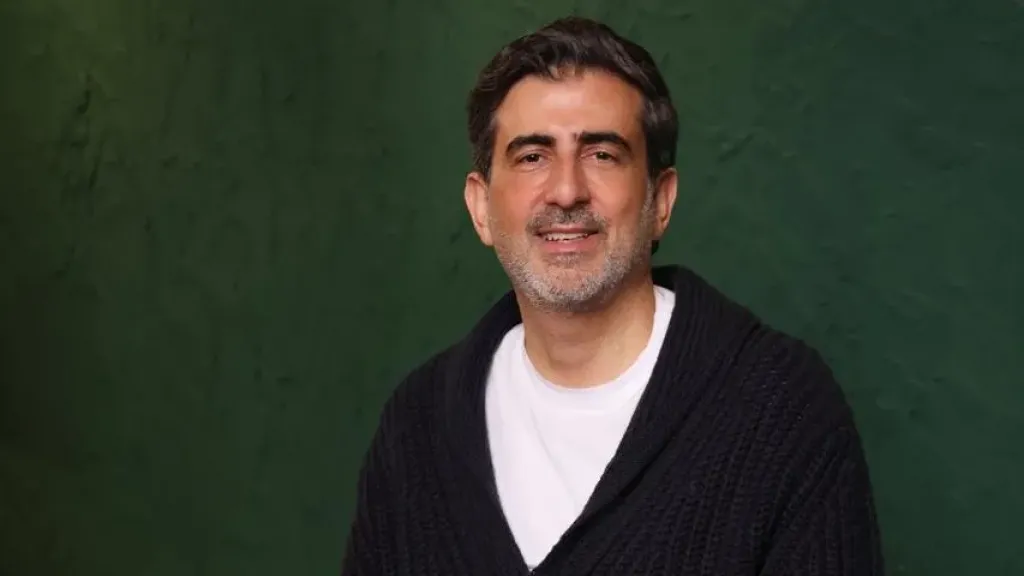
Investment leader Samer Choucair said the Egyptian Ministry of Civil Aviation’s decision to qualify seven consortia out of the ten that submitted prequalification applications for the management, operation, and development of Hurghada International Airport marks an important transition in the process: from attracting investor interest to testing financial and technical capacity ahead of the Request for Proposals, or RFP, stage. The Ministry confirmed on September 11, 2026, that ten consortia had submitted applications under the RFQ process and that seven were selected to advance to the next stage.
Choucair emphasized that the project does not represent the sale of a state-owned asset. Rather, it is a long-term private-sector participation structure under a wider program covering 11 airports, advised by the International Finance Corporation. Ownership of Hurghada International Airport is to remain with the Egyptian Holding Company for Airports and Air Navigation, while the selected private partner will be responsible for upgrading, maintaining, and operating the airport.
“Prequalification measures eligibility,” Choucair said. “The financial and technical bid will determine which consortium ultimately takes on the operating risk and earns the return.”
Hurghada: A Tourism Asset Approaching Its Capacity Frontier
Samer Choucair said Hurghada’s selection as the pilot transaction was not accidental. The airport is one of Egypt’s most important tourism gateways, and its traffic profile gives investors exposure to recurring demand from major European and Russian source markets while also creating a clear case for operational and commercial development.
Choucair said an institutional investor is not buying a passenger-terminal building. It is effectively bidding for the right to manage a cash-flow platform tied to the European and Russian tourism cycle and to the airport’s ability to convert passenger volumes into non-aeronautical revenue.
For that reason, the reduction from ten applicants to seven qualified consortia is more than an administrative detail. It raises the minimum threshold for financial strength, operating expertise, and execution capacity that the concession will require.
“The asset is not simply about how many passengers cross the terminal,” Choucair said. “The real question is how efficiently those passengers can be converted into recurring commercial cash flow without weakening the airport’s competitiveness as a destination gateway.”
An Operating Partnership, Not Privatization
Samer Choucair stressed that the underlying assets will remain state-owned through Egypt’s airport holding structure, while the private sector will assume management, operation, and development responsibilities within an agreed regulatory framework.
That structure makes the transaction closer to a long-term operating concession or public-private partnership than an outright privatization.
IFC confirmed in 2025 that it would support Egypt in launching a competitive tender for Hurghada and would also assess the appropriate model for private-sector participation in ten additional airports. Those airports include Sphinx, Sharm El Sheikh, Borg El Arab, Luxor, Aswan, Sohag, Assiut, Abu Simbel, Alamein, and Marsa Matrouh, with the possibility that more than one airport could eventually be bundled into a single transaction.
Choucair also pointed to the September 11, 2026 meeting between Civil Aviation Minister Sameh El Hefny and senior IFC officials, held around the El Alamein International Airshow, as evidence that the process has moved into a more advanced execution phase.
The involvement of an institution from the World Bank Group can reduce procedural and transaction-structuring risk, Choucair said, but it does not eliminate valuation risk.
“The stronger the process becomes, the more important pricing discipline becomes,” he said. “Institutional credibility can improve execution, but it cannot make an overpriced concession attractive.”
Tourism Is Being Converted Into Infrastructure Cash Flow
Choucair said the strength of Egypt’s tourism demand explains much of Hurghada Airport’s strategic appeal.
The investment proposition is straightforward: a high-volume tourism gateway can potentially transform tourism growth into relatively durable infrastructure cash flow if the operator can raise commercial efficiency, improve passenger spending, enhance ground handling, and deepen integration with airlines and hospitality operators.
But Samer Choucair cautioned that growth in tourism can also expose capacity constraints.
Passenger growth is valuable only when the airport’s infrastructure, processing systems, commercial layout, and transport connections can absorb peak-season demand without degrading service quality.
Hurghada’s particular challenge is seasonality. Strong flows from Europe can generate highly attractive peak periods, but they can also create operational bottlenecks and uneven utilization during the year.
For an investor, Choucair said, the question is therefore not simply whether tourist arrivals are growing. The more important question is whether that growth can be converted into predictable, bankable, year-round revenue.
Where Capital Is Likely to Move
Samer Choucair said one of the most important signals in the transaction is the gap between broad initial interest and the smaller group of investors able to advance through formal qualification.
That pattern matters because infrastructure transactions often attract significant early attention, while a much smaller universe of investors ultimately has the balance sheet, technical capability, financing access, and operating experience required to commit capital over a multi-year horizon.
Choucair said previous Gulf interest from Emirati, Qatari, and Saudi investment circles also reflects a broader search for tourism-linked airport infrastructure in markets where entry valuations may still be lower than comparable European assets.
He cautioned, however, that the economics of Hurghada will ultimately be priced primarily against European passenger flows and tourism-linked foreign-currency revenues rather than Gulf domestic demand.
“The most credible consortium will be the one that combines three capabilities,” Choucair said. “A global airport operator, a development partner capable of carrying capital expenditure, and a financing arm able to withstand a multi-year investment cycle.”
That combination matters because infrastructure concessions are rarely won by headline valuation alone. They are won by the ability to finance, operate, upgrade, and monetize an asset over a long period while meeting service and regulatory obligations.
The RFP Will Be the Real Test
Choucair warned against assigning excessive value to non-aeronautical revenue before a bidder proves that it can redesign the commercial passenger journey.
Retail, ground services, parking, hospitality links, airline partnerships, and other commercial services can all become important revenue engines, but only if they are implemented without undermining airport affordability or passenger experience.
For that reason, Choucair said the RFP documentation will matter more than the headline number of qualified consortia.
The critical issues will include the tariff regime, the revenue-sharing mechanism, capital-expenditure obligations, service-level requirements, foreign-currency exposure, financing costs, and the degree of operational flexibility granted to the selected consortium.
A weak concession framework can destroy value even in a strong tourism market.
A well-structured one, by contrast, can transform passenger growth into recurring infrastructure returns.
Choucair said investors should pay particularly close attention to regulatory and tariff risk, volatility in European and Russian tourism demand, the complexity of redevelopment inside an operating airport, currency risk, the cost of dollar financing, and the possibility that a weak outcome at Hurghada could influence how investors price the rest of Egypt’s airport program.
Hurghada as a Pricing Signal for Egypt’s Airport Program
Samer Choucair said the investor universe most likely to focus on Hurghada includes global infrastructure funds, airport operators, tourism and hospitality investors, and banks capable of arranging debt against concession cash flows.
The banking component will be especially important because lenders will effectively determine how much leverage the concession can sustainably carry.
Choucair said the short-term effect on Egyptian capital markets may be indirect, but the transaction could influence several broader variables: investor confidence in Egypt’s asset-monetization program, the perceived risk of structured infrastructure finance, and the willingness of development institutions and international lenders to participate in subsequent transactions.
Hurghada should therefore be viewed as more than a single airport transaction.
It could become the reference point against which investors price the rest of Egypt’s airport pipeline.
“The quality of the RFP matters more than the number of qualified consortia,” Choucair said. “The revenue-sharing structure, capital-expenditure obligations, and service metrics will determine whether this becomes an efficient operating concession or a much broader development program.”
For long-term capital, that distinction is fundamental.
An operating concession built around predictable traffic, disciplined capital spending, and transparent revenue-sharing can generate an infrastructure-style return profile.
A poorly structured development mandate can instead become capital intensive, difficult to finance, and exposed to significant execution risk.
A New Investment Cycle for Egyptian Aviation
Choucair concluded that Hurghada Airport could become the first serious pricing benchmark for a broader cycle of private capital in Egyptian aviation infrastructure.
The qualification of seven consortia confirms that investor appetite exists, but qualification alone does not determine value.
What matters next is how Egypt structures risk, how clearly responsibilities are divided between the state and the private operator, how capital expenditure is phased, and how much commercial upside is left available to investors in exchange for assuming long-term operating obligations.
For Samer Choucair, the investment principle is therefore straightforward: watch the RFP, not the qualification announcement; study the revenue-sharing formula, not the headline language of partnership; and assess whether the eventual operator can transform Red Sea tourism seasonality into stable, long-duration cash flow.
If the Hurghada transaction succeeds on those terms, it could do more than upgrade one of Egypt’s most important tourism gateways. It could establish the valuation framework for a new generation of airport concessions and open a broader cycle of tourism, infrastructure, and aviation capital across Egypt.