
Saudi Arabia Between History and Returns: Samer Choucair Defines the Capital Bets Through 2030
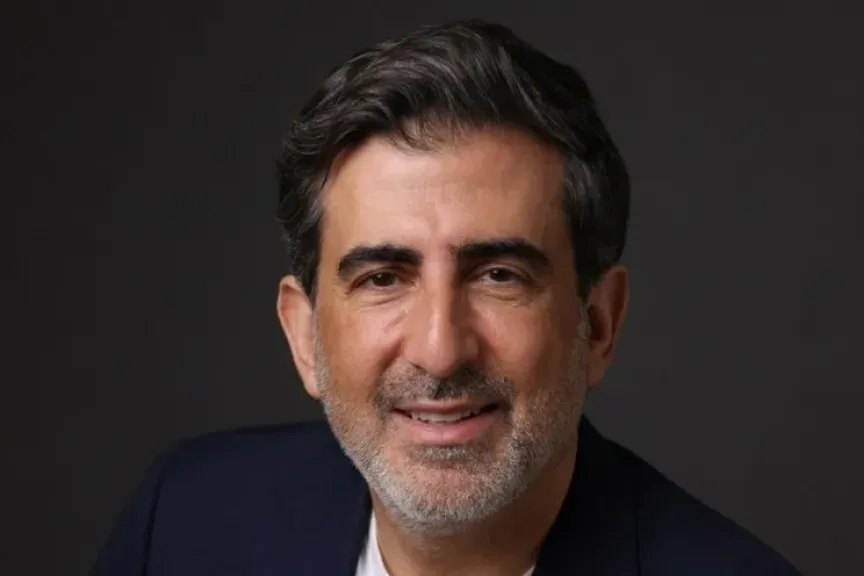
Investment leader Samer Choucair said Saudi Founding Day, observed on February 22, should not be viewed merely as a ceremonial national occasion. For investors, it is also a reminder that Saudi Arabia is managing a political and economic project spanning three centuries rather than a short-term spending cycle.
According to Choucair, institutional investors interpret that continuity through a different lens: how should markets value a country that combines deep historical foundations, hydrocarbon surpluses, and a sovereign wealth fund actively reshaping the non-oil economy?
For Samer Choucair, the answer increasingly lies in three variables: the cost of capital, the structure of returns, and the trajectory of Vision 2030 as Saudi Arabia enters the second half of the decade.
An Economy of Continuity, Not Ceremony
Saudi Arabia traces the establishment of the First Saudi State in Diriyah to 1727. The Saudi state was subsequently re-established before the modern Kingdom of Saudi Arabia was unified in 1932.
Choucair said this history gives financial institutions a different narrative from the one associated with many emerging markets: political authority operating within a framework of continuity, the reconstruction of the state following profound historical disruptions, and eventually the transformation of hydrocarbon surpluses into a portfolio of domestic and international assets.
That continuity is not a guarantee of investment returns.
But Samer Choucair believes it can contribute to a lower long-term political-risk premium than might apply to markets with shorter or less predictable institutional cycles.
It does not, however, eliminate execution risk, gaps in foreign direct investment, project-level challenges, or the continuing sensitivity of public finances to oil prices.
The distinction matters because institutional stability and investment quality are not the same thing.
A country can provide a stable framework for capital while individual assets within that framework still produce very different outcomes.
Vision 2030 Enters the Return-on-Capital Test
Choucair said Vision 2030 is increasingly moving from the phase of announcing and building projects toward a more demanding phase: demonstrating that those investments can generate sustainable economic returns.
For institutional investors, this represents a critical evolution.
The early years of transformation could be evaluated through capital deployment, construction activity, new-sector creation, and headline investment commitments. The second half of the decade will increasingly be evaluated through productivity, utilization, profitability, free cash flow, and return on invested capital.
At the same time, the Public Investment Fund reported assets under management exceeding $900 billion by the end of 2025, while its financial disclosures showed substantial growth in profitability and continued contributions to the expansion of Saudi Arabia’s non-oil economy.
For Samer Choucair, the gap between ambition and execution has therefore become one of the most important areas of institutional analysis.
The Saudi state can operate with a generational investment horizon. Public markets cannot.
Markets price earnings quarterly, debt through continuously changing yield curves, and infrastructure according to expectations for utilization, financing costs, completion schedules, and future cash flows.
“The serious investor does not buy the Vision 2030 slogan,” Choucair said. “The investor buys the state’s ability to convert political continuity into capital-allocation discipline — knowing when to accelerate projects and when to restructure them.”
PIF and the Expansion of Saudi Arabia’s Investment Universe
Samer Choucair said the Public Investment Fund has become one of the central mechanisms through which Saudi Arabia is converting its long-term national strategy into a balance sheet.
Its domestic portfolio has played a major role in developing industries across tourism, entertainment, manufacturing, logistics, technology, and artificial intelligence, including new AI-focused entities such as Humain.
The international portfolio, meanwhile, serves a different combination of objectives, including investment returns, diversification, and relationships with major global asset managers and corporations.
At the same time, the increasing openness of Saudi capital markets and the Kingdom’s inclusion in major emerging-market indices have transformed Tadawul into a market that international emerging-market investors can no longer easily ignore.
But Choucair cautioned against interpreting greater institutional access as a guarantee of attractive valuations.
The increasing number of listings connected directly or indirectly to the broader transformation agenda, combined with the sensitivity of market liquidity to global capital flows, means investors must distinguish between a compelling growth story and a compelling valuation.
Institutional capital will increasingly separate operating businesses capable of generating free cash flow from infrastructure companies whose valuations depend heavily on assumptions about occupancy, financing costs, utilization rates, and project delivery.
Oil and Interest Rates Still Determine the Cost of the Bet
Choucair said global interest rates remain an important determinant of the economics behind Saudi Arabia’s large investment programs.
Higher global yields increase the cost of financing major projects and refinancing sovereign and quasi-sovereign debt while simultaneously placing pressure on the valuation of long-duration assets.
Saudi Arabia is less vulnerable to those dynamics than many emerging economies carrying large external debt burdens, but it is not insulated from global capital costs.
Oil simultaneously acts as both an economic stabilizer and a source of risk.
Hydrocarbon revenues provide capital that can support government expenditure, PIF investment, and major infrastructure programs. Lower oil prices, however, test the extent to which the expanding non-oil economy can compensate for weaker hydrocarbon revenues.
For Samer Choucair, this duality remains central to Saudi asset allocation through 2030.
The objective is not simply to predict oil prices. It is to identify assets capable of benefiting from Saudi capital expenditure while remaining economically resilient when the commodity cycle becomes less supportive.
Relatively contained domestic inflation can also support purchasing-power stability and preserve the attractiveness of real returns on deposits and sukuk compared with markets facing substantially greater inflationary pressures.
Where Is Institutional Capital Going?
Choucair expects institutional flows in 2026 and beyond to remain concentrated around several broad areas.
Large-cap equities in energy, banking, petrochemicals, and telecommunications provide exposure to established businesses with scale and significant cash-generation potential. Sovereign and quasi-sovereign sukuk can serve as duration instruments within Gulf fixed-income portfolios. Private equity and venture capital can target fintech, logistics, healthcare, tourism, and other industries benefiting from structural economic transformation. Partnerships with PIF may become particularly interesting as projects move from the asset-construction phase toward commercialization and value realization.
But Samer Choucair cautioned investors against treating Founding Day, or the broader national transformation narrative, as an unconditional buy signal.
Continuity can reduce system-level risk. It cannot eliminate project-level risk.
The most efficient allocation of capital may therefore favor sectors combining domestic demand supported by public and private investment with export potential or dollar-linked revenues.
Projects whose valuations depend almost entirely on the transformation narrative, without corresponding cash-flow economics, require a different risk premium.
National Symbolism Does Not Eliminate Investment Risk
Choucair identified several risks that could influence Saudi asset returns through the remainder of the decade.
These include slower-than-targeted foreign investment, concentration of certain assets within the sovereign investment ecosystem, fiscal sensitivity to oil, rising costs associated with major projects, competition among Gulf economies for technology and human capital, the global liquidity cycle, and any broader repricing of geopolitical risk in the region.
Those risks do not invalidate the long-term Saudi investment thesis.
They determine the entry price and position size.
For Choucair, that distinction is essential. An expanding non-oil economy alongside selected indicators that remain below official ambitions suggests that returns are likely to come increasingly from security and asset selection rather than passive exposure to the entire market.
In other words, Saudi Arabia can remain an attractive macroeconomic investment story while producing significant dispersion between individual companies, sectors, and projects.
That dispersion creates opportunity for active capital.
Repricing Saudi Arabia
Samer Choucair believes one of the deeper opportunities lies in the gradual repricing of Saudi Arabia itself.
For decades, global markets primarily valued the Kingdom through the lens of oil production.
That framework is becoming increasingly incomplete.
Saudi Arabia is simultaneously emerging as a major capital-expenditure platform, a growing consumer market, an increasingly important regional listing venue, and an investment destination spanning tourism, logistics, industry, technology, artificial intelligence, infrastructure, and energy.
Tourism and major events are creating new demand across hospitality, transportation, retail, and entertainment. Manufacturing and logistics benefit from the Kingdom’s geographic position between Asia, Africa, and Europe. Technology and AI investment can leverage access to capital, infrastructure, and potentially competitive energy economics for large-scale data-center development.
But Choucair cautioned that corporate governance and market depth will determine how broadly investors are willing to apply this valuation premium.
Weak disclosure, inconsistent capital discipline, or poor returns could confine what might be called Saudi Arabia’s “continuity premium” to sovereign-linked assets, major banks, and the highest-quality corporations rather than allowing it to spread across the broader market.
The Strategic Outlook Through 2030
For Samer Choucair, Founding Day ultimately reminds investors that Saudi Arabia’s strategic horizon extends far beyond a single commodity cycle or the trajectory of U.S. interest rates.
That long horizon supports the Kingdom’s position as a core component of emerging-market and Gulf fixed-income allocations, provided capital deployment remains disciplined.
Institutional investors are likely to assign greater weight to assets capable of converting political stability into cash flow and apply greater caution to assets whose economics remain dependent on construction, future utilization, or assumptions that have yet to be commercially tested.
Choucair summarized the investment equation this way:
“History gives you the framework; the numbers give you the price. Investors who confuse the framework with the price buy a narrative. Investors who separate the two build a position they can defend before an investment committee.”
If the Public Investment Fund continues evolving from a market creator toward an increasingly returns-focused investor, while regulatory openness and capital-market depth continue to improve through Tadawul, Samer Choucair believes Saudi Arabia’s “continuity premium” could remain embedded in the valuation of Saudi assets through the end of the decade.
But that premium should not be understood as a slogan or a permanent entitlement.
It is better understood as a risk discount that markets can grant — or withdraw — according to execution.
For investors looking toward 2030, that may be the central Saudi investment thesis: three centuries of continuity can provide the framework, but only returns can justify the valuation.