
Samer Choucair: As Ever’s Traffic Rebound Tests Whether Personality-Driven Brands Can Turn Attention Into Sustainable Demand
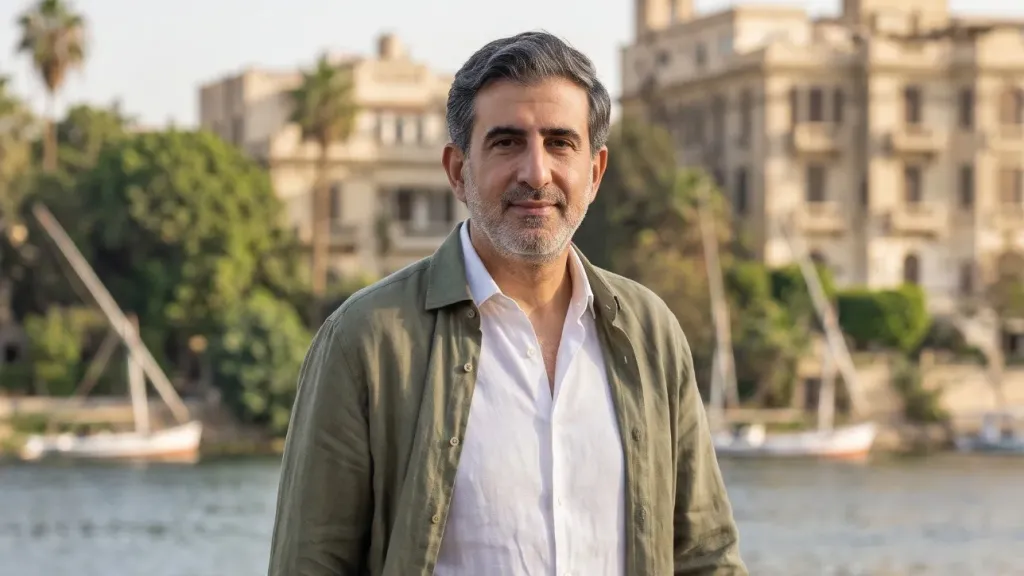
Investment leader Samer Choucair said the sharp increase in traffic to As Ever, Meghan Markle’s lifestyle brand, following reports surrounding her and Prince Harry’s planned return to Britain should not, by itself, be interpreted as evidence of a brand recovery.
Instead, Choucair said the rebound highlights one of the fundamental challenges facing personality-driven direct-to-consumer businesses: whether a surge in public attention can be converted into recurring revenue, scalable margins, and durable customer relationships.
According to Similarweb data analyzed by Newsweek, As Ever recorded 182,707 visits in August, compared with 126,655 in July, an increase of approximately 44%. Around 71,000 visits were recorded between August 22 and August 28 alone.
But Samer Choucair cautioned that the increase followed a prolonged decline in traffic, from approximately 268,200 visits in January to the year’s low in July. With shipping still limited to the United States, the rebound raises a more important investment question than headline traffic growth.
“The institutional investor does not buy a ‘brand recovery’ story,” Choucair said. “The investor looks for evidence that an attention shock has been converted into recurring demand and scalable margins.”
A Visit Is Not Revenue
As Ever, launched in 2025 alongside Meghan’s Netflix series With Love, Meghan, offers products across food, beverage, and lifestyle categories, including honey, preserves, tea, wine, candles, and other home-related goods.
The brand initially benefited from a platform-driven launch model, with early product releases selling out rapidly. Traffic subsequently weakened through 2026.
For Choucair, the decline from more than 268,000 visits in January to roughly 127,000 in July illustrates a familiar challenge for brands built around intense media visibility: curiosity can generate traffic, but traffic does not necessarily create a consumption habit.
That distinction is critical when evaluating celebrity-led consumer businesses.
A traditional consumer brand can potentially build value through product quality, distribution, customer retention, pricing power, and habitual purchasing. A personality-driven brand can benefit from all of those factors, but it also carries an additional variable: the media cycle surrounding its founder.
When that cycle accelerates, traffic can rise dramatically. When it fades, the underlying economics of the business become much easier to see.
August Tests the Quality of the Audience
Samer Choucair said the August rebound brought traffic back to its highest level since March, although it remained below the peaks recorded earlier in the year.
The website reportedly attracted approximately 3,092 visits on August 18. Traffic then accelerated as media coverage intensified on August 19, before reaching 16,089 visits on August 22.
The composition of that audience may be more significant than the headline number.
The United States, currently the only market to which As Ever ships, represented more than 40% of August traffic after U.S. visits nearly doubled compared with July.
For Choucair, this matters because visitors from a market where fulfillment is available can theoretically move from awareness to purchase. International visitors who cannot complete an order may increase traffic statistics without contributing directly to revenue.
As Samer Choucair put it: “A visit is not an economic unit. The economic unit is executable demand multiplied by unit margin and purchase frequency.”
The Difference Between Attention and Expansion
Choucair stressed that website-traffic data measure potential demand rather than confirmed sales, particularly because As Ever does not publicly disclose detailed revenue figures.
Any institutional assessment of the business would therefore need to examine conversion rates, average order value, customer-acquisition costs, repeat-purchase behavior, and margins after the news cycle fades.
Markets distinguish between an attention shock and an expansion of the customer base.
An attention shock can push traffic sharply higher for several days or weeks. Genuine customer expansion should eventually appear in metrics such as returning visitors, lower bounce rates, stronger organic channels, improved retention, and less dependence on searches generated by news about the personalities associated with the brand.
Choucair also noted that historically limited social traffic relative to total website activity could weaken the argument that As Ever’s owned channels are currently powerful enough to compensate fully for declining media attention.
For investors, that distinction determines whether publicity should be treated as an acquisition engine or merely as temporary traffic.
Shipping and Inventory Determine Unit Economics
Samer Choucair said limiting fulfillment to the United States creates a structural gap between global attention and executable demand.
A brand can attract substantial international interest, but if consumers in those markets cannot purchase its products, part of that attention becomes economically stranded.
This matters particularly for inventory-heavy consumer businesses.
Previous reports that inventory figures became visible through a technical issue, indicating stock levels running into hundreds of thousands of units, illustrate how working capital in personality-driven brands can potentially expand faster than the digital channel supporting it.
For Choucair, As Ever’s true competitive landscape is therefore not defined by comparisons with royal gift shops or other personality-driven ventures. Its competitors are the established direct-to-consumer food and lifestyle businesses operating across the United States and Europe.
More mature brands may possess advantages in fulfillment, subscriptions, retail distribution, inventory management, and customer retention. Those capabilities become increasingly important once the initial publicity surrounding a launch begins to normalize.
Capital Wants Repeat Purchases
Choucair said the interest-rate environment continues to place pressure on the valuations of growth businesses that have yet to demonstrate sustainable profitability.
That is pushing venture capital and private equity investors toward a more demanding standard: prove the unit economics before aggressively expanding geography.
Artificial intelligence can improve inventory forecasting, dynamic pricing, customer segmentation, and retargeting. But Samer Choucair cautioned that technology cannot solve weak repeat-purchase behavior.
AI can identify which customer is more likely to return. It cannot manufacture genuine consumer loyalty when the underlying product fails to create it.
The broader digital-economy trend in 2026 therefore favors businesses capable of converting attention into first-party customer data and an ongoing commercial relationship, rather than simply generating a temporary spike in searches tied to a news event.
The Lesson for Saudi Arabia and the Gulf
For Samer Choucair, As Ever also offers a relevant investment lesson for Saudi Arabia and the wider Gulf as Vision 2030, sovereign capital, tourism development, the creative economy, and cross-border e-commerce contribute to the creation of new consumer brands.
The distinction between a company built around the founder’s story and one built around distribution, inventory discipline, governance, and repeatable customer economics becomes clearest when demand experiences its first major shock.
Founder narratives can be powerful. They can reduce customer-acquisition costs, accelerate awareness, attract media attention, and give a new business cultural relevance that would otherwise take years to develop.
But institutional capital ultimately needs that narrative to become measurable economics.
For Gulf investors, the lesson is therefore not to avoid founder-led or personality-driven brands. It is to determine whether the founder is functioning as an efficient customer-acquisition channel or whether the entire value of the company remains dependent on continuous public attention.
Choucair said institutional investment across Saudi Arabia and the Gulf will increasingly reward businesses capable of turning narrative into measurable cash flow rather than assigning value to the narrative itself.
Risks, Opportunities and the Personality Premium
Samer Choucair identified several key risks surrounding the model, including dependence on the news cycle, limited international fulfillment, the possibility that August’s rebound proves temporary, and valuation pressure if higher traffic remains disconnected from disclosed sales growth.
The opportunities, however, could become significant if As Ever successfully opens additional shipping markets, introduces subscription models for frequently purchased consumer products, and develops products whose value proposition can stand independently of the personal events surrounding its founder.
Governance will also remain particularly important.
Personality-driven brands carry an additional risk discount because part of the commercial asset is connected to the reputation of an individual. Institutional investors therefore need greater legal and operational separation between the public personality and the underlying company, together with greater transparency around distribution, marketing channels, inventory, and commercial performance.
The strongest celebrity businesses eventually reach a point where the personality accelerates the brand but no longer defines its entire economic value.
That transition can be one of the most important stages in determining whether a personality-driven venture becomes a durable consumer company.
The Strategic Outlook
Samer Choucair said the August traffic surge may ultimately provide stronger evidence of the resilience of attention around As Ever than of a structural transformation in underlying demand.
That could still have economic value.
A demonstrable ability to reactivate consumer attention could support financing discussions or distribution partnerships, although potentially on more conservative terms than would accompany clear evidence of sustained customer retention and recurring revenue.
Choucair expects capital in 2026 to become increasingly selective toward lifestyle brands capable of demonstrating repeat purchasing across markets, combining content with effective logistics, and supporting valuations with cash flow rather than media peaks.
For As Ever, the decisive test therefore begins after the surge in attention subsides.
Samer Choucair concluded with what he described as the critical investment question:
“After the news fades, what remains of the customer?”
If repeat purchases remain, owned customer channels strengthen, and the relationship survives beyond the media cycle, then the event may have served as a genuine catalyst for growth.
If traffic instead returns to the trajectory seen during the first half of the year, the investment lesson becomes very different:
Attention is cheap at the peak and expensive when it is priced as a permanent asset.