
Samer Choucair: 55 Years After the Nixon Shock, Gold Is Redrawing the Map of Confidence in the Dollar
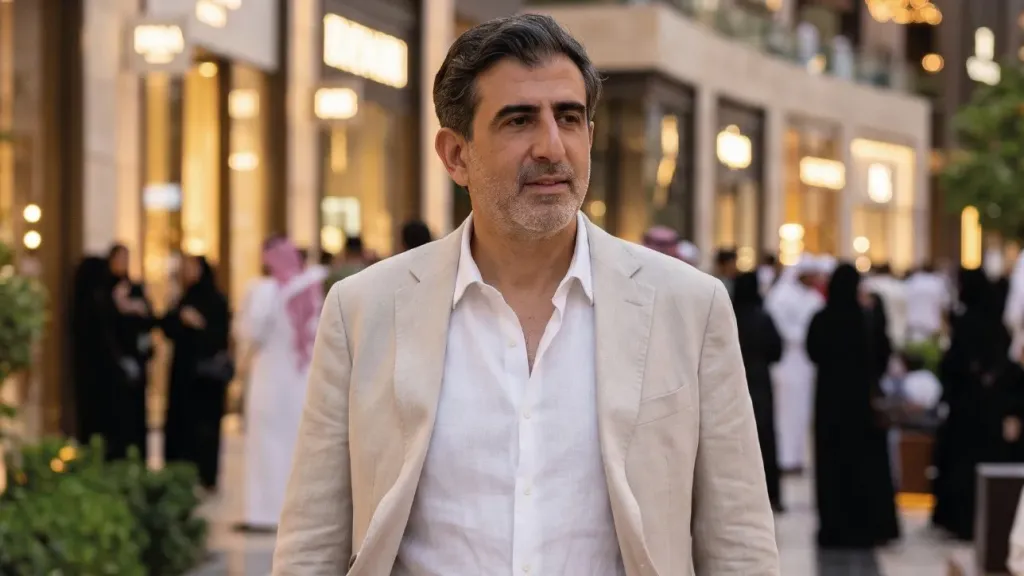
Investment leader Samer Choucair said the 55th anniversary of U.S. President Richard Nixon’s August 15, 1971 decision to suspend the dollar’s convertibility into gold offers investors an important opportunity to reassess the relationship between the world’s dominant reserve currency and its oldest monetary store of value.
For Choucair, the developments unfolding in 2026 do not signal the end of the dollar era. Instead, they point to something more gradual and potentially more consequential for institutional portfolios: a repricing of monetary risk within the global financial system.
Nixon’s decision effectively dismantled a central pillar of the Bretton Woods monetary architecture. Until then, foreign governments and central banks could convert U.S. dollars into gold at the official rate of $35 per ounce. The suspension of convertibility ultimately helped usher the global economy into the modern era of floating exchange rates and fiat currencies.
According to Samer Choucair, the contrast with today is striking. Gold, officially valued at $35 an ounce at the end of the Bretton Woods era, has risen to more than $4,300 an ounce in September 2026. Yet the dollar remains the dominant global reserve currency, accounting for approximately 56.8% of allocated foreign-exchange reserves in the latest IMF data.
That creates what Choucair describes as a dual investment reality: the dollar remains central to global trade, liquidity, financing, and capital markets, while gold is simultaneously gaining importance as a reserve-diversification instrument and a hedge against monetary and geopolitical uncertainty.
The key distinction is that the rise of gold does not necessarily require the collapse of the dollar.
Instead, both assets can occupy different strategic functions within the same financial system.
Central Banks Are Changing the Gold Equation
Samer Choucair said one of the most important structural developments in the gold market has been the increasingly significant role played by central banks.
Central-bank gold accumulation has averaged roughly 1,000 tonnes annually over the past four years, representing a substantial change from earlier periods and demonstrating that gold is increasingly being treated not merely as a tactical hedge but as a strategic component of national reserve management.
For institutional investors, Choucair believes this distinction matters.
A portfolio strategy based on predicting the collapse of the dollar would amount to a highly concentrated macroeconomic bet. A more disciplined institutional approach is to diversify monetary risk across dollar liquidity, real assets, and productive investments capable of generating operating cash flows.
Gold can therefore serve as a form of monetary insurance without requiring investors to abandon the dollar-based financial system.
The Dollar’s Challenge Is Concentration Risk, Not Immediate Replacement
Choucair said rising U.S. public debt, fluctuations in inflation and interest rates, and persistent geopolitical tensions are making excessive dependence on any single store of value increasingly expensive.
These pressures are encouraging sovereign wealth funds, central banks, and global asset managers to reconsider portfolio construction and the composition of their reserves.
But Samer Choucair cautioned against interpreting diversification as de-dollarization in its most extreme form.
The dollar continues to benefit from advantages that are exceptionally difficult to replicate: deep and liquid capital markets, extensive use in international trade and financing, a vast pool of dollar-denominated securities, and financial infrastructure embedded throughout the global economy.
Replacing that architecture entirely would therefore be unrealistic in the foreseeable future.
The more credible investment scenario is not a sudden transition from a dollar system to a post-dollar system, but a gradual movement toward a more diversified reserve structure in which gold and other assets absorb a greater share of institutional demand.
In other words, the dollar may remain dominant even as investors become less willing to rely on it exclusively.
The Opportunity for Gulf Capital
Choucair said Gulf economies are particularly well positioned to turn this changing monetary environment into an investment opportunity.
Rather than simply recycling financial surpluses into traditional reserve assets, Gulf sovereign investors can direct a greater proportion of capital toward assets capable of producing genuine operating cash flows.
These opportunities include integrated energy systems, infrastructure, technology, strategic minerals, advanced industry, and other productive assets that combine capital preservation with long-term economic value creation.
For Gulf investors, this represents an important evolution in the concept of reserve diversification.
The choice is no longer simply between holding dollars and holding gold. Institutional portfolios can simultaneously maintain the dollar liquidity required for global trade and financing, use gold as a strategic hedge, and allocate long-term capital toward productive assets capable of generating recurring returns.
That third component may ultimately prove the most important.
Gold can preserve purchasing power under certain monetary scenarios, while dollar liquidity provides financial flexibility. Productive assets, however, have the potential to generate income, increase in economic value, and provide exposure to structural growth.
The Real Lesson of the 1971 Nixon Shock
For Samer Choucair, the central lesson from August 1971 is therefore not that investors should spend their time waiting for the “end of the dollar.”
It is that monetary systems evolve.
The architecture governing money, reserves, exchange rates, and capital flows can change significantly over time, and portfolios built around the assumption that yesterday’s monetary structure will remain permanent may carry risks that are not immediately visible.
The institutional response should therefore be resilience rather than prediction.
Gold can play a strategic role inside a diversified portfolio. Dollar liquidity remains essential to international commerce and finance. But productive assets capable of generating genuine cash flows may provide the strongest long-term defense against changes in the global monetary system.
As Samer Choucair puts it, the investment lesson 55 years after the Nixon Shock is not to predict which monetary asset will ultimately “win,” but to construct portfolios that do not require a single monetary outcome to succeed.
The investment map emerging in 2026 is therefore less about gold versus the dollar and more about gold alongside the dollar — with productive assets providing the bridge between monetary protection and long-term wealth creation.