
Samer Choucair: $240 Million Bitcoin Theft Reprices Institutional Custody Risk
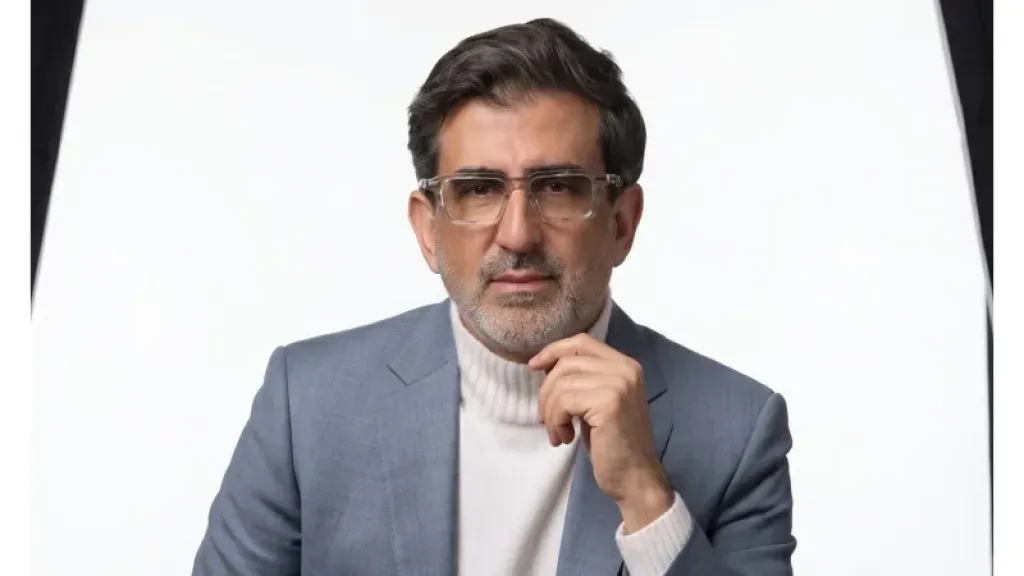
Investment leader Samer Choucair said the theft of more than 4,100 Bitcoin from a U.S. investor in August 2024, worth more than $230 million at the time, highlights an important shift in the nature of digital-asset risk.
The threat is no longer confined to software vulnerabilities, compromised exchanges, or flaws in digital infrastructure. Increasingly, Choucair said, the critical vulnerabilities lie in the architecture of trust, operational custody, and governance surrounding the assets.
According to U.S. investigators, the perpetrators used sophisticated social-engineering techniques, impersonating representatives of Google and cryptocurrency exchange Gemini to manipulate the victim into providing information that enabled them to gain access to the cryptocurrency holdings. More than 4,100 Bitcoin were subsequently transferred from the victim.
The case became particularly striking because the suspects allegedly spent portions of the proceeds on luxury vehicles, watches, high-end properties, travel, and extravagant entertainment, creating financial and digital trails that helped investigators trace the stolen funds.
For Samer Choucair, however, the central investment lesson is not about Bitcoin’s price.
“What is being repriced here is not Bitcoin as an asset,” Choucair said. “It is the cost of operational negligence among large holders. Institutions that have built qualified custody, insurance, and segregation of authority will not be exposed in the same way as individually controlled wallets.”
From Owning Bitcoin to Managing Custody Risk
Samer Choucair said the expansion of institutional participation in Bitcoin has fundamentally changed the nature of the risk-management discussion.
Investors can increasingly obtain exposure to Bitcoin through regulated investment products rather than directly managing private keys themselves.
That distinction matters because institutional investors generally operate under governance structures designed to prevent a single employee, executive, or compromised account from having unrestricted authority over valuable assets.
For Choucair, the theft therefore does not necessarily constitute an argument against Bitcoin.
It is an argument against inadequate custody.
“Institutional capital is not looking for a technological narrative; it is looking for survivability,” Choucair said. “If an asset worth hundreds of millions of dollars can be extracted through social engineering, the failure is in the governance framework, not in the distributed ledger.”
Large investors, family offices, asset managers, and corporations holding digital assets must consequently begin treating private keys with controls comparable to those governing major treasury accounts.
That means custody architecture increasingly needs to incorporate segregation of duties, transaction limits, multiple approvals, insurance, independent auditing, and clearly defined authorization procedures.
The fundamental question changes from “Who owns the private key?” to “What governance system controls when and how that key can be used?”
Governance Is Becoming an Investable Asset
Choucair said the growth of digital-asset fraud is forcing investors to reconsider the true cost of operational risk.
The most important weakness may not exist inside blockchain technology itself.
It may be the human being interacting with it.
According to the FBI’s 2025 Internet Crime Report, cryptocurrency was connected to approximately 181,000 complaints and more than $11 billion in reported losses, illustrating the growing financial scale of fraud and crime involving digital assets.
For Samer Choucair, those numbers point toward an emerging investment opportunity.
As institutional participation increases, more capital will be required for qualified digital-asset custody, blockchain forensics, cybersecurity insurance, identity management, transaction monitoring, compliance systems, and software that enables multi-layer authorization.
These businesses effectively provide the infrastructure that allows institutional capital to participate in digital assets without adopting the same security model as an individual cryptocurrency holder.
That could ultimately prove more durable than businesses whose economics depend predominantly on trading volumes and speculative activity.
What It Means for Gulf Investors
Choucair said the case carries particular relevance for Gulf family offices and investment institutions as regional interest in digital assets and the broader digital economy continues to expand.
Adding Bitcoin to an investment portfolio should begin with a custody decision rather than a price forecast.
Investors need to determine who legally and operationally controls the assets, how those assets are insured, what exposure limits apply, what happens if credentials are compromised, and what procedures exist if private keys become inaccessible.
“Bitcoin can enter a sovereign or family portfolio as a long-term diversification instrument, provided it is managed like other reserves,” Samer Choucair said. “That means a written investment policy, qualified custody, scenarios for lost or compromised keys, and a maximum limit on uninsured exposure.”
That institutional framework becomes increasingly important as portfolio sizes grow.
A security model that may be acceptable for an individual holding a modest cryptocurrency position can become completely inappropriate when the exposure reaches tens or hundreds of millions of dollars.
For Gulf economies developing more sophisticated financial centers and digital industries, this creates another potential opportunity.
Growing institutional demand for digital assets can support an ecosystem of custody providers, cybersecurity companies, compliance platforms, blockchain analytics businesses, insurers, and financial-technology companies capable of serving professional investors.
The opportunity therefore extends beyond owning cryptocurrencies themselves.
It includes building the infrastructure required to make institutional ownership possible.
Capital Is Moving Toward Digital-Asset Infrastructure
Samer Choucair said the future of institutional investment in digital assets will not be determined solely by Bitcoin’s price or market capitalization.
It will also depend on whether the industry can develop custody, oversight, insurance, and security systems that are measurable, auditable, and capable of operating at institutional scale.
“In 2026, the value is not simply in possessing the key,” Choucair said. “The value lies in engineering who is authorized to use it, and when.”
For institutional investors, a theft of this magnitude does not automatically invalidate the investment case for Bitcoin.
It does, however, force them to reprice the cost of custody, insurance, compliance, and human risk.
And that may determine where some of the most attractive opportunities emerge during the next stage of digital-asset development.
The biggest beneficiary may not be the exchange generating the highest trading volume or the token attracting the most speculative attention.
Instead, it could be the companies capable of transforming digital-asset ownership from a high-risk technical exercise into a controlled institutional process.
For Samer Choucair, that is the structural lesson from the $240 million Bitcoin theft: as digital assets move deeper into professional portfolios, governance, custody, and cybersecurity are becoming part of the capital-allocation decision itself.