
Samer Choucair: Capital Is Returning to Egyptian Startups, but Under Stricter Conditions
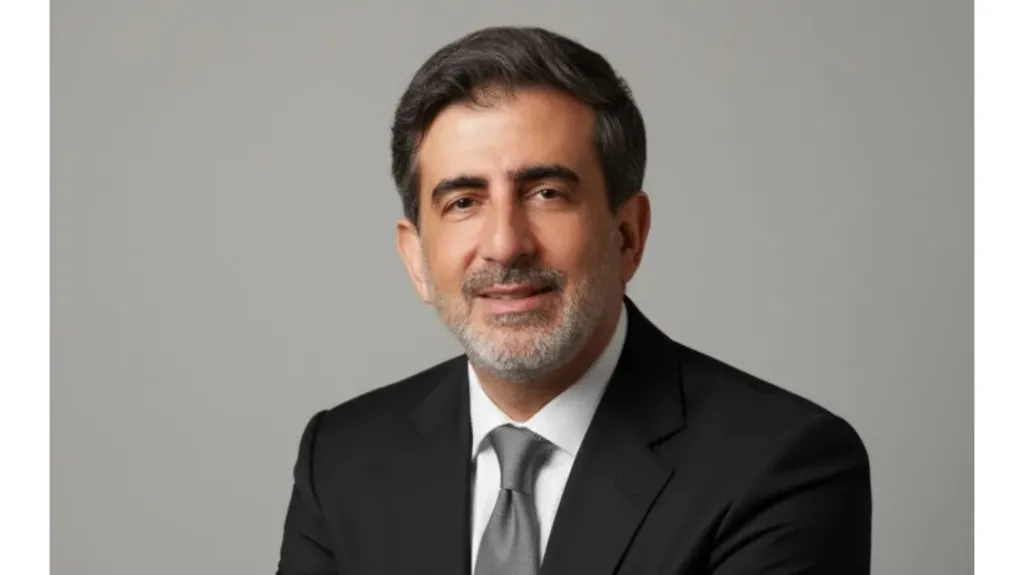
Investment leader Samer Choucair said the rise in funding for Egyptian startups to approximately $614 million in 2025, up 51% year on year, should not be interpreted as a broad return to the market’s previous boom.
Instead, Choucair said the figures point to a more selective return of capital, with the total including both equity and debt financing, according to Africa: The Big Deal data cited in Entlaq’s Egypt Entrepreneurship Ecosystem Diagnostic Report 2026.
Samer Choucair said the more important indicator for institutional investors is the ecosystem-readiness score, which remained at 2.90 out of 5, below the neutral threshold. At the same time, venture-capital activity fell to 69 deals worth $304 million, compared with a peak of 160 transactions in 2022.
For Choucair, the message is clear: the Egyptian startup market is increasingly rewarding companies capable of demonstrating credible unit economics and generating cash flow rather than businesses whose valuations depend primarily on narrative and expansion expectations.
The Funding Gap Between Formation and Growth
Samer Choucair said Entlaq’s report, based on 130 participants and 2,790 responses, highlighted a persistent financing gap as startups attempt to move from formation to growth.
Access to pre-seed and seed financing was rated at 2.53 out of 5, compared with 2.63 for Series A funding and beyond, indicating that capital constraints remain visible across the financing lifecycle.
Egypt’s economy, meanwhile, recorded growth of 5.1% in fiscal year 2025/2026, compared with 4.4% in the previous year, according to figures presented during the Entlaq Summit in September 2026. Industry, trade, communications, and information technology accounted for approximately 48% of that growth.
Choucair said demand across fintech, digital real estate, and e-commerce is increasingly becoming part of Egypt’s effort to rebuild and diversify its sources of economic growth.
The startup market, he added, is moving from what could be described as “funding expansion” toward “funding resilience,” with governance, sustainable unit economics, and balance-sheet discipline becoming more important to investors.
Larger Deals and the Growing Role of Debt
MAGNiTT data showed venture-capital funding reaching $304 million across 69 transactions, while Partech placed the average deal size at close to $6 million, although that figure was influenced by several large funding rounds.
Nawy raised approximately $75 million, including $52 million in equity and $23 million in debt. Tasaheel issued approximately $50 million in bonds, while Valu raised $27 million. Funding rounds for Khazna, Thndr, and Sylndr were in the $15 million to $16 million range.
Samer Choucair said the increasing use of debt represents a partial transition from financing an idea to financing a balance sheet.
That distinction is important because debt can become an efficient instrument for businesses with predictable revenues and measurable cash flows, but significantly more dangerous when used simply to extend the runway of companies that have not yet established operating profitability.
“The growth of debt financing changes the discipline of the market,” Choucair said. “Equity can finance an expectation, but debt ultimately has to be serviced by cash flow.”
Egypt Faces the Gulf Opportunity-Cost Test
Startup funding across Africa reached approximately $3.2 billion excluding exits, an increase of roughly 40%, with Egypt accounting for around 20% of the total.
Egypt also became Africa’s second-largest market for startup debt financing, attracting approximately $278 million, equivalent to around 24% of the continent’s funding through that instrument.
At the same time, the competitive environment for capital has become considerably more demanding.
Startup funding across the Middle East and North Africa reached a record $7.5 billion, with approximately $5 billion going to Saudi Arabia and another $2 billion to the United Arab Emirates.
Samer Choucair said investors evaluating Egypt are therefore increasingly comparing potential returns with what he described as the “Gulf opportunity cost.”
Capital looking at an Egyptian startup is no longer assessing that company in isolation. It is comparing the opportunity with businesses operating in markets where sovereign investment, regulatory reforms, infrastructure spending, and deeper pools of growth capital can provide different risk-return characteristics.
Egypt nevertheless retains significant structural advantages, Choucair said, including its demographics, domestic market size, engineering talent, and the ability of Egyptian companies to use the country as a base for expansion into North Africa and the Levant.
The challenge is converting those advantages into businesses capable of competing for capital on increasingly regional terms.
Opportunities and Risks in the Next Phase
Egypt recorded 12 venture-backed mergers and acquisitions, the highest number of exits in Africa according to MAGNiTT data, providing an important signal that the ecosystem is beginning to develop more credible liquidity pathways for investors.
The Startup Charter also aims to mobilize approximately $1 billion over five years, while regulatory changes discussed in September 2026 include amendments addressing shareholder agreements, convertible debt instruments, and the creation of formal registries for those structures.
Choucair said fintech, proptech, artificial intelligence, and the wider digital economy remain among the most attractive areas for capital deployment.
However, currency risk, leverage, and insufficient early-stage financing continue to represent significant vulnerabilities.
Egypt had also ranked third regionally in AI-related startup funding during the first half of 2025, although a substantial portion of the total value was concentrated in a single large transaction.
For investors, Choucair said that concentration is important because headline funding numbers can create the appearance of broad ecosystem momentum even when capital is actually being deployed into a relatively small number of companies.
A More Selective Capital-Allocation Cycle
Samer Choucair concluded that the $614 million funding figure should not be interpreted as a general buy signal for Egypt’s startup ecosystem.
Instead, it confirms that capital is returning selectively.
Choucair expects investors to increasingly favor fintech companies with verifiable credit data, digital infrastructure connected to real estate and financial services, and consolidation transactions capable of acquiring market share rather than simply purchasing growth expectations.
The future of Egypt’s startup ecosystem, he said, will ultimately be determined at the intersection of governance quality, financing diversity, and the ability of companies to access demand beyond the domestic economic cycle.
If regulatory reforms and deeper capital markets can narrow the financing gap between seed-stage companies and scalable growth businesses, the current recovery could develop into a structural repricing of Egyptian venture capital.
But if funding remains heavily concentrated in a limited number of large transactions, headline totals will continue to provide an incomplete picture of the underlying market.
“The real signal is not that capital has simply returned to Egypt,” Samer Choucair said. “It is that capital has returned with conditions. The companies that can demonstrate governance, cash-flow visibility, disciplined unit economics, and regional scalability will increasingly separate themselves from those that can only demonstrate growth.”
For institutional investors, that distinction may define the next phase of Egypt’s startup market: not a return to capital at any cost, but a transition toward capital that demands proof.